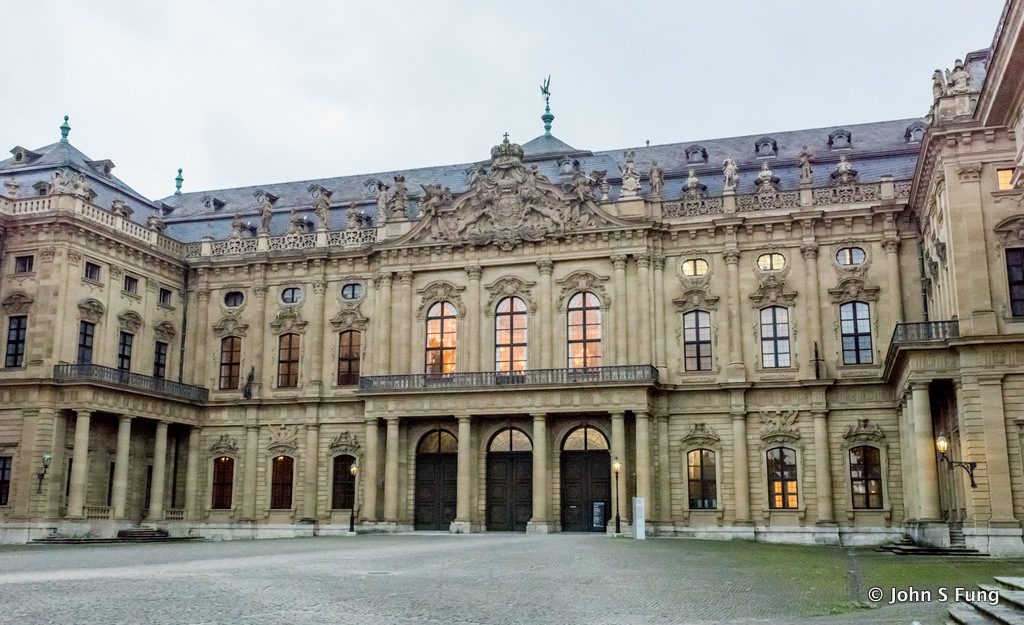
維爾茨堡是 Franconia 州的重鎮,天主教羅馬帝國時,Franconia 的公爵(亦即王子-主教)就駐在維爾茨堡,在政治和宗教上管理Franconia 州。主教原居於美因河西岸的 Marienberg 堡壘,後來建成東岸的主教府,便搬了過來。維爾茨堡以巴洛式建築聞名,最有名的代表就是主教府。建成於1744年,主教禮賢下士,禮聘 Johann Balthasar Neumann 負責建築,其設計之無柱之巨型樓梯空間,令人驚艷; 意大利壁畫名家Tiepolo 負責樓梯大堂上巨型天花的壁畫。據說當時 Tiepolo 名氣正盛,主教以極大誠意,加上重金禮聘,才得這威尼斯名家首允云云。
今日早上船稍停Karlstadt,讓參加雷登堡市一日遊或瑪利安堡壘半日遊的朋友先下船轉車。我們因為2020年再來,所以決定這次先看維爾茨堡主教府。早上仍過水閘,我們在船上欣賞 Franconia 的景色。下午二時參觀主教府,之後步行至老城參觀。
“Surrounded by Franconian vineyards, Wurzburg was heavily damaged during World War II, but has since been completely restored. This prestigious university city is a jewel of baroque architecture. Its most pristine example of pomp and glory is the great Bishops’ Residenz palace, built in 1744 for the prince-bishop; his unwavering support of artists is evidenced by the sweeping staircase and magnificent ceiling frescoes by Tiepolo.” (Viking Cruise info)
Our ship made a brief stop at Karlstadt for those who joined excursions for Rothenburg or Marienburg Fortress. We already booked a similar trip in 2020.8, so we save Rothenburg for our next trip and stayed on board for the Wurzburg Residence. We relaxed that morning and enjoyed the beautiful countryside scenery of Franconia. We had lunch at 12:15, a bit earlier than usual and getting reading for the excursion at around 1:45pm.
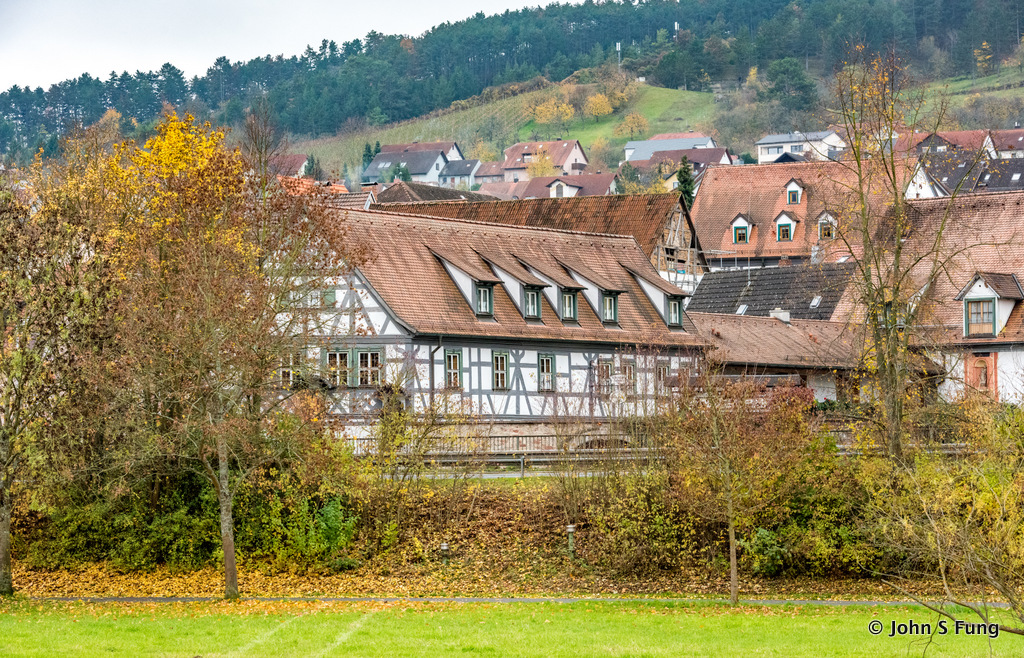
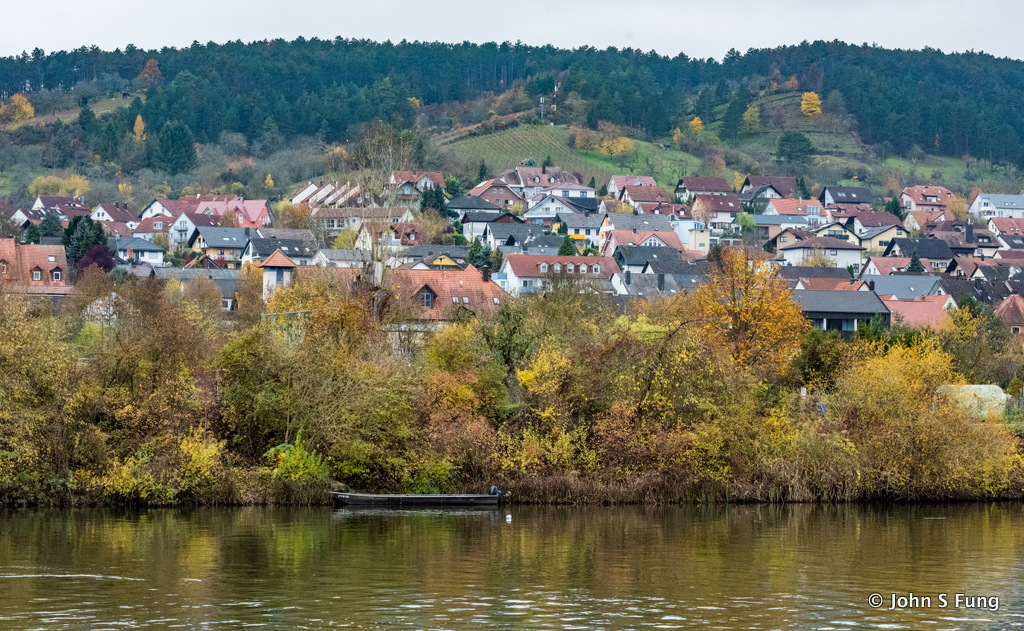
Cruising Franconia countryside
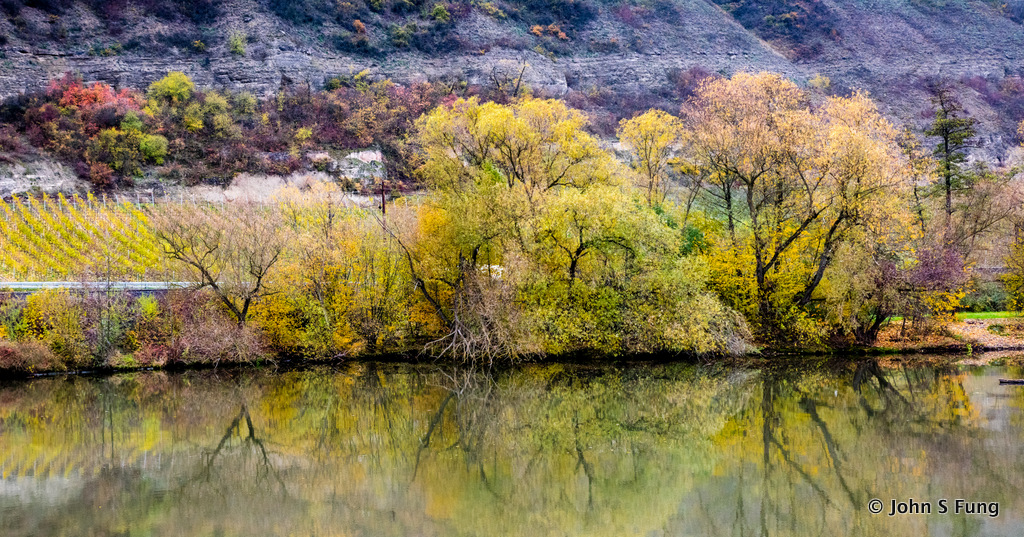
Franconia 葡萄園很多,風光明媚。
Vineyards and cultivated land along the Main River.
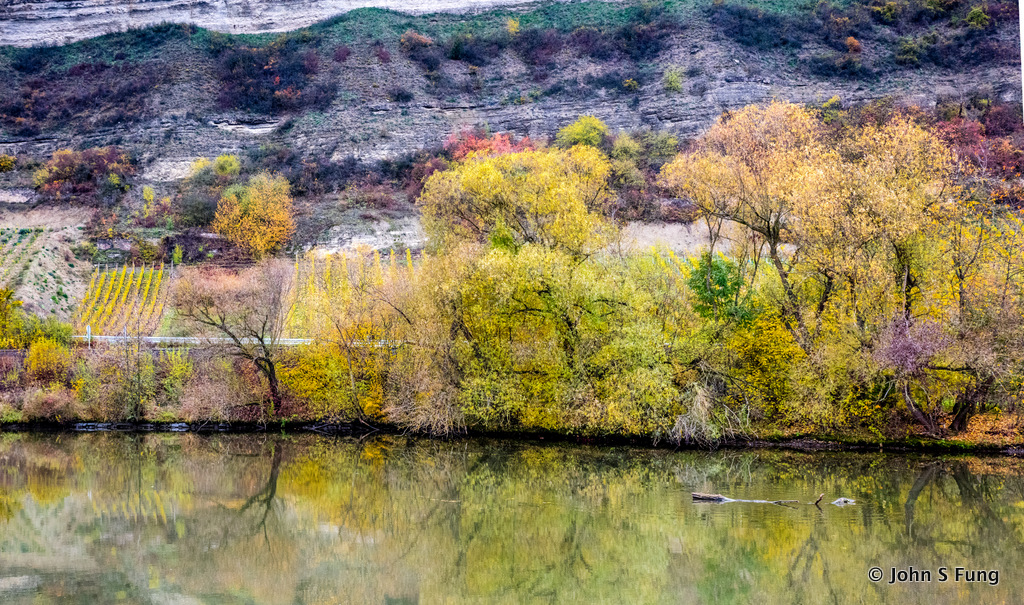
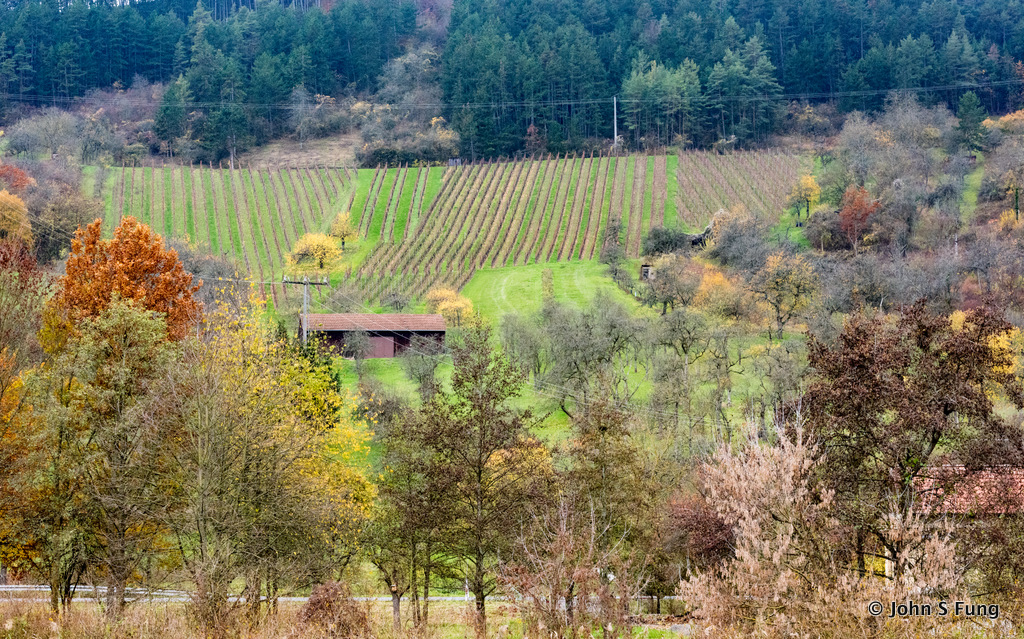
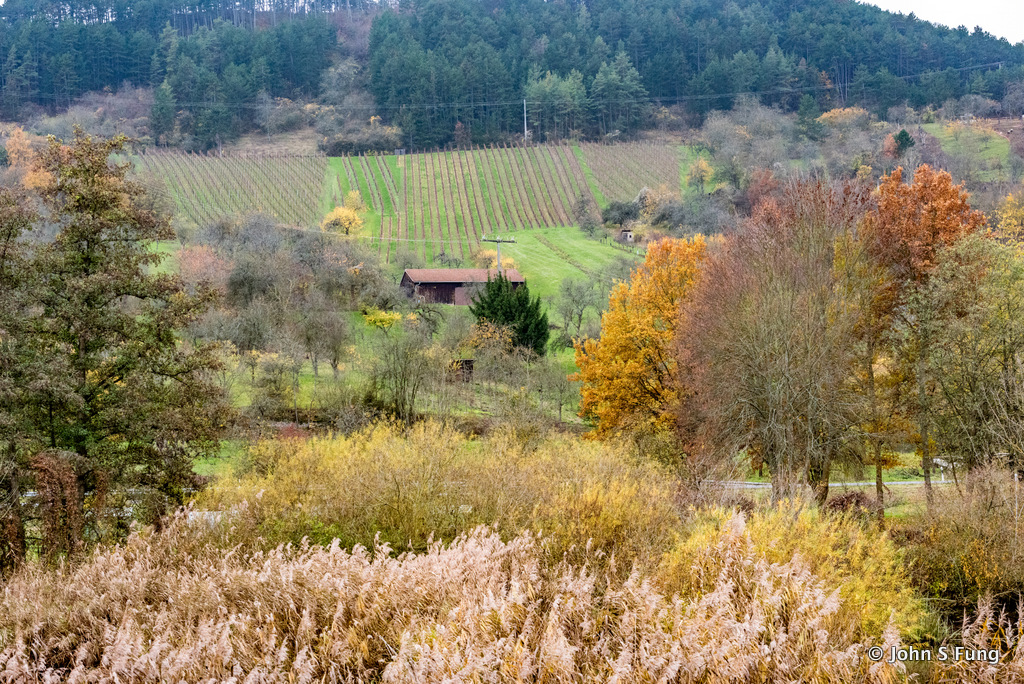
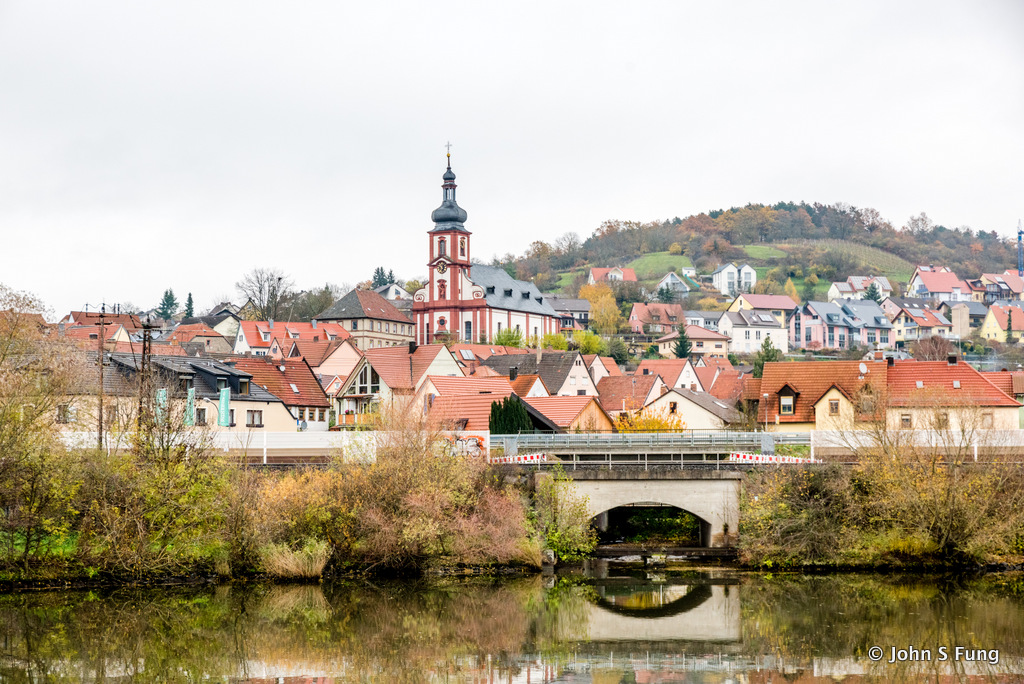
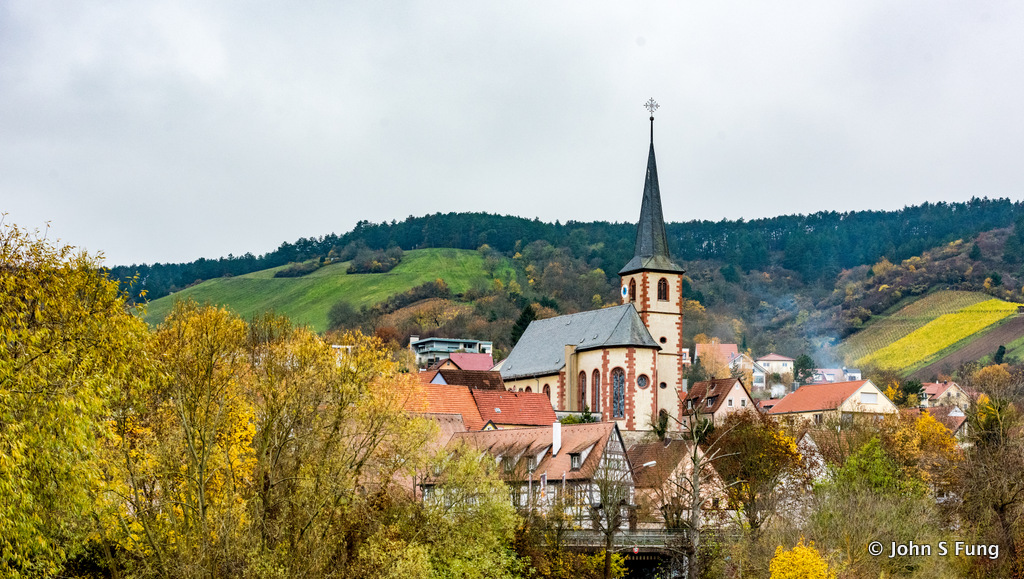
途經Earlabrunn 鎮。 A church near Earlabrunn.
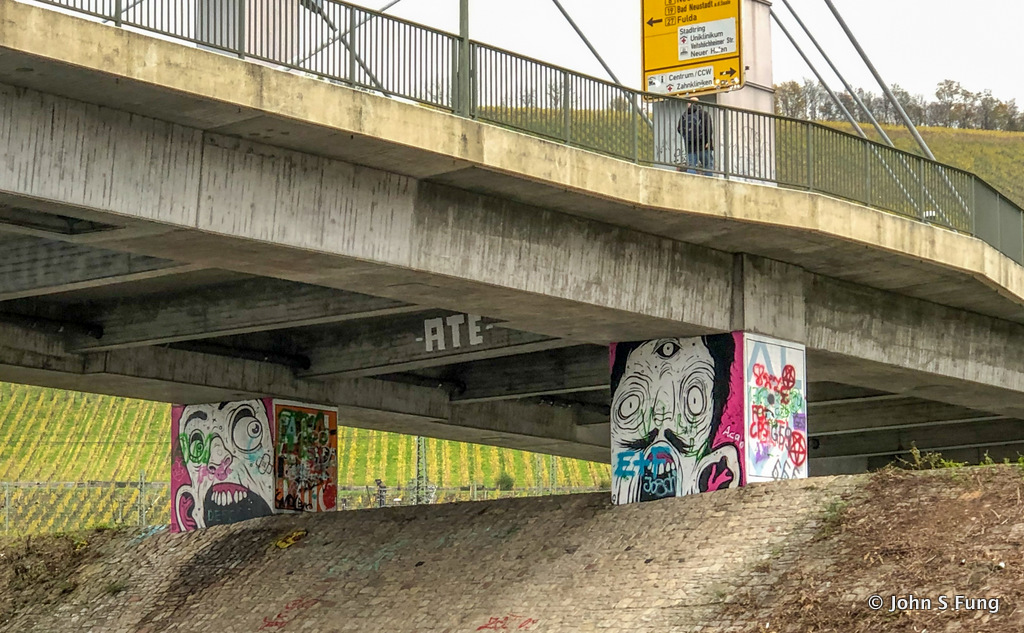
這是維爾茨堡市內的新橋樑,兩個可愛的塗鴉人物。
Before reaching the Main Bridge, we passed this concrete bridge with two lovely graffiti figures.
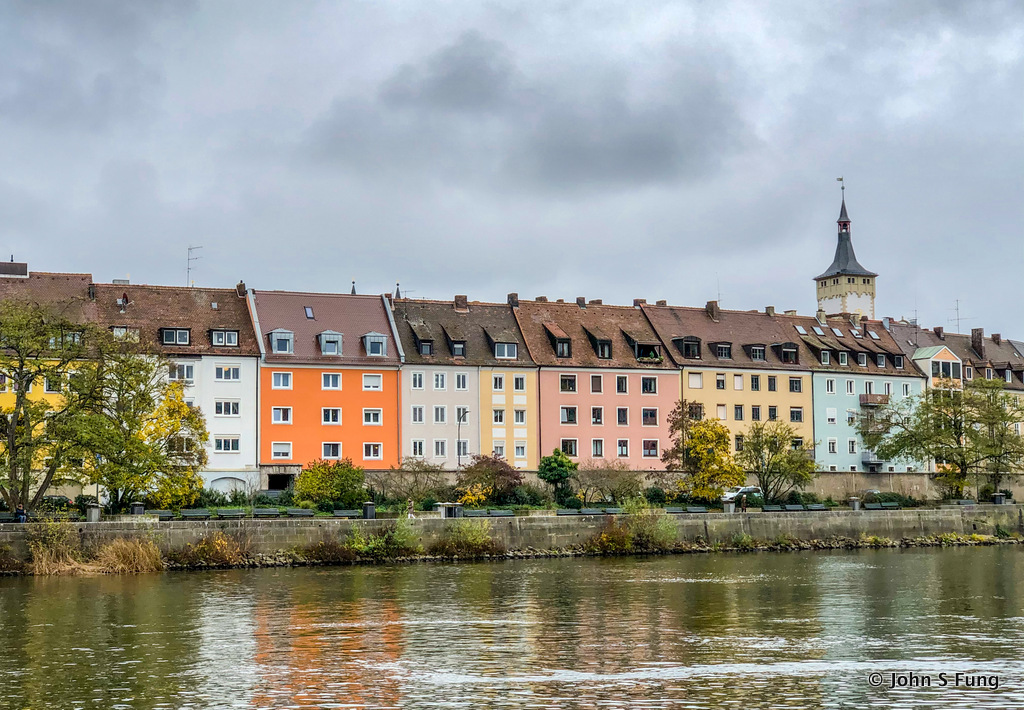
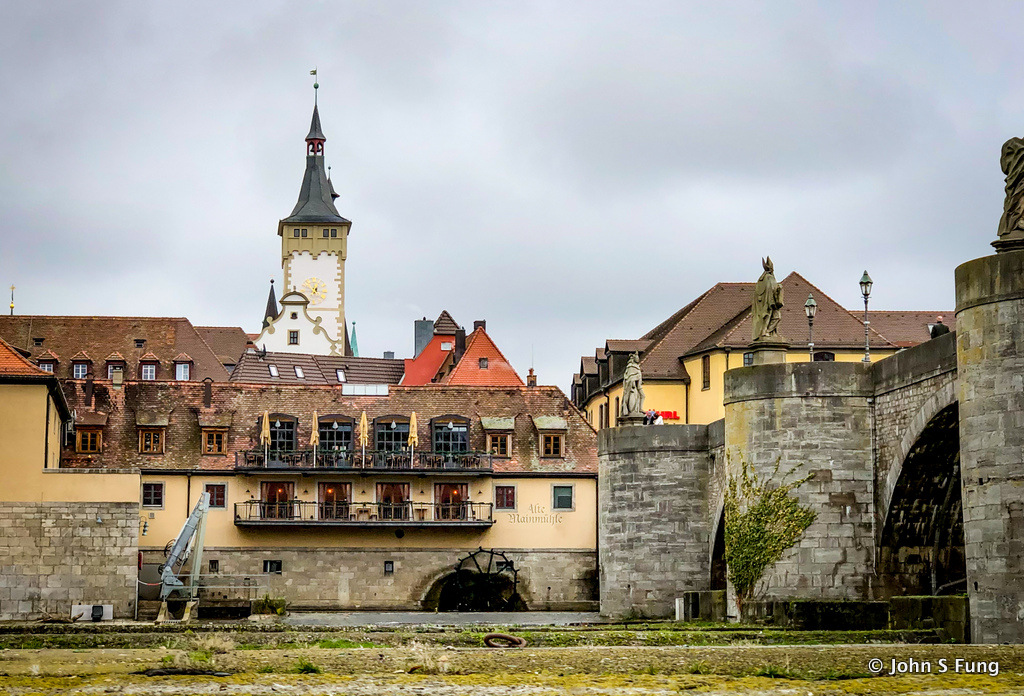
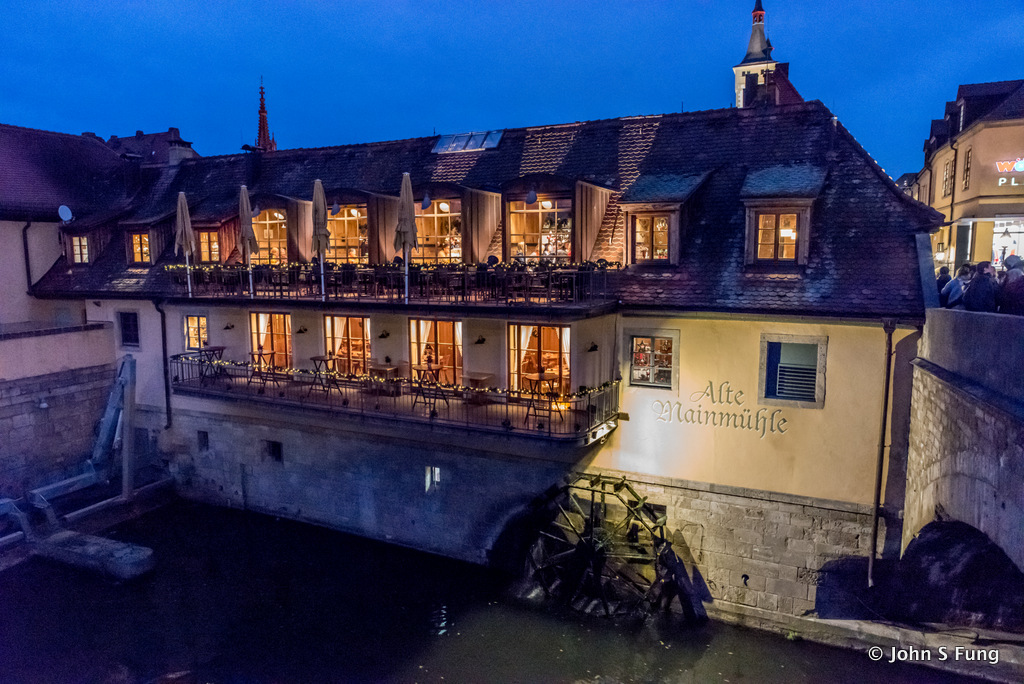
船過維爾茨堡市中心的老主橋(右),前方是河邊的人氣餐廳 – 老水車餐廳,水邊還真的有水車呢。後為老政廳的塔。
Alte Mainbrucke – Old Main Bridge near city center of Wurzburg. The popular Old Millwheel restaurant at the waterfront and behind it is the tower of the Old City Hall.
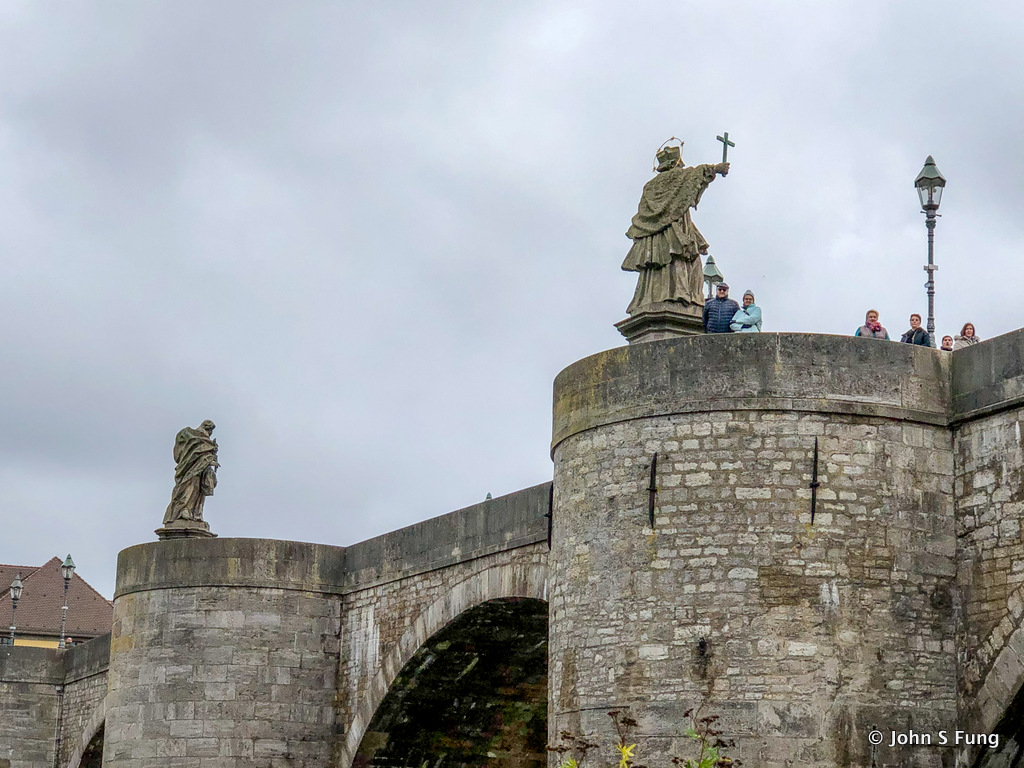
老橋上有十尊聖人雕像。左為聖若瑟,右為聖約翰。
Barocque statues on the pier caps, St. Joseph with Jesus (left) and St. John of Nepomuk (right).
維爾茨堡主教府 Wurzburg Residenz
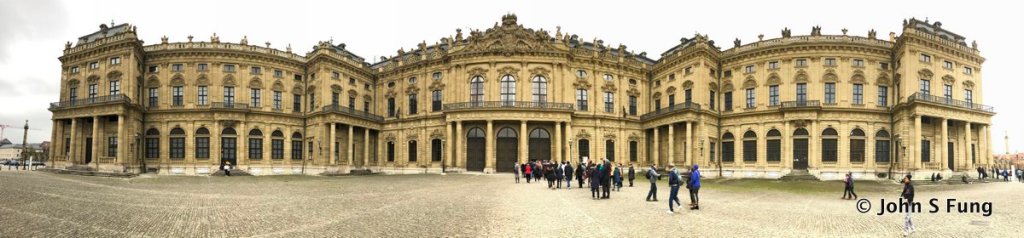
維爾茨堡主教府,手機拍的全景照。
Wurzburg Residence. Pano with an iPhone.
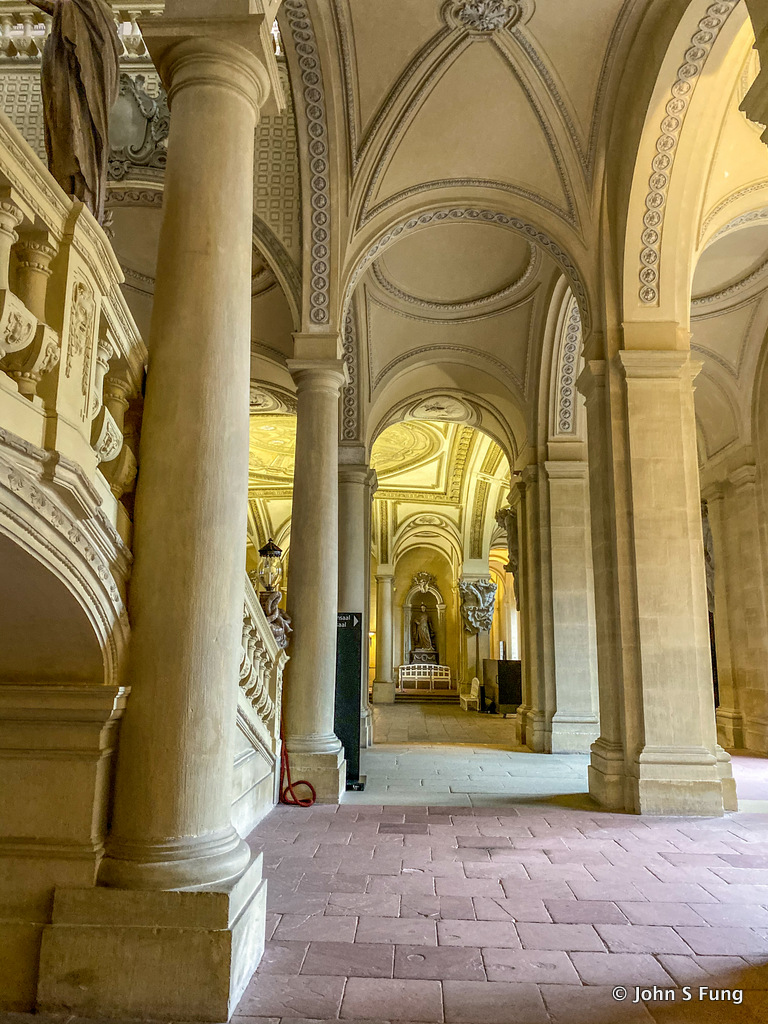
進入主教府大門,工作人員要我們將背囊/相機袋放入儲藏箱內。沒有了我的家生,悵然若失,就像沒穿衣服似的,最重要的是沒有經過變焦鏡頭的觀察,我看過的東西很快就會變成過眼煙雲了。尤幸在晚餐桌上收到朋友 airdrops 分享的照片,聊勝於無(14天行程中,我還收過幾張不知是誰拍的照片,感謝)。
After entering the Residenz, We were told to leave our backpacks/camera bags in a big wooden box. Without my equipments, I was feeling naked, but most importantly, I knew I wouldn’t remember a thing after leaving the front door. However, thanks to those who knew how to snap a couple of shots with cellphones in that situation and shared them with us over dinner table. As a matter of fact, we received photos from time to time by AirDrop during dinner time by folks whose identity are unknown to me, ha ha, that’s how AirDrop works.
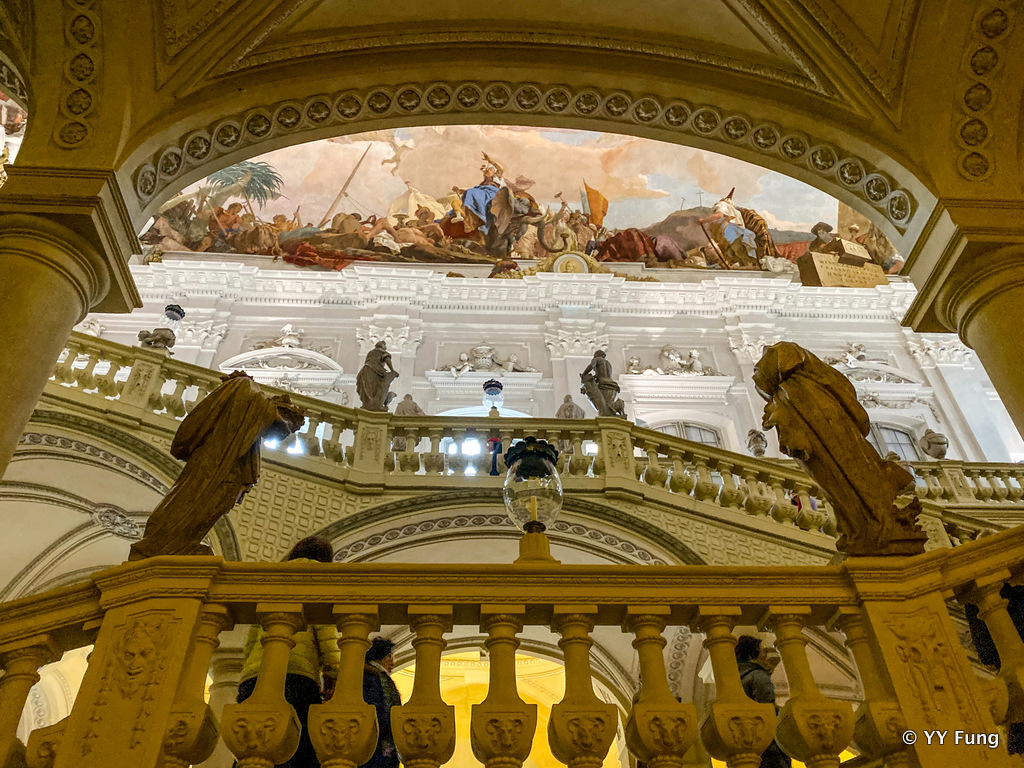
這兩張手機拍的,這位朋友拍的角度相當好。
These two that show the ceiling freshco. excellent shots. I believe they are from Mandy, thx, Mandy.
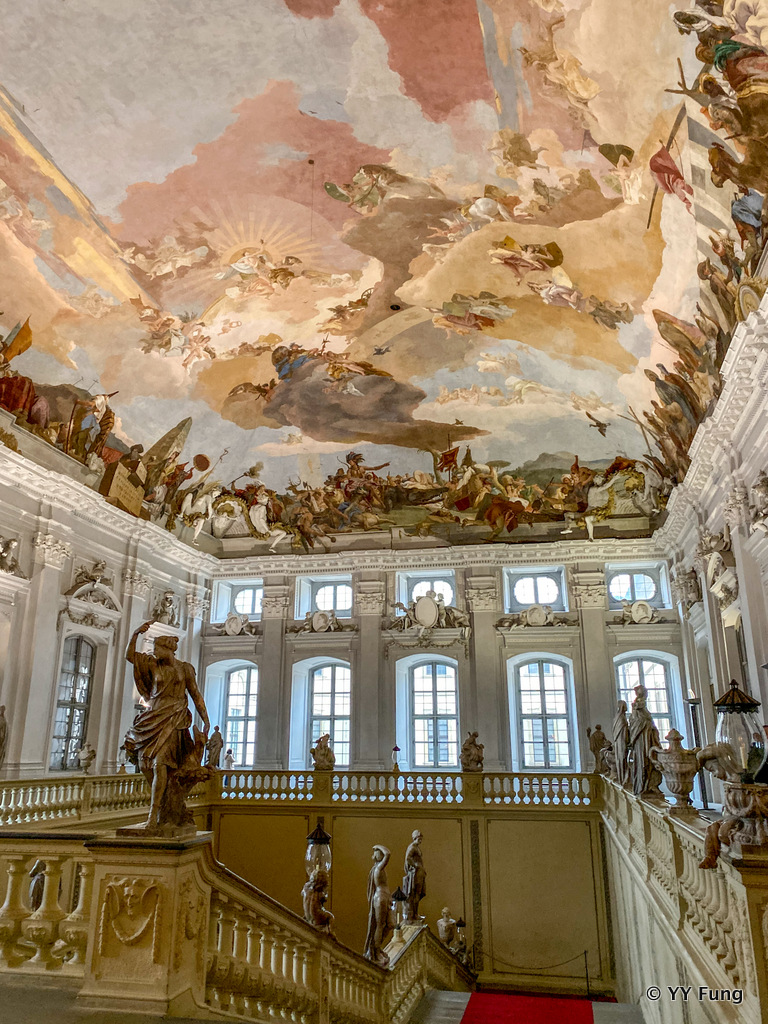
二次大戰時,維爾茨堡受盟軍空襲,市內受損嚴重,主教府亦不例外,尤幸這著名的樓梯大堂和天花上的壁畫未受破壞。
The City of Würzburg and Würzburg Residenz suffered extensive damage from air-raids during World War II. Fortunately, the structure in the staircase and the ceiling withstood the destructive impact of bombing and the fire, and we are so lucky that we are able to see the ceiling fresco today.
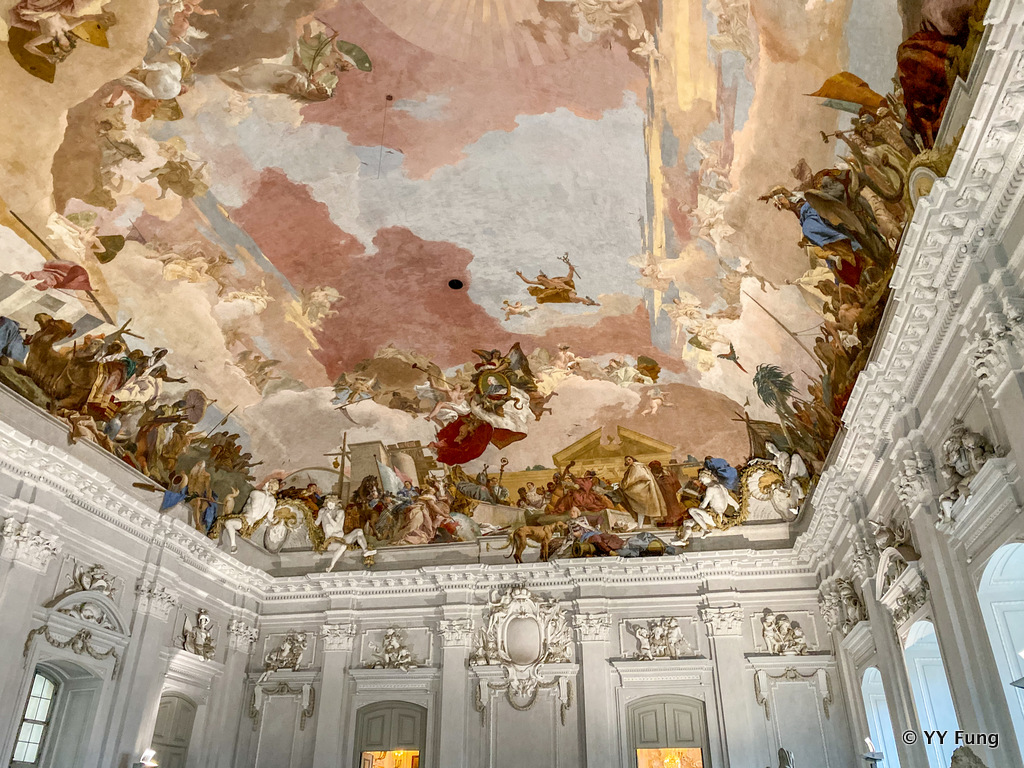
上面是樓梯間穹頂上的壁畫,出自意大利壁畫家Tiepolo及其團隊之手,繪畫世界四大洲的風情。當導遊解釋在天花四周飾帶區(frieze) 的四大州時,我就覺得主題有似曾相識之感。回到船上,打開自己的老blog, 原來十年前瘋教堂時特別愛耶蘇會的教堂天花,曾在羅馬聖依納爵教堂看過 Andrea Pozzo 類似的主題,見:https://bluepapillon.wordpress.com/2010/08/11/羅馬聖依納爵教堂-santignazio-church-rome/。
The one above shows the Baroque-style staircase with the famous ceiling fresco by Tiepolo. As the guide was explaining the frieze of the four continents and their allegorical female rulers, I had a feeling that I had seen some ceiling fresco before that has similar theme. Checked it later that night, I was right, that’s the ceiling fresco of Sant’Ignazio Church in Rome by Andrea Pozzo, see https://bluepapillon.wordpress.com/2010/08/11/羅馬聖依納爵教堂-santignazio-church-rome/ in my old blog.
我知道自己有過目即忘 的本事,所以在他們的小賣部找有關 Tiepolo 壁畫的書籍,皇天不負有心人,果然找到一本漂亮的專書。雖然還未有時間細看,但覺得是本好書。下面就借幾張圖填填我沒拍照的空白。
I knew I couldn’t remember a thing without taking pictures, so I looked for books about the Residenz and in particular about the fresco ceiling, I found them. For record sake, I am putting a few of photos from the book to finish the story here.
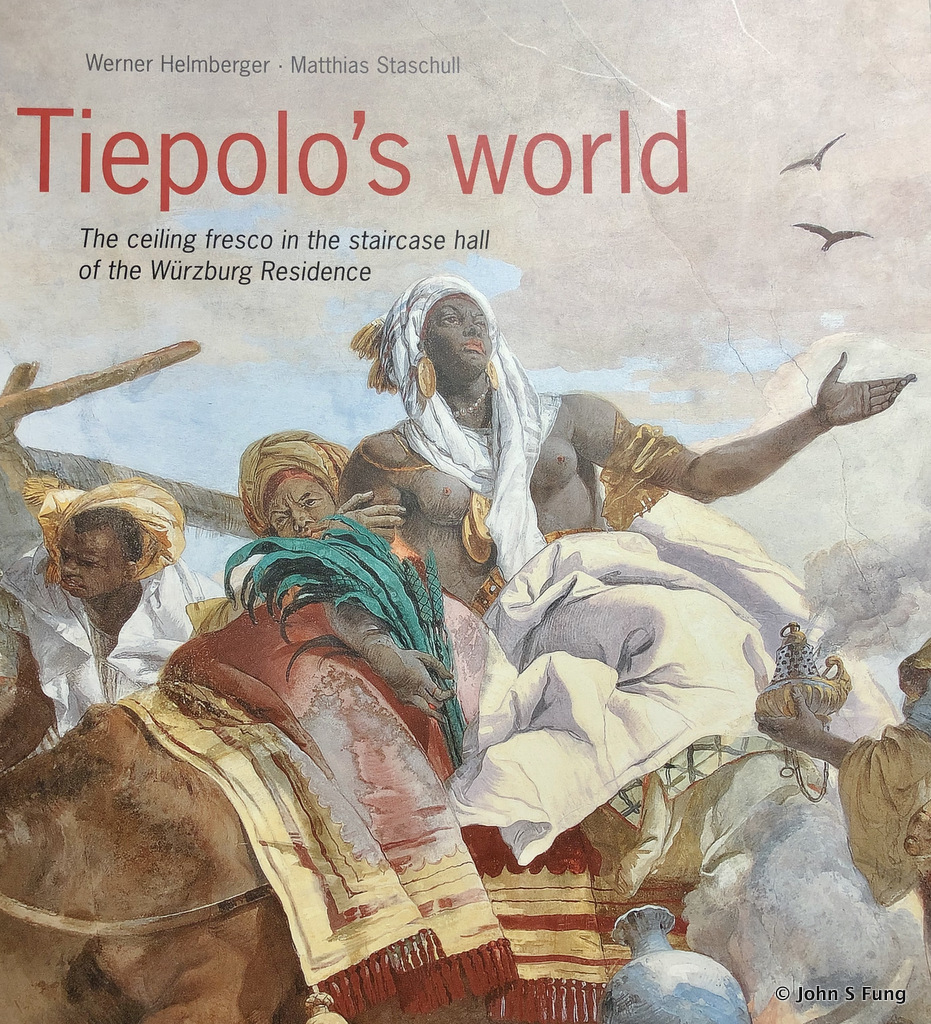
就是這本,Tiepolo 的世界。封面是代表非洲的女皇。
This is a beautiful book, and is surprisingly cheap. The cover shows the princess of Africa.
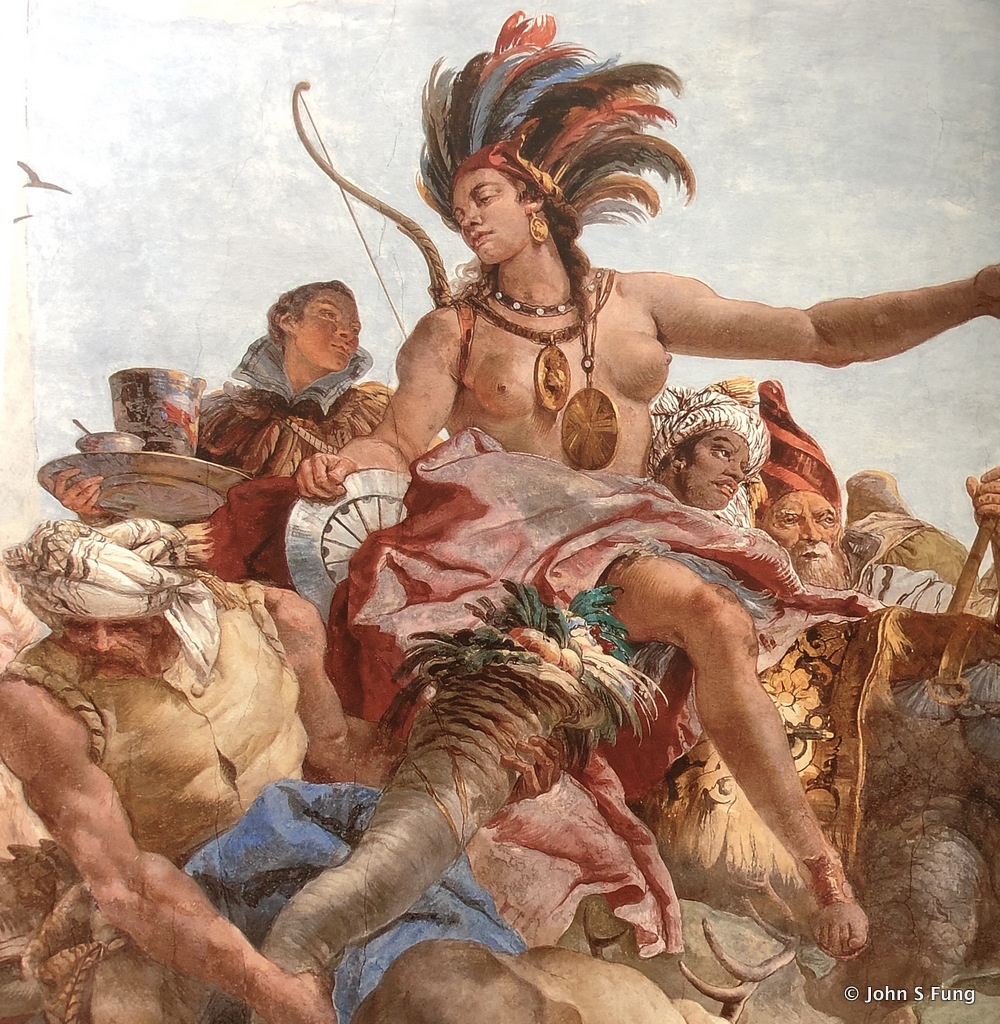
這是美洲的女皇(寓意性的)。
The allegorical female ruler of America.
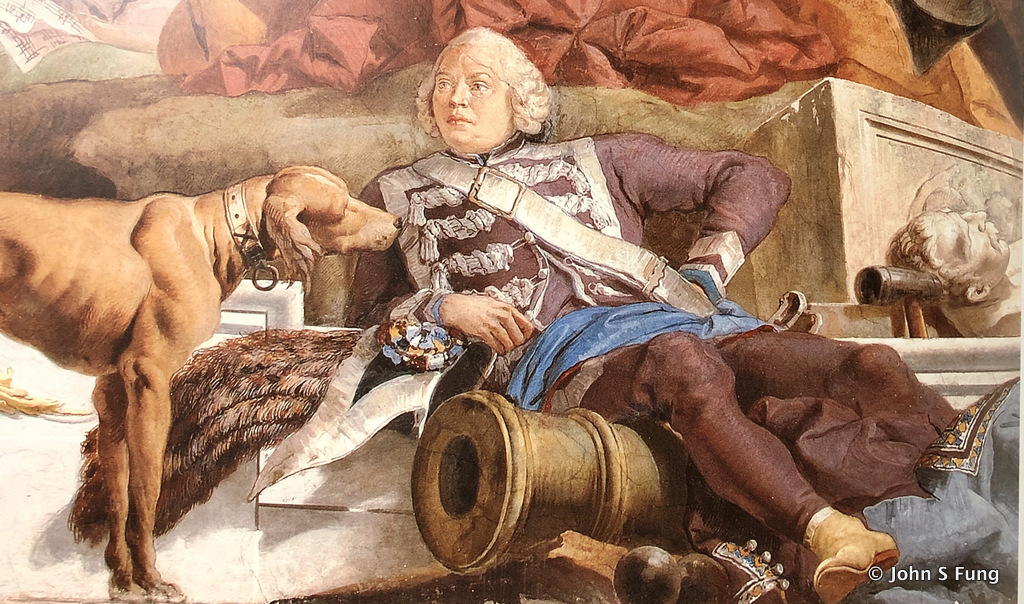
主教府是建築師紐曼(Balthasar Neumann)的傑作,Tiepolo 沿用歐洲藝術家的習慣,把有關藝術家的尊容帶進畫中。這裡將紐曼繪畫成坐在火炮上的上校。
Balthasar Neumann, the architect of the Wurzburg Residenz, is portrayed as a colonel in the artillery seated on a canon at the the frieze of the Europe scene.
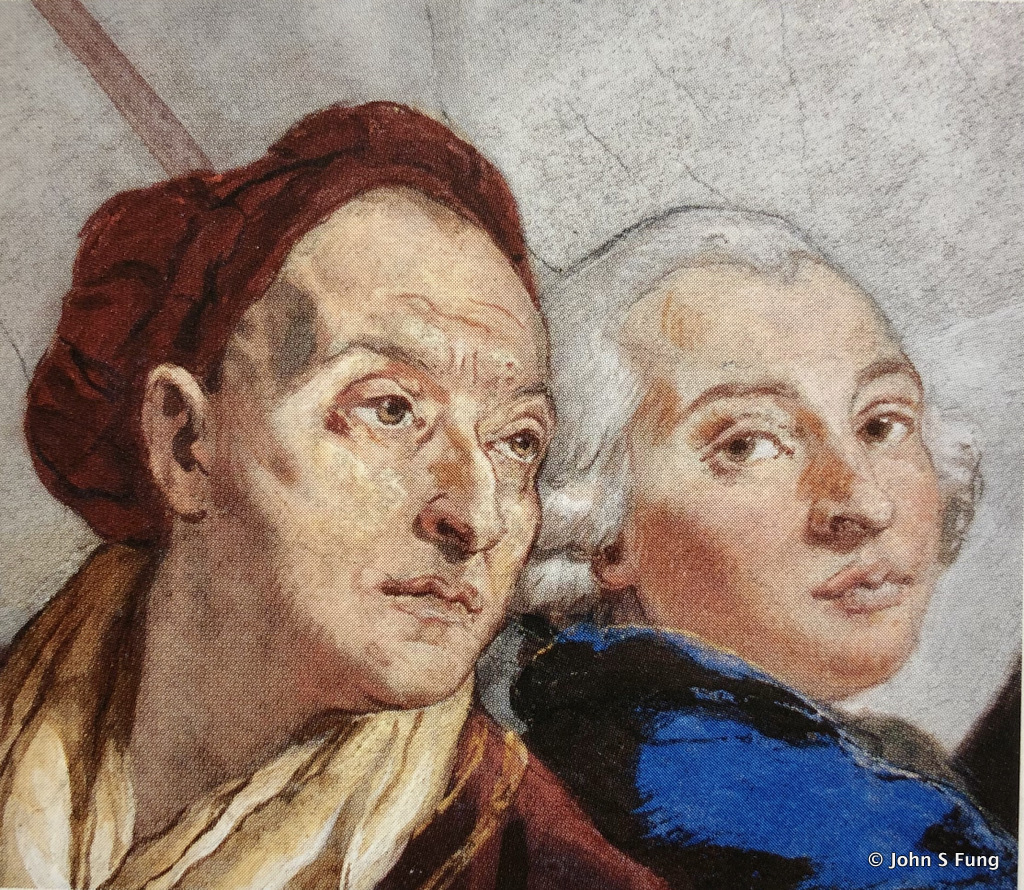
Giovanni Battista Tiepolo (left), the creator of the fresco and his son Giovanni Domenico Tiepolo, one of the painter in Tiepolo’s team, at the left-hand end of the Europe scene. “The heads are so different that it can be assumed here that the father painted the son and the son the father.”
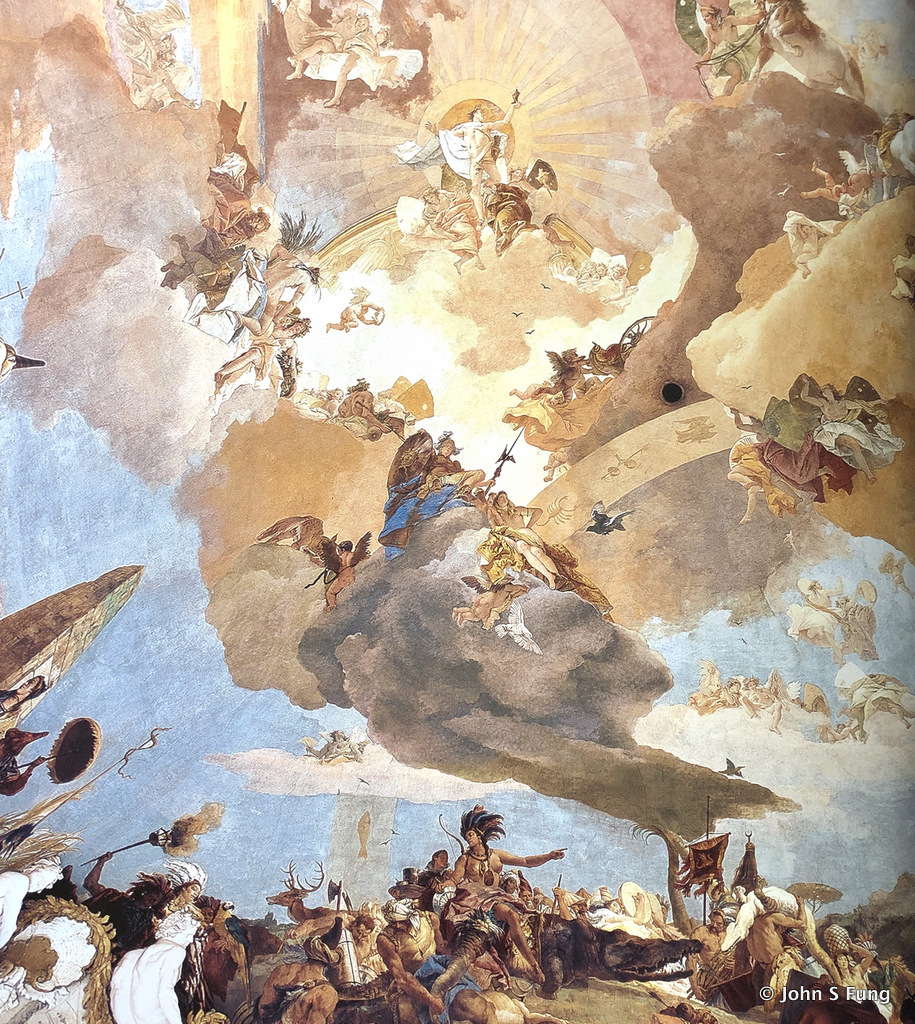
從美洲部分向上看。 Looking towards the America scene and the vault.
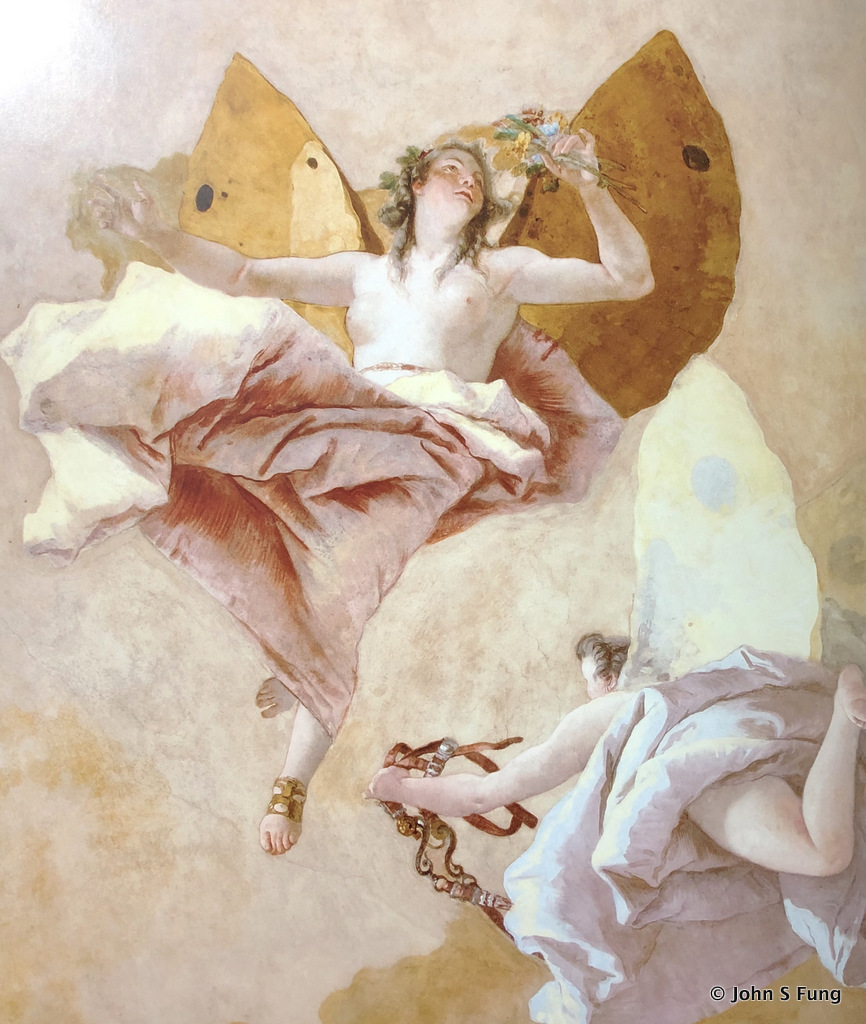
兩位帶蝴蝶翅膀(似是粉蝶)的時令女神/季節女神(Hours ,希臘神話的女神),他們一手拿花束,一手持馬韁繩。
Two Hours with butterfly wings bearing a bouquet and the bridle for a sun stallion. Hours or Horae were the goddesses of the seasons and the natural portions of time in Greek mythology.
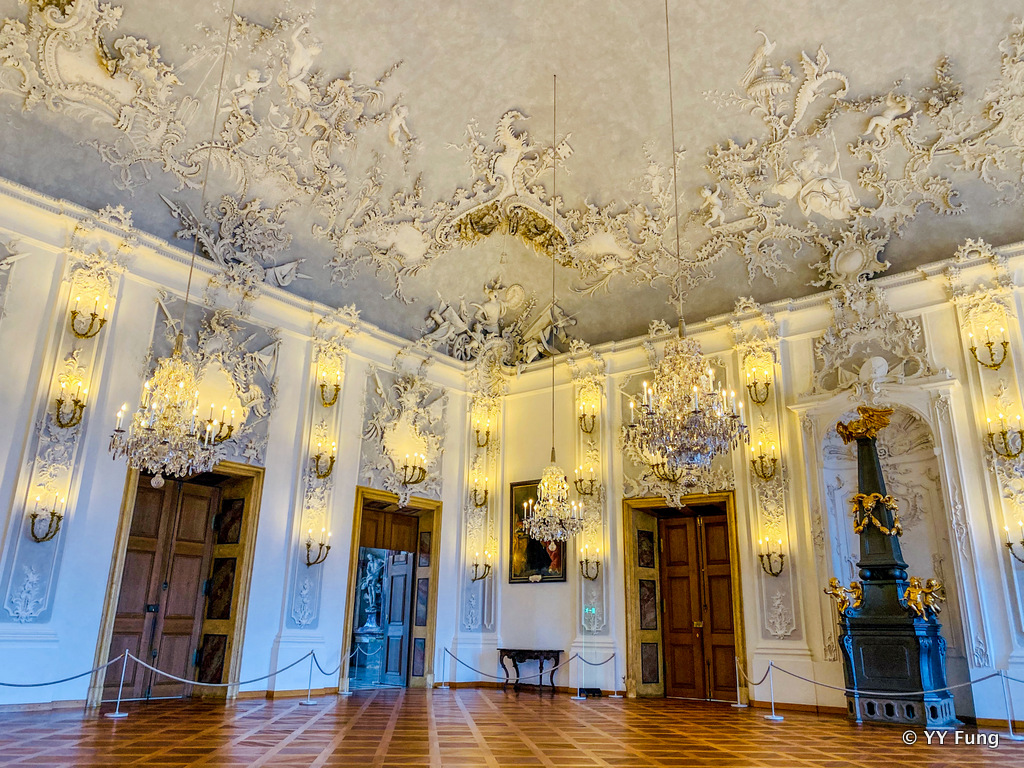
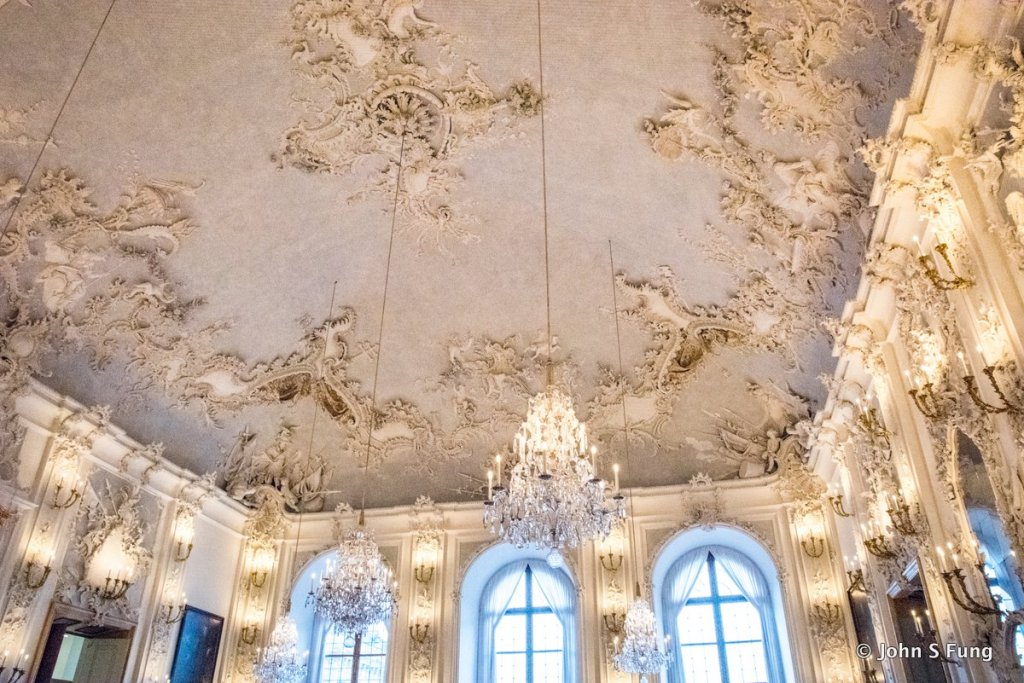
二樓南面的白室(White Hall) 。白室連接東面的皇室大㕔 Imperial Hall 和南面的居室。白室天花和牆上有 A. Bossi 在1744-45 所作的裝飾浮雕。為了彰顯皇室大廳的金碧輝煌,此室特意用上低調的白色。
The photo below shows the white Hall with elaborate stucco work by A Bossi in 1744-45.
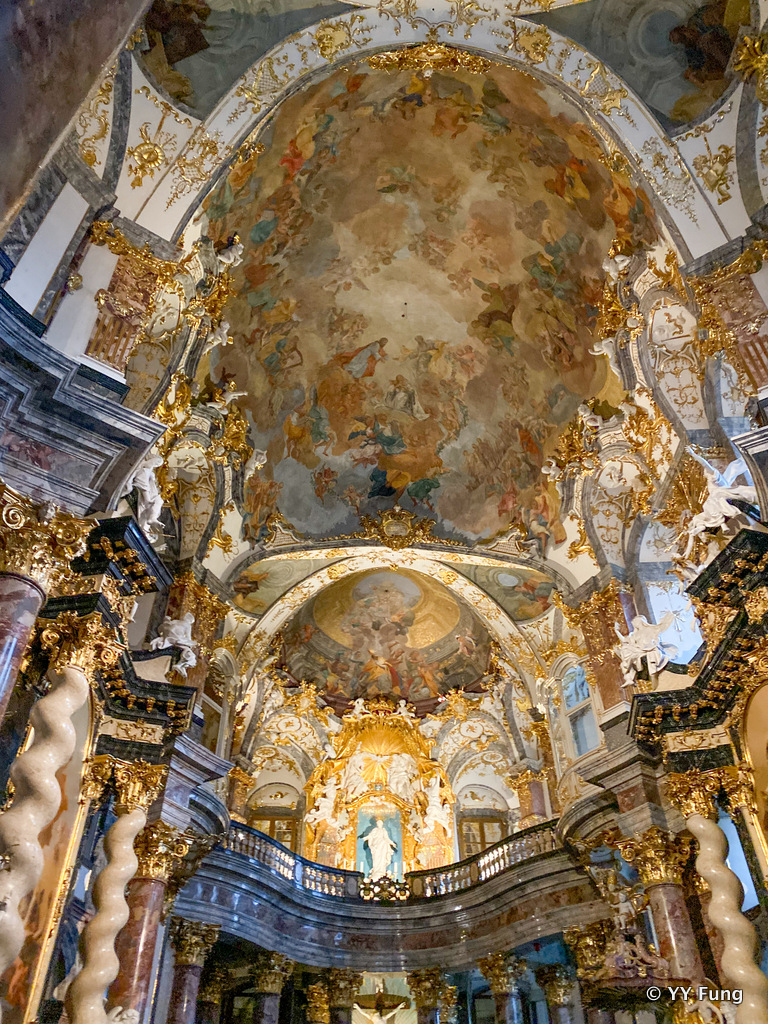
皇宮內禮拜堂。站在中庭望向天花。建築師紐曼 Neumann 以善於溶合各類風格而創出特色的巴洛式建築聞名。他在此禮拜堂中,在一長方型內放入三個橢圓造型,非常特別。
Court chapel, looking towards the vault. Balthasar Neumann (1687-1753), was a German architect developed a refined brand of Baroque architecture, inserted into what was actually a rectangular space three adjoining ovals one behind the other.
我們南北向來回看了一系列的室間,有皇家臥室、客室、坐臥間、讌會間,都是雕樑畫棟,大多都是洛可可式的,可惜都忘記了。幸好買了另一本書,閒時可重溫。
We toured through an array of lavishly decorated rooms, be it imperial apartment, guest room or special function room, I don’t remember a thing after the White Hall. My impression was that Prince-Bishop Johann Philipp Franz von Schonborn, who initiated the building of the Residence, as the Duke of Franconia, must have been very successful in running the state of Franconia. I’m not sure if his was a braggadocios who wanted to showoff his sumptuous taste in art and architecture.
維爾茨堡市內遊 City Walk
我們開始市內遊的時候已是下午四時,天色已暗。We began our city walk tour at around 4pm.
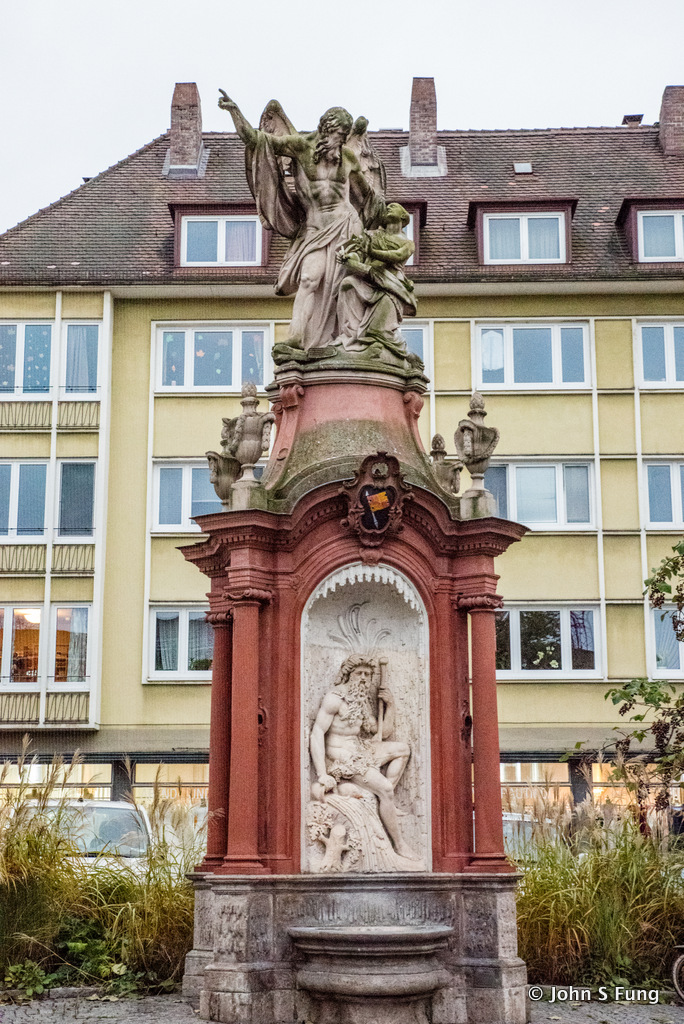
Chrono fountain, 原來是一口井,在1770 -1772 年建成現今模樣。Chronos 是希臘神話的時間的神。在整座塑像最上方有翅的男士, 正用手指指向主教府方向的就是 Chrono 神,而小水池上方用石灰石雕成的就是美恩河的河神 Moenus。
Chronobrunnen (Chrono fountain) or Moenusbrunnen (Moenus fountain), Chronos is the “god of time”, and Moenus is the Latin name for Main, also meant the river god, the “Father Main”. Above the fountain bowl is Moenus, the river god while on top is a man with wings (Chronos, the god of time) pointing to the residence.
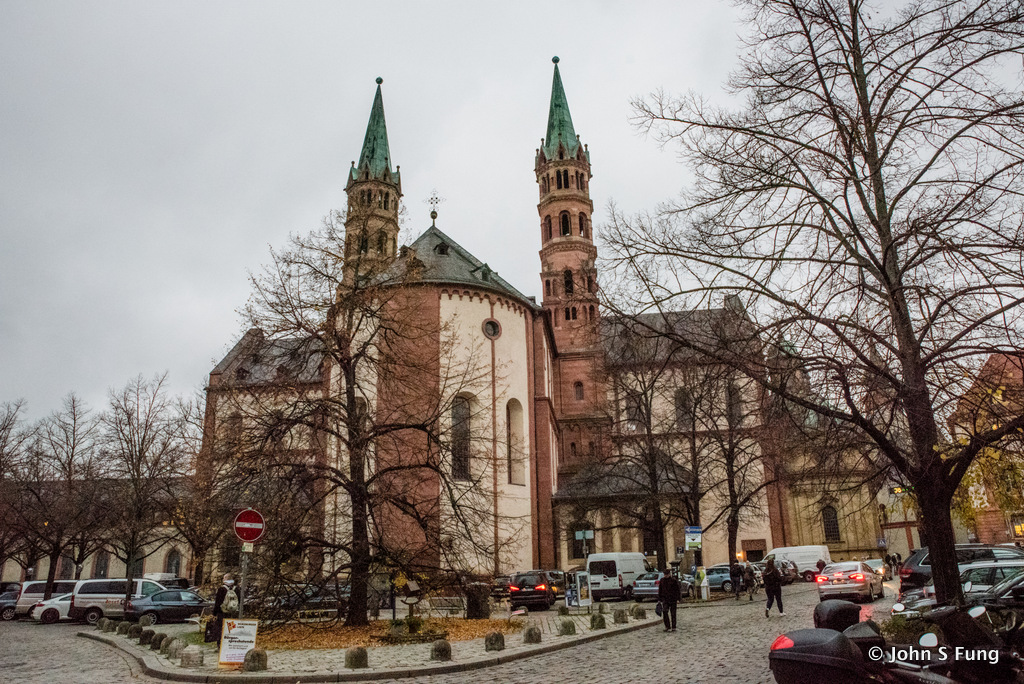
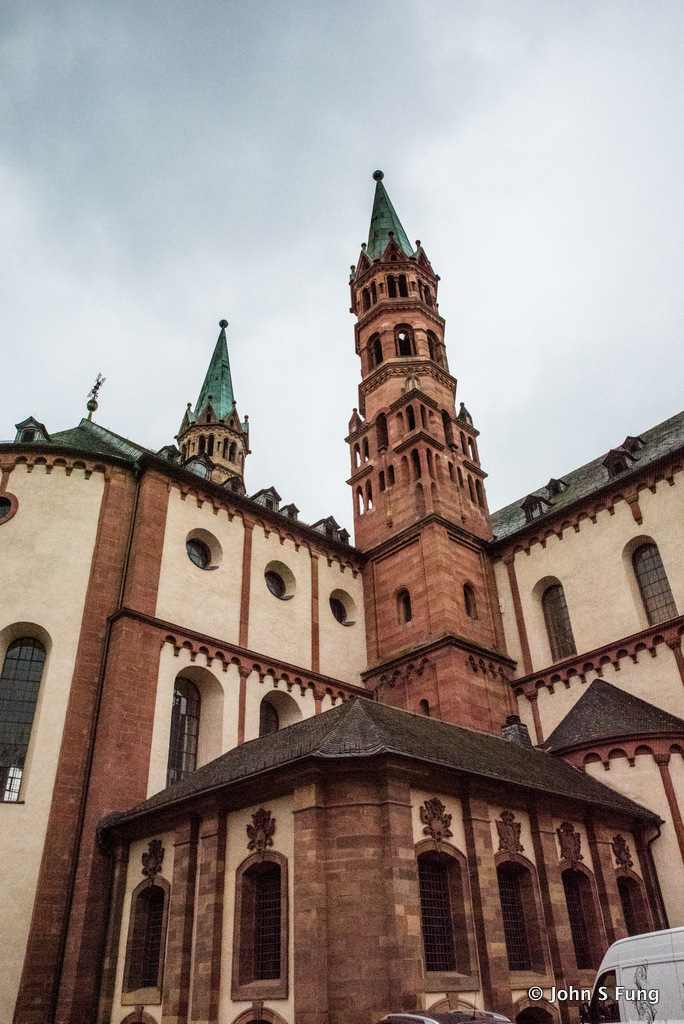
由水泉向下行,就見到維爾茨堡大教堂的雙塔和半圓祭壇/詩班外面。
The apse.choir and the towers of Wurzburg Cathedral.
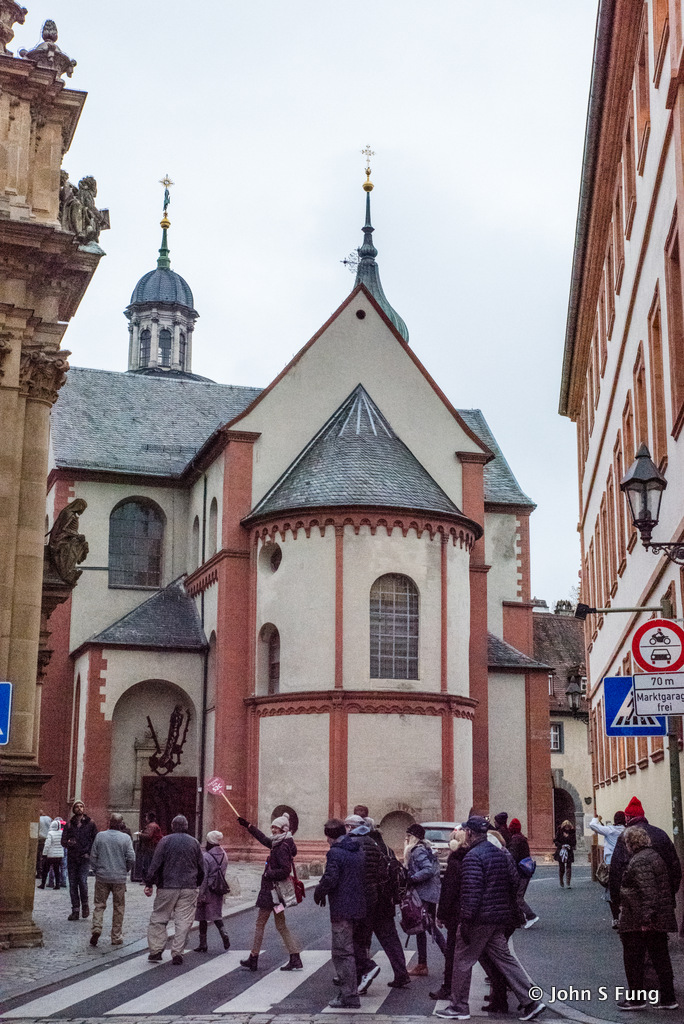
新教堂詩班位置外可見其羅馬式建築。
The eastern choir in Romanesque style of Neumünster Collegiate church.
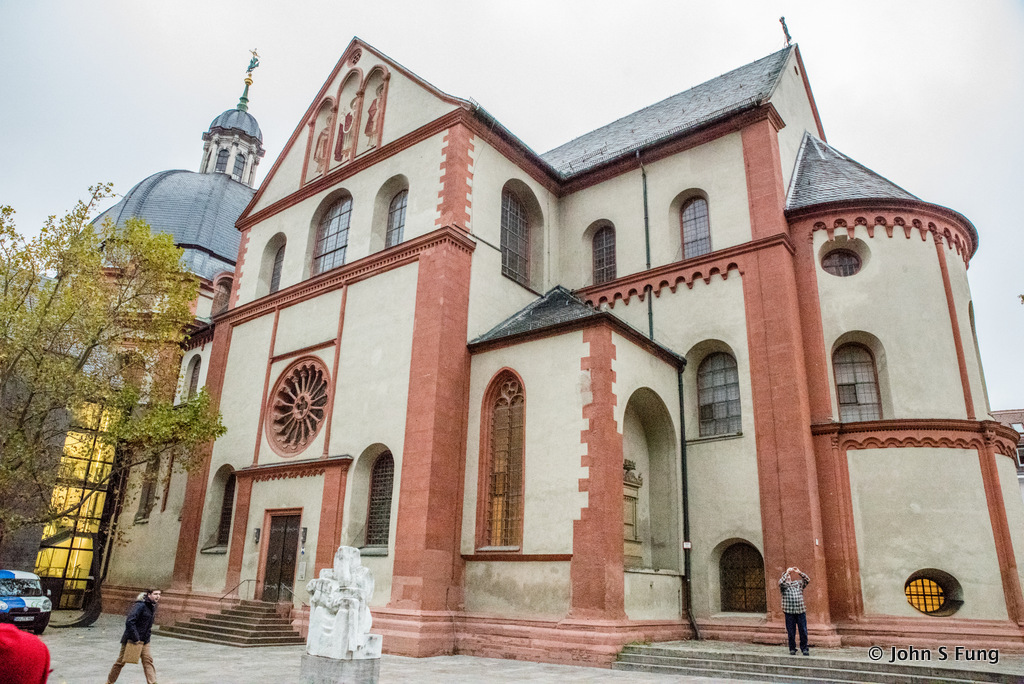
The church dates back to 1065. The original church was built in Romanesque style, and later was renovated and expanded (1180-1250).
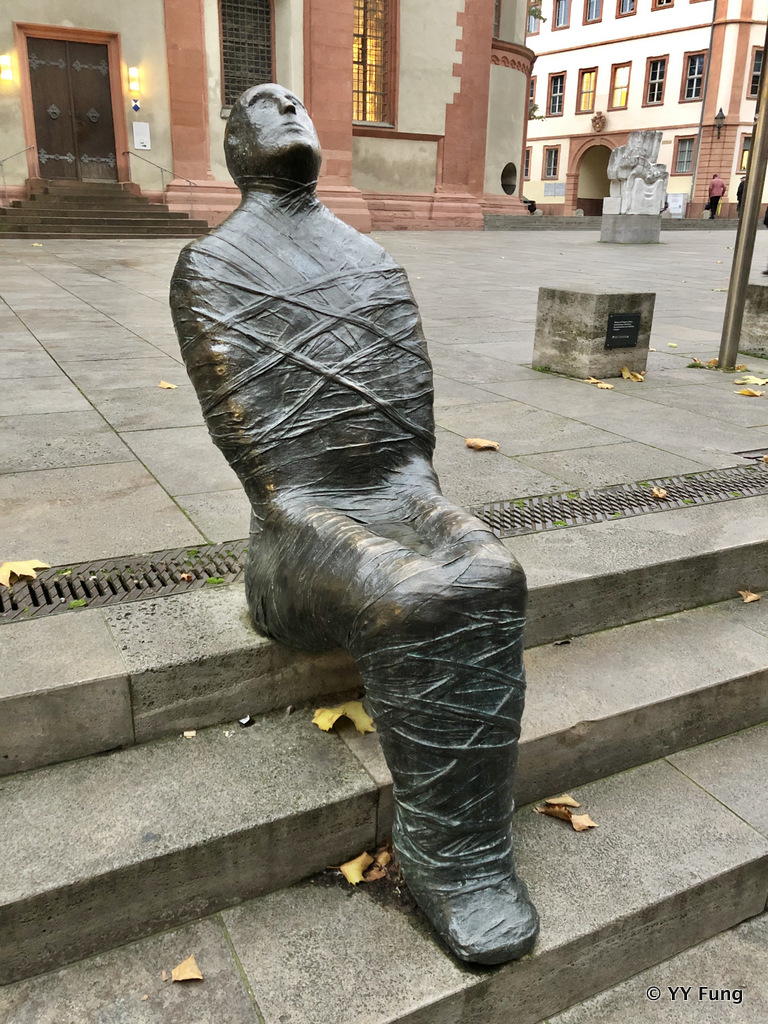
This statue, called “handrail”, is sitting in the open area between the Cathedral and the Newmunster Church. The statue, bound in red tape, is placed there in protest of a dictated handrail installation on the stairs.
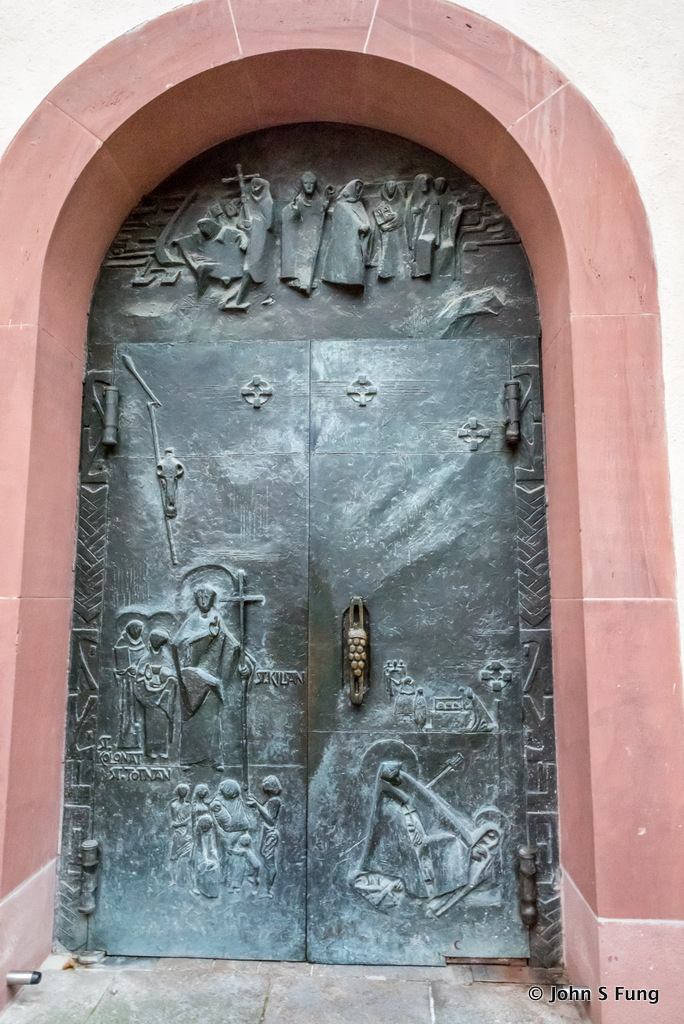
導遊帶我們到大教堂和新教堂之間的小廣場,大教堂這側門十分吸引我,趁著他講解的空檔,我快閃進教堂裡看一看。
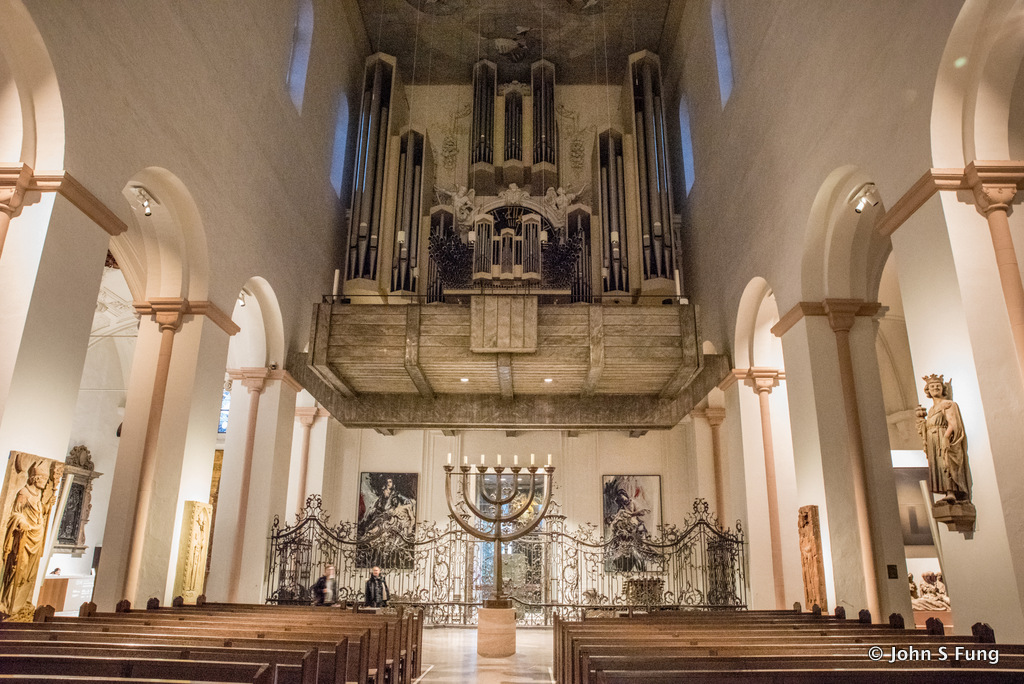
The gate to the nave of the Cathedral caught my eyes, I sneaked in and checked out the nave while our group was outside.
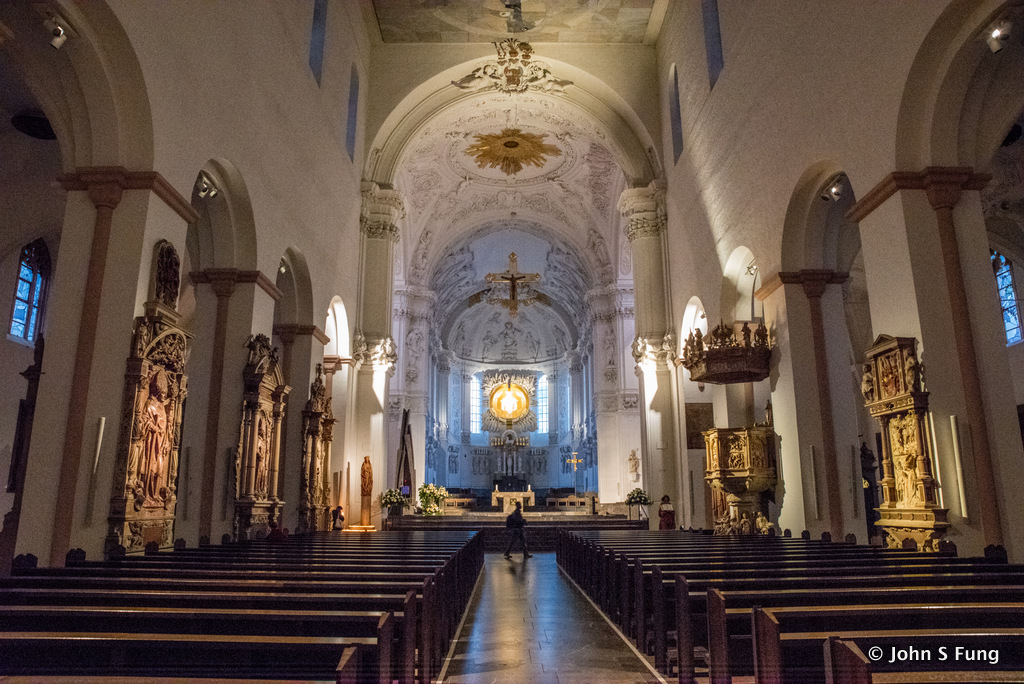
Standing in the nave looking to the apse and choir. The church suffered severe damage during Second World War, the current church was rebuilt in the ’50s.
進得門來,站在教堂中庭向祭壇望去。教堂在二戰空襲時受損嚴重,現在的教堂是50年代重建的。
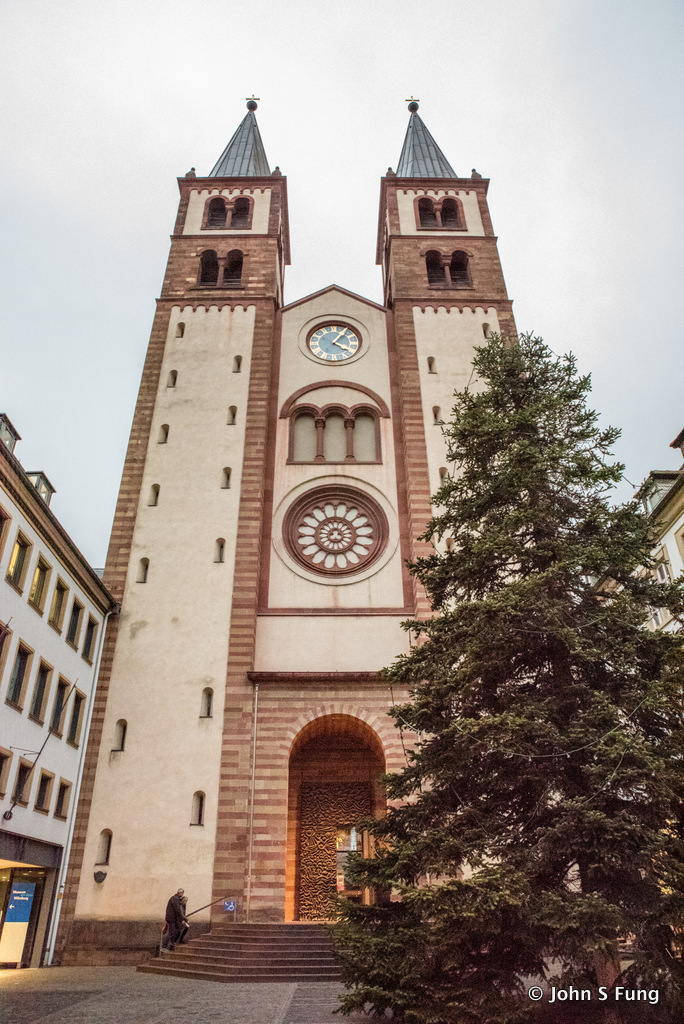
維爾茨堡大教堂的西面立面。
The west facade of Wurzburg Cathedral.
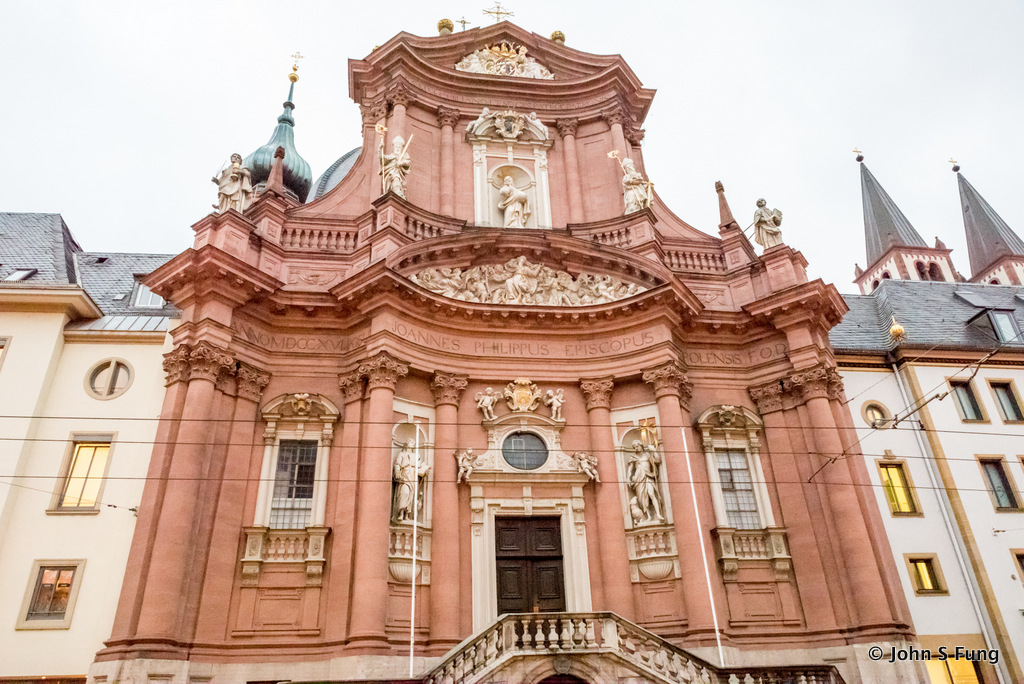
新教堂的西立面,巴洛式的教堂。教堂始建於1065,屬羅馬式建築, 後經數度擴張,改建。至1711-1716才改成現今的模樣。
New Munster Church (Neumunster). The church dates back to 1065. The orginal church was built in Romanesque style, and later was renovated and expanded (1180-1250). The west facade of was built 1711 to 1716 by Josef Greising in Baroque style.
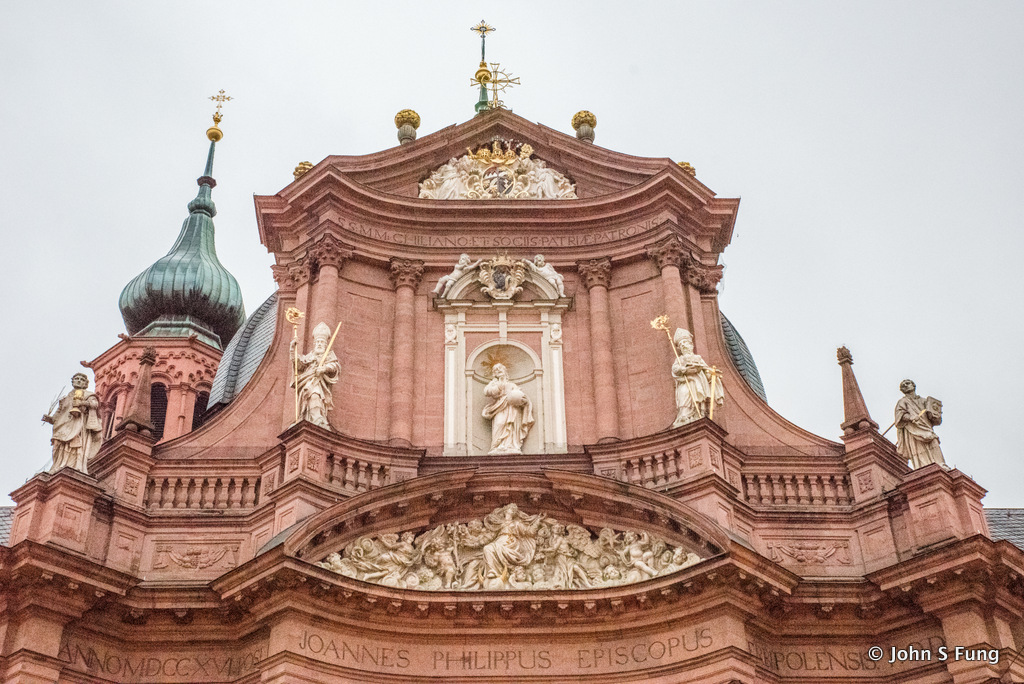
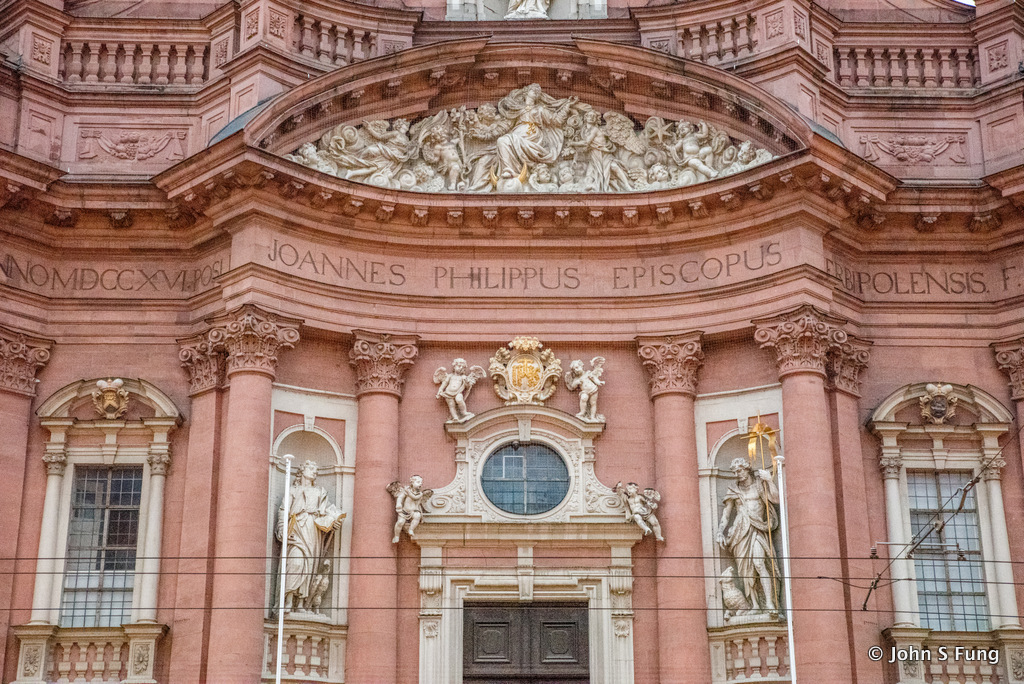
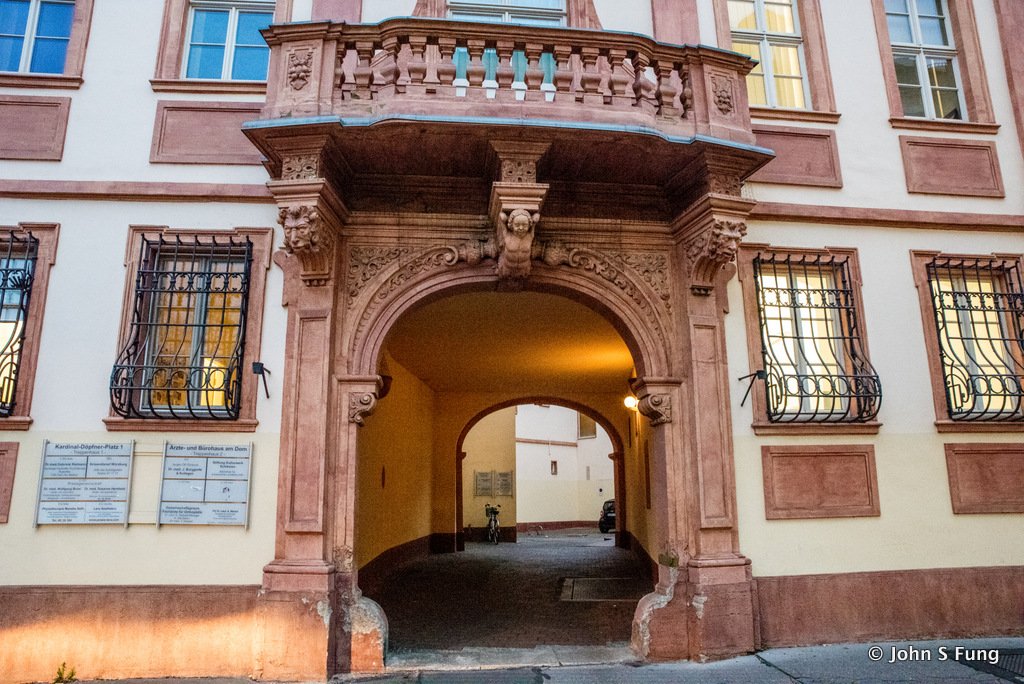
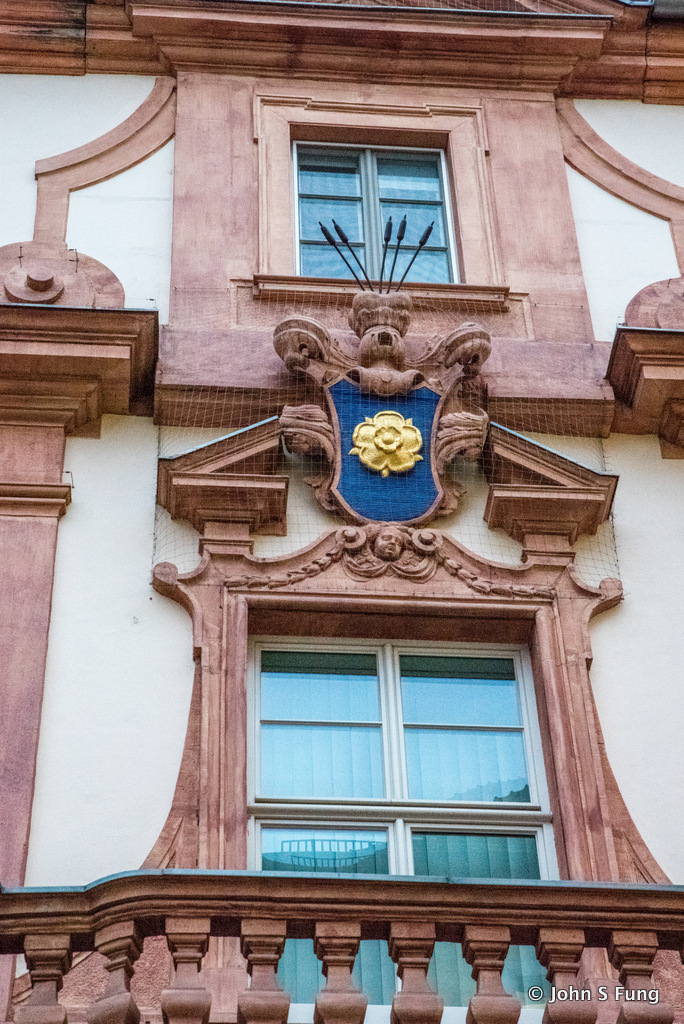
喜歡這些建築元素,資料在搜集中。
Love these architectural elements, I don’t know any history of them.
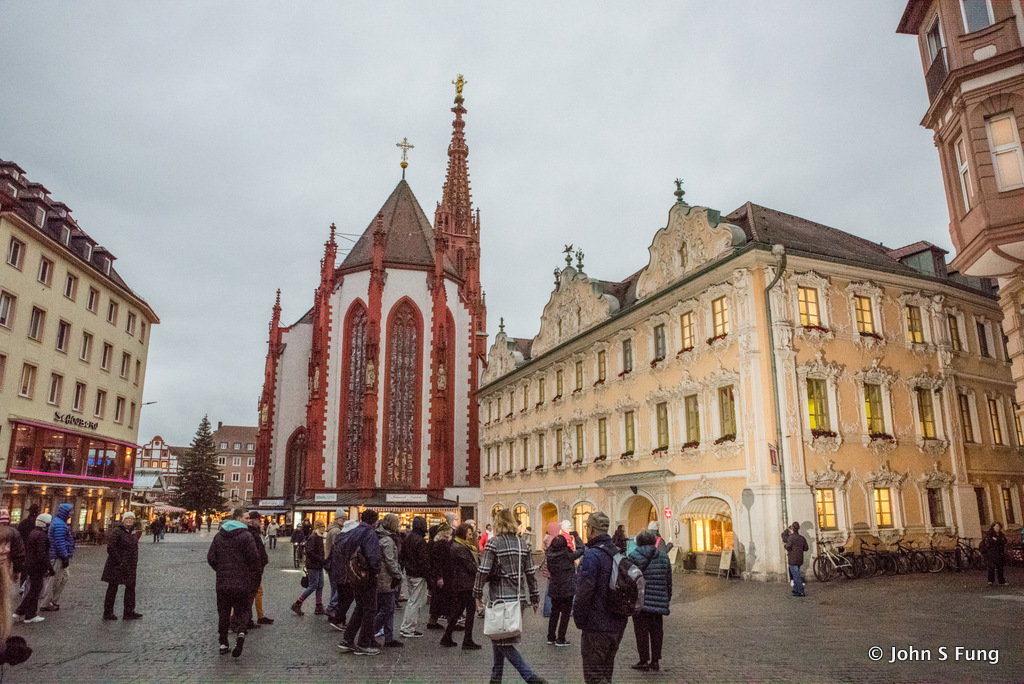
老市場廣場。 The old market place square.
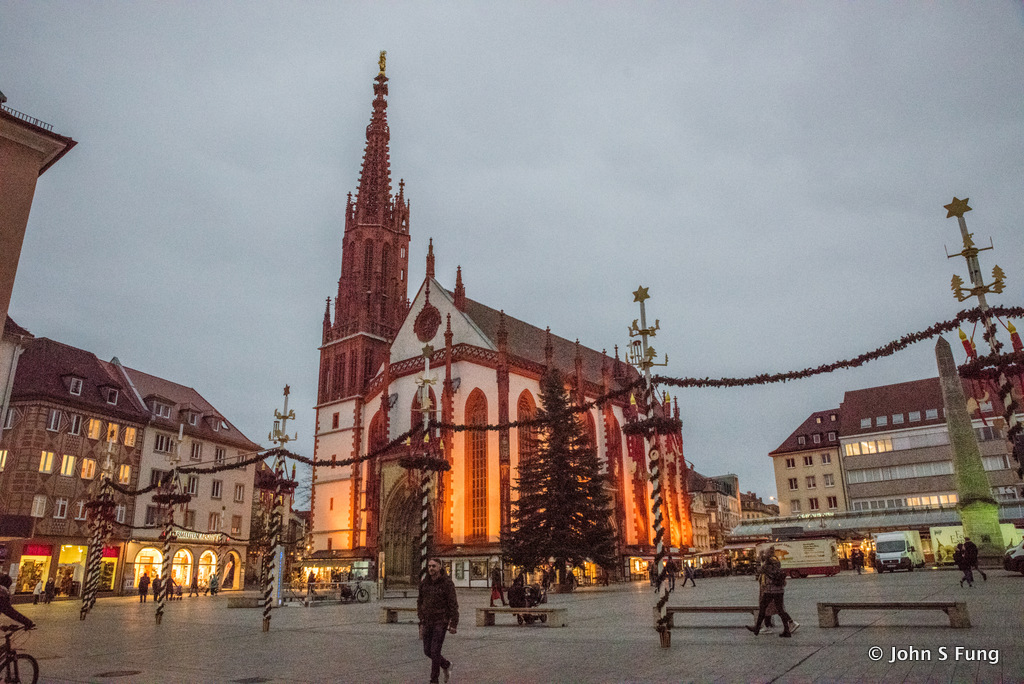
聖瑪利禮拜堂。 Mary’s Chapel.
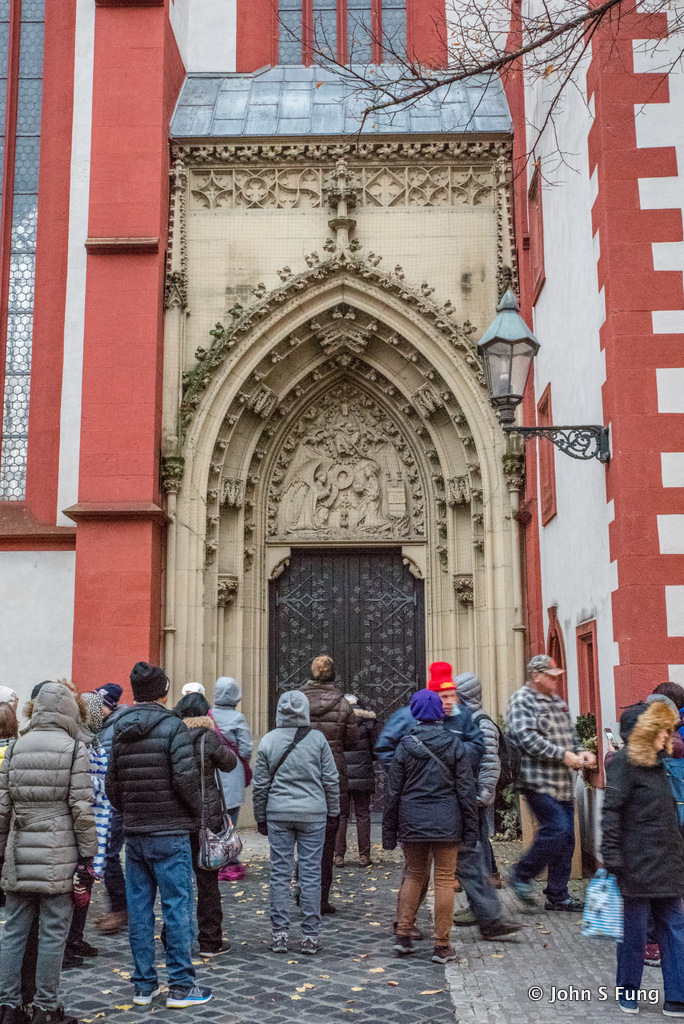
導遊把我們帶到瑪利禮拜堂的側面,聚焦在這個門三角牆(tympanum) 上的一幅浮雕。浮雕具象的描述天使報喜當兒發生的事。聖瑪利跪於右方,面對來報喜的天使加百列(Gabriel), 就在加百列報喜時,上方的上帝用一支管將耶蘇送至聖瑪利左耳,完成不失童貞的受孕。
Our guide led us to the north door of Mary’s Chapel. She pointed to a famous relief on the tympanum , the triangular decorative wall above the door, known as “Adam and Eve”. This relief depicts Annunciation – “Concepio per aurem” in a graphic visual way.
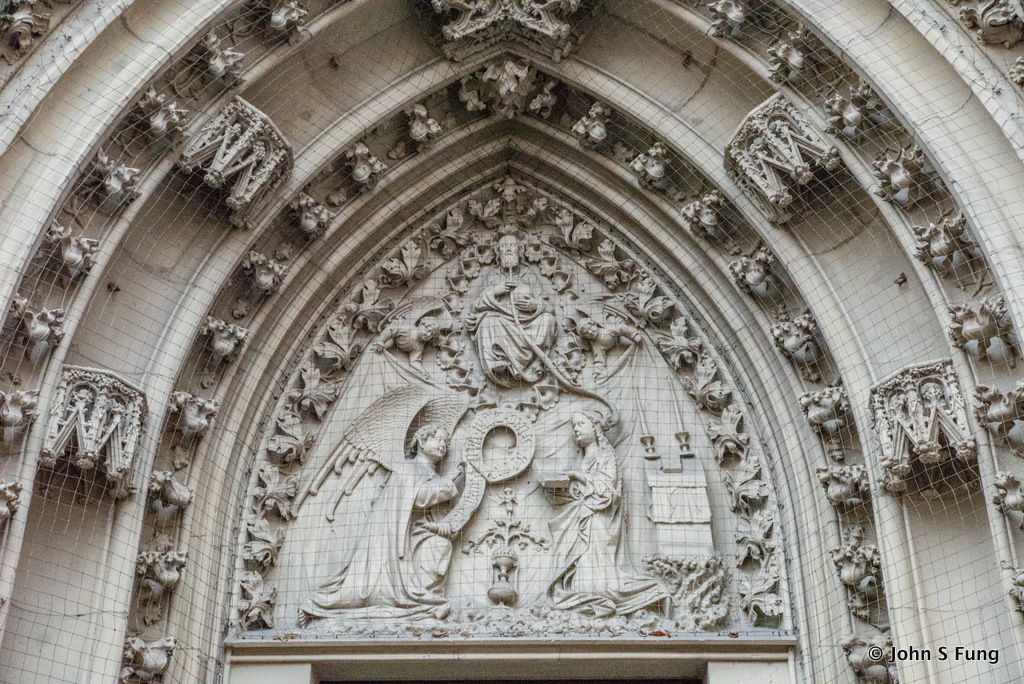
Mary is kneeling down in front of the angel Gabriel who announces that Mary was the chosen one, God the father, above them, is blowing the baby, Jesus, down a tube into Mary’s left ear. Mary was impregnated at the instant of hearing the angel’s heavenly message announcing her that she would be mother of the Son of God.
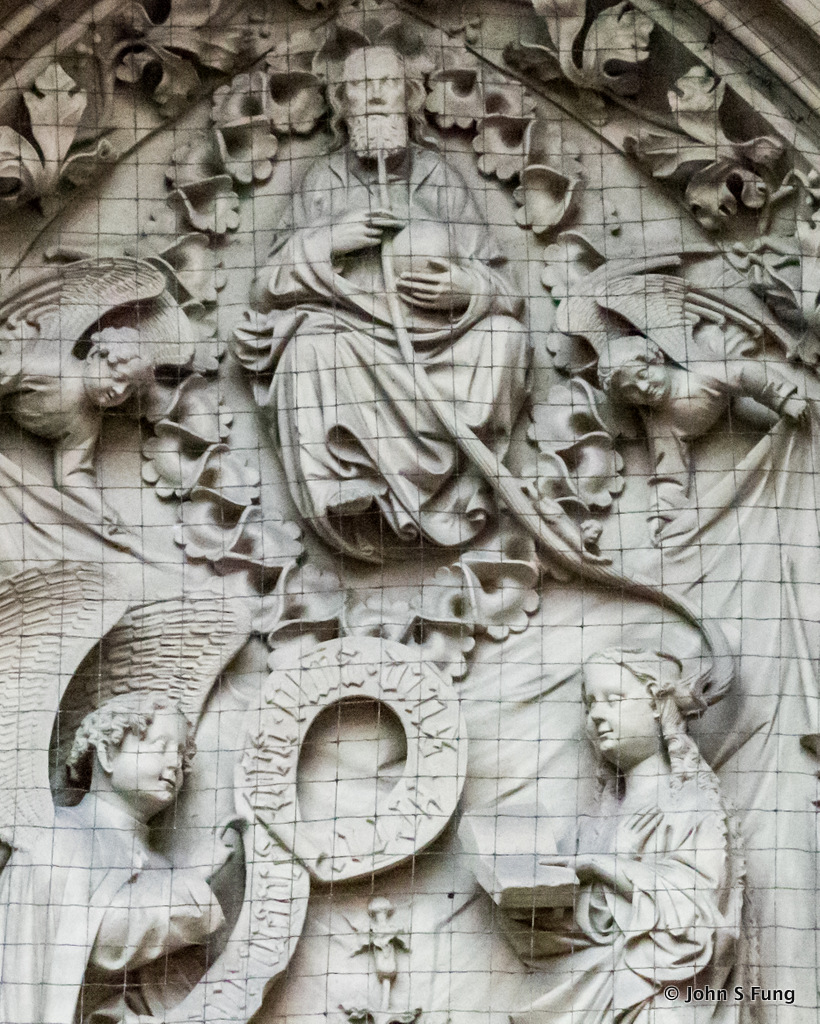
上帝用一支管將耶蘇送至聖瑪利左耳,完成不失童貞的受孕。
God is blowing the baby, Jesus, down a tube into Mary’s left ear. Note the baby Jesus at the middle of the tube.
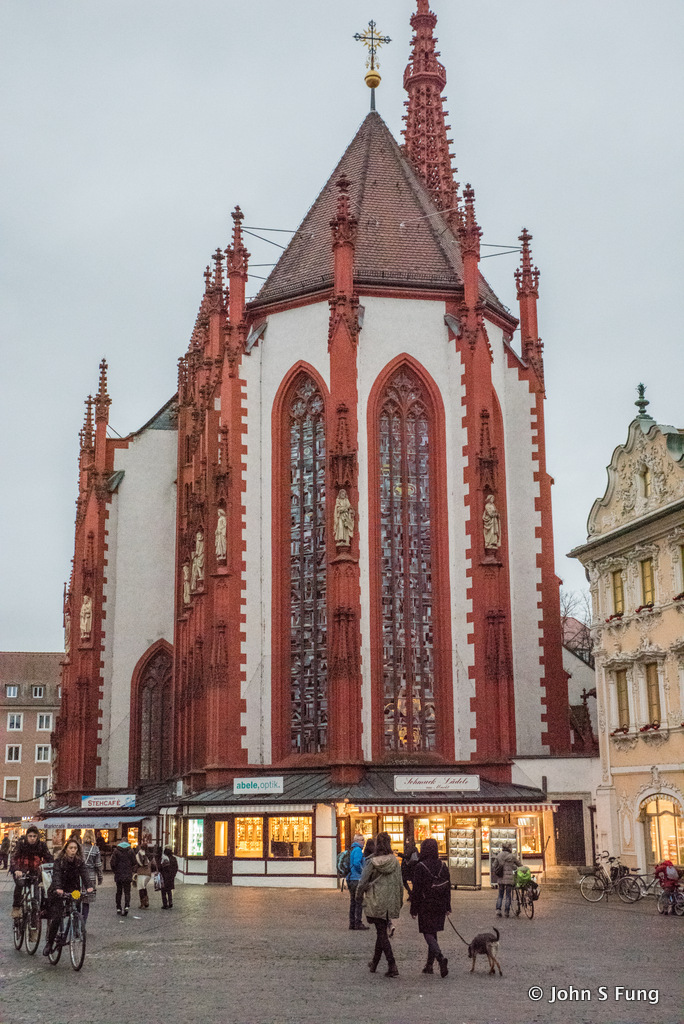
我們沒有時間參觀聖瑪利禮拜堂。據說二次大戰戰火中破壞嚴重,現建築是上世紀五十年代重建的。
Mary’s Chapel, we didn’t have a chance to visit the inside of the chapel. However, it was said that they the chapel was destroyed during the air-raid in second world war and was rebuilt in the ’50s.
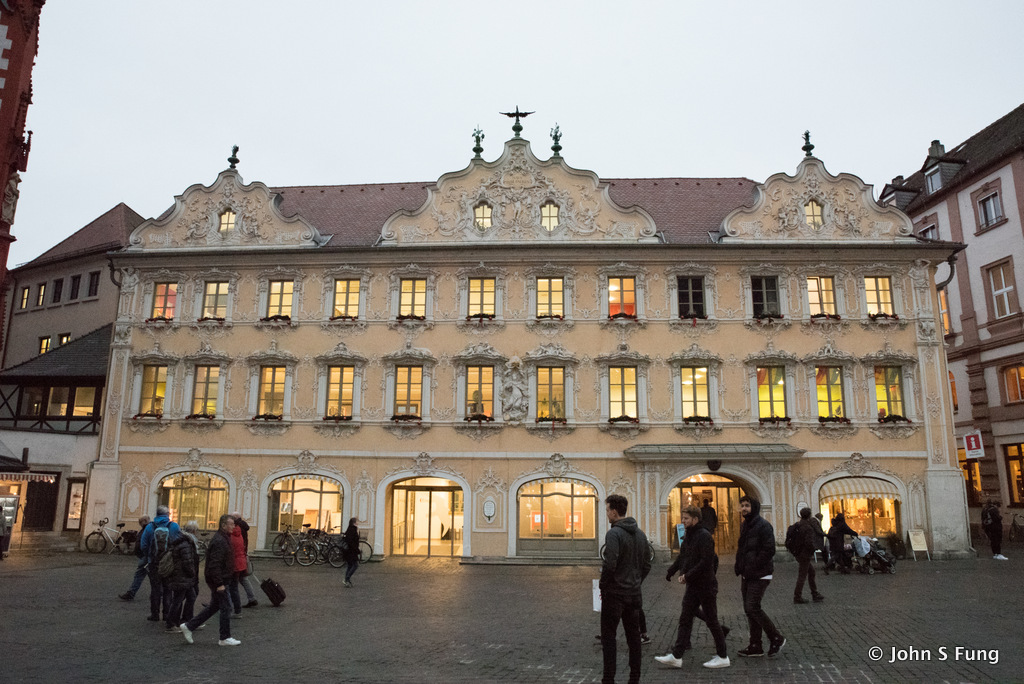
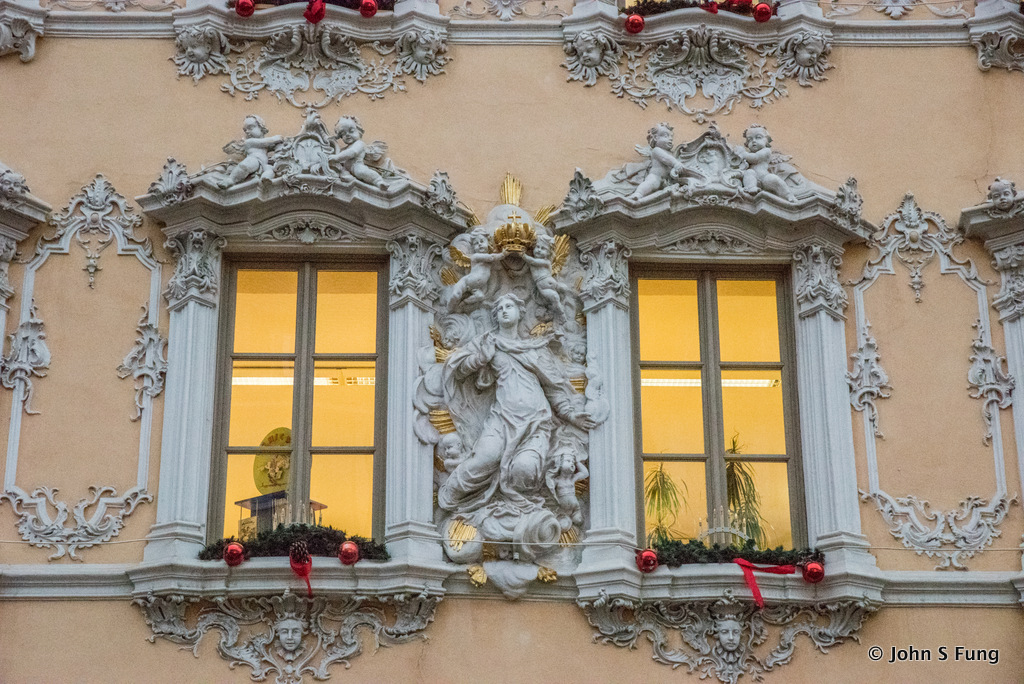
廣場旁有一憧米色的建築,立面上有特別漂亮的洛可可式的拉毛粉飾(stucco work). 這巴洛式的建築名為隼鷹屋。現用作圖書館和遊客中心。
Next to the Mary’s Chapel, there is a beautiful Baroque building with lightly beige façade with exceptional stucco work, called Falcon House (Falkenhaus) . It is a library and a tourist information center.
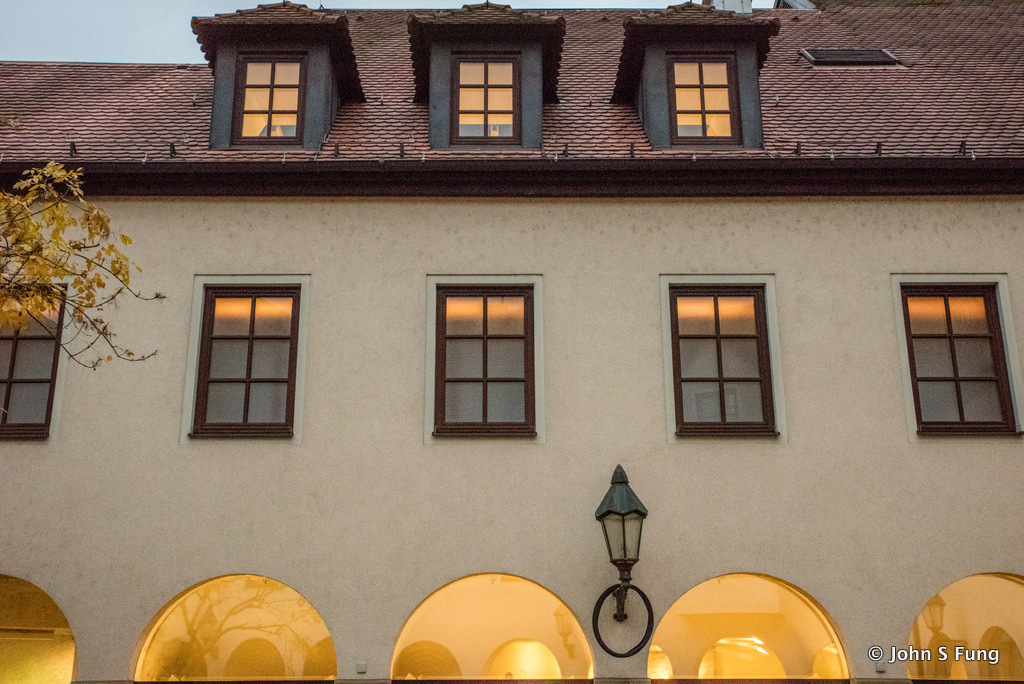
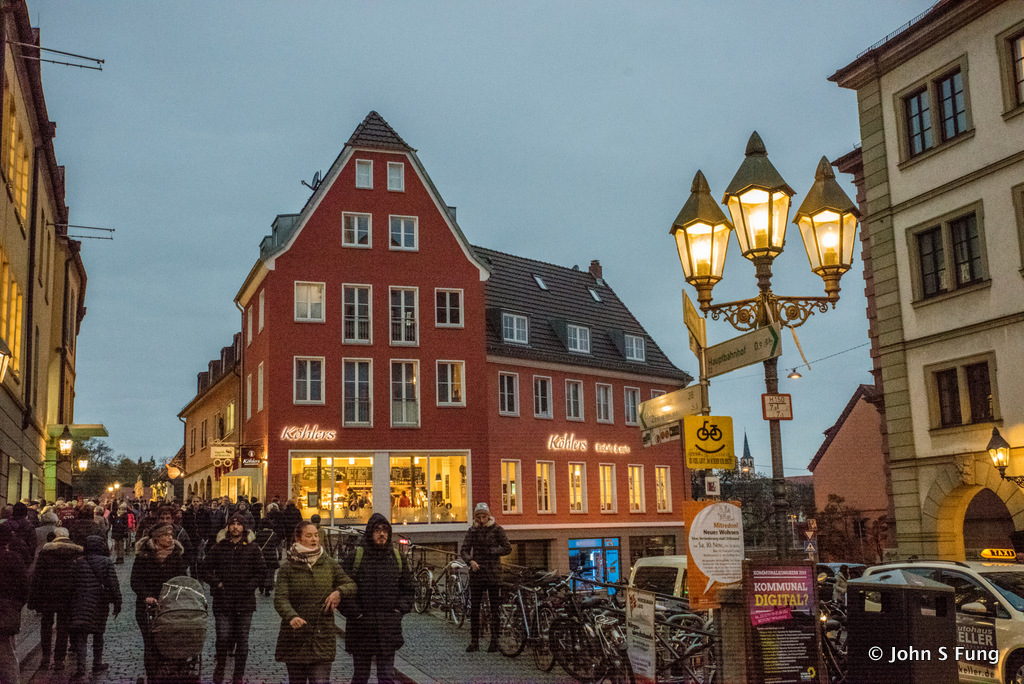
It was getting dark, we missed a lot of little things on the way to the Main Bridge. However, the atmosphere with the lights on was romantic.
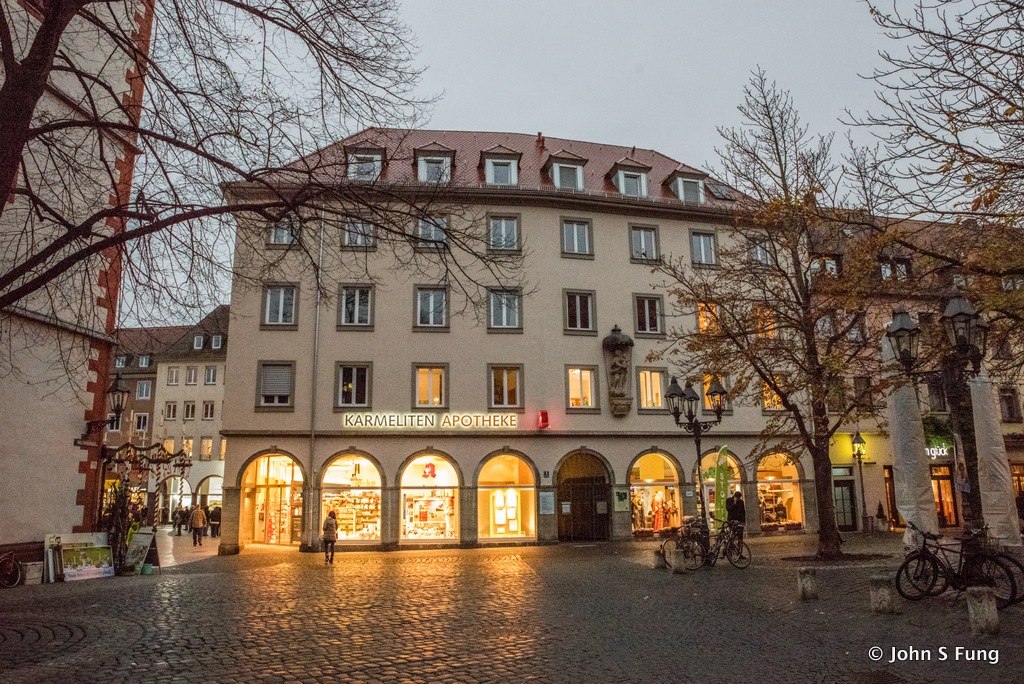
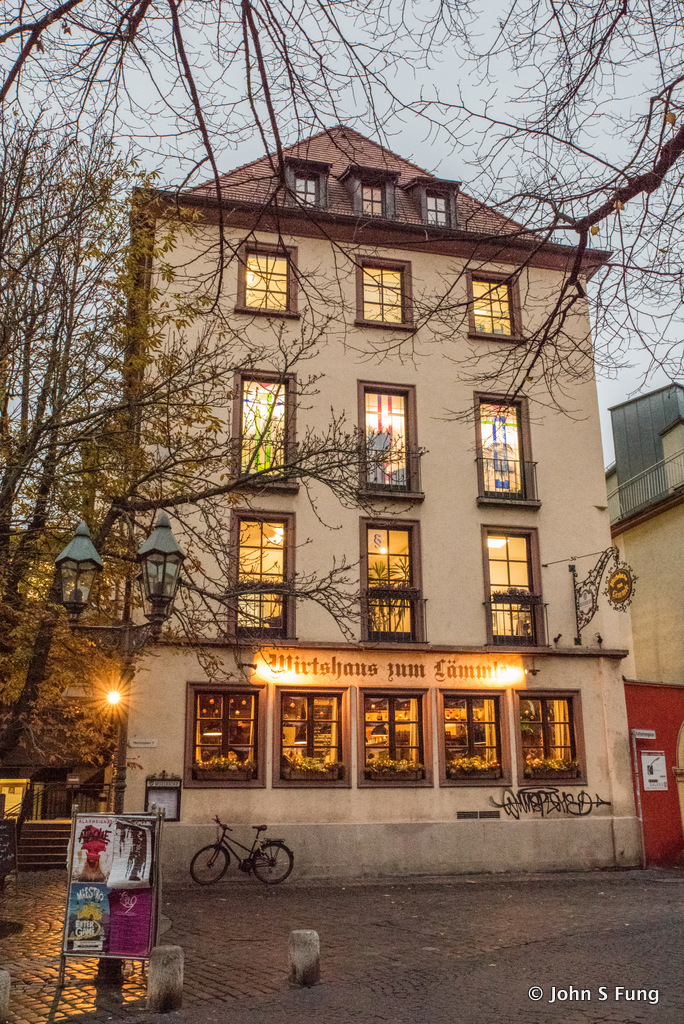
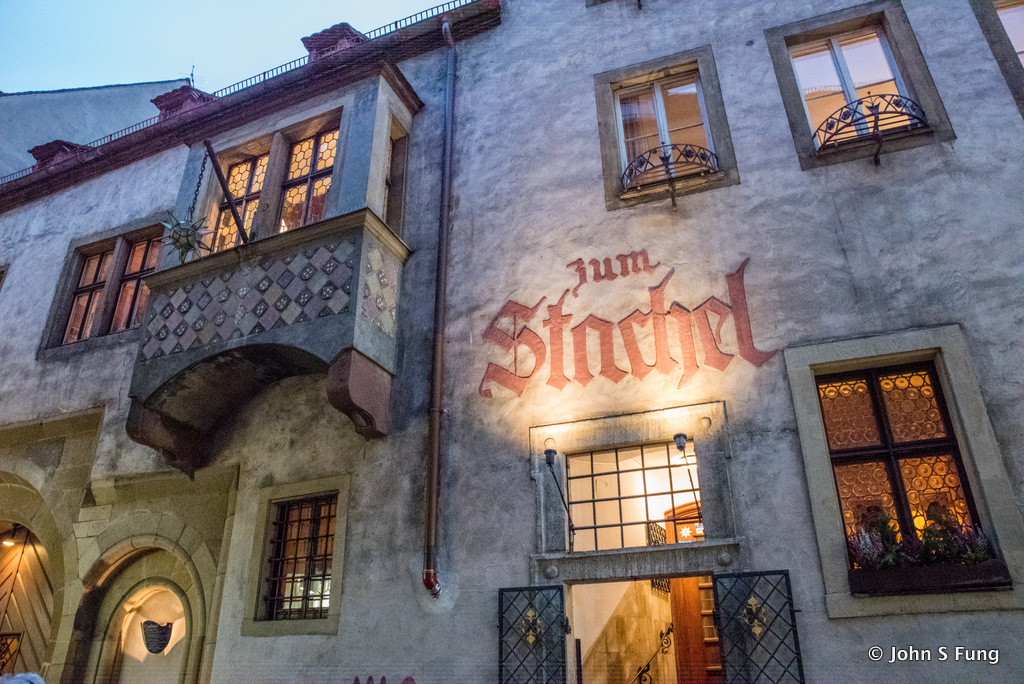
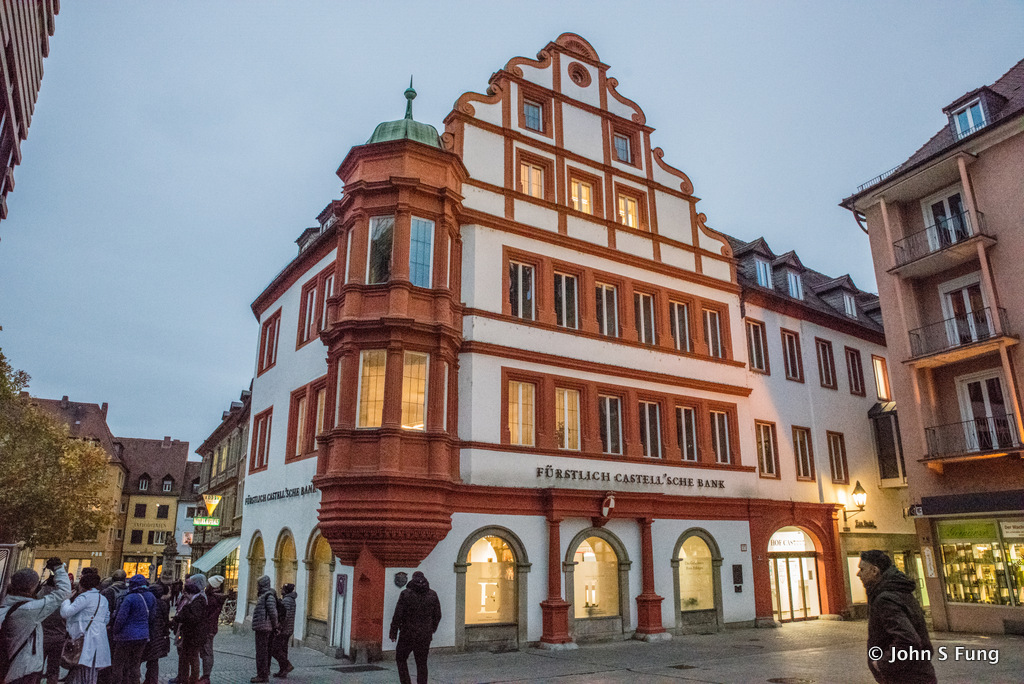
Stachel 酒家,是德國老牌客棧之一。1413年漢斯威連和妻子買下此店,改為餐廳。
Zum Stachel, Stachel Wine House is one of the oldest German inns in Würzburg. In 1413 the butcher Hanns Rehlein and his wife and landlady Margarete bought the “Gressenhof” for 200 guldens and founded a gastronomic tradition. (Wikipedia)
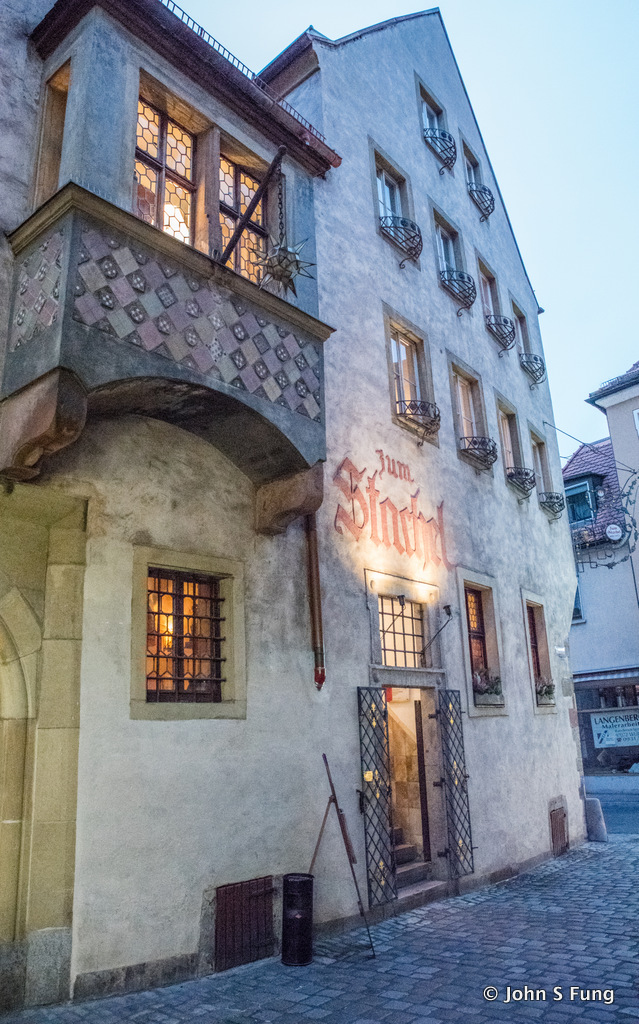
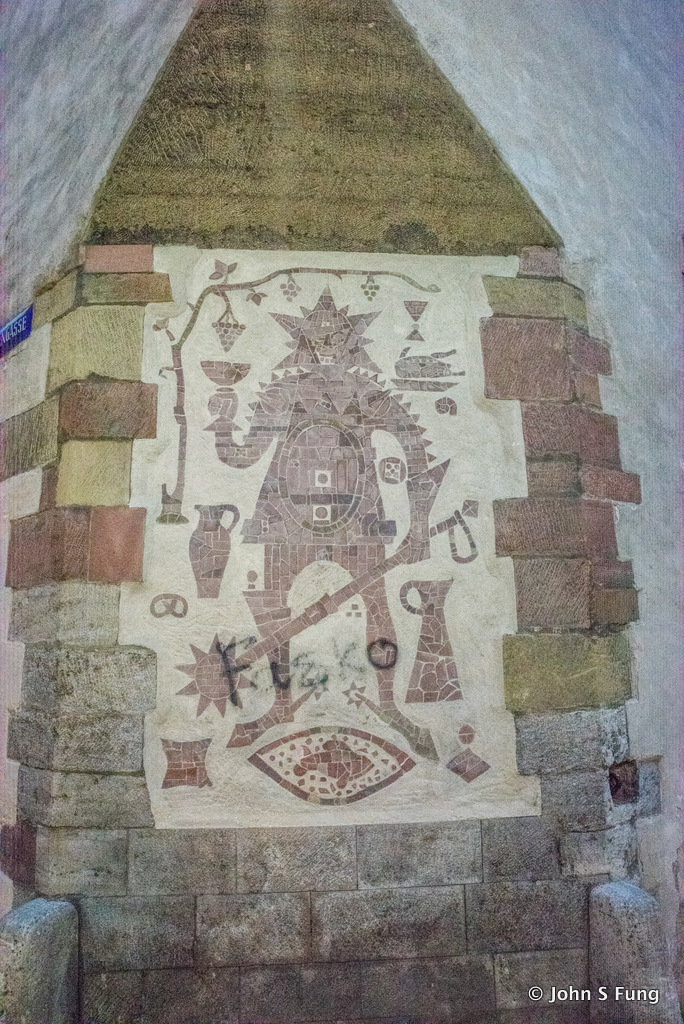
餐廳的轉角處,有此嵌畫。
At the corner of Zum Stachel, there is an interesting art work.
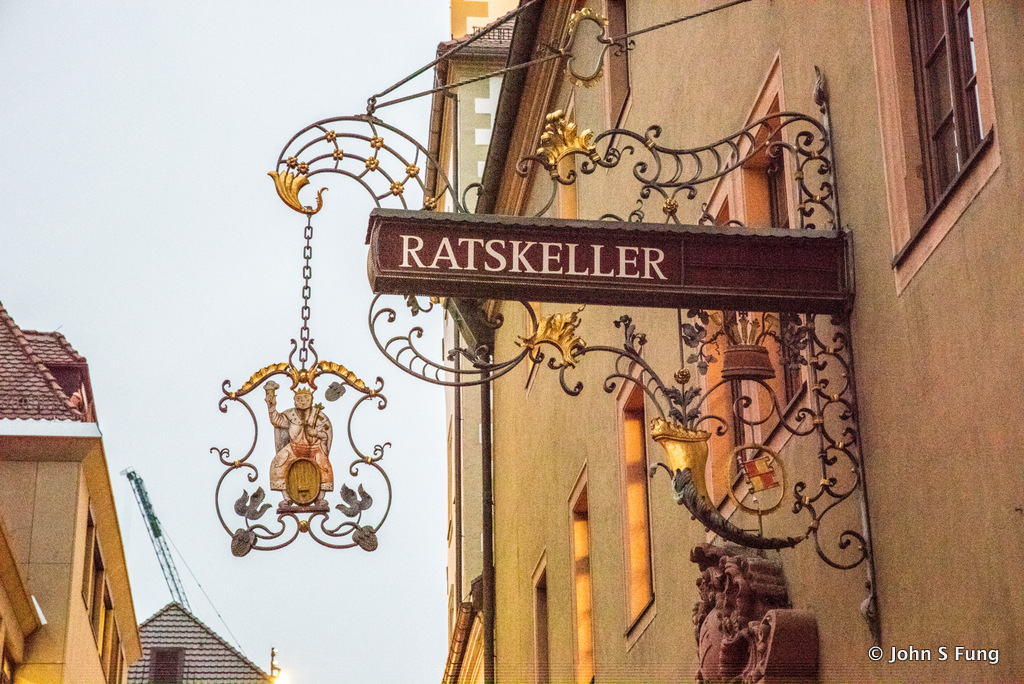
酒吧 Ratskeller 的招牌。名字原意指市政廳的地窖,通常是指市政廳地庫或附近的酒吧/餐廳。
The beautiful sign of Ratskeller (historically Rathskeller, in German, “council’s cellar”) which is a bar or restaurant located in the basement of a city hall or nearby.
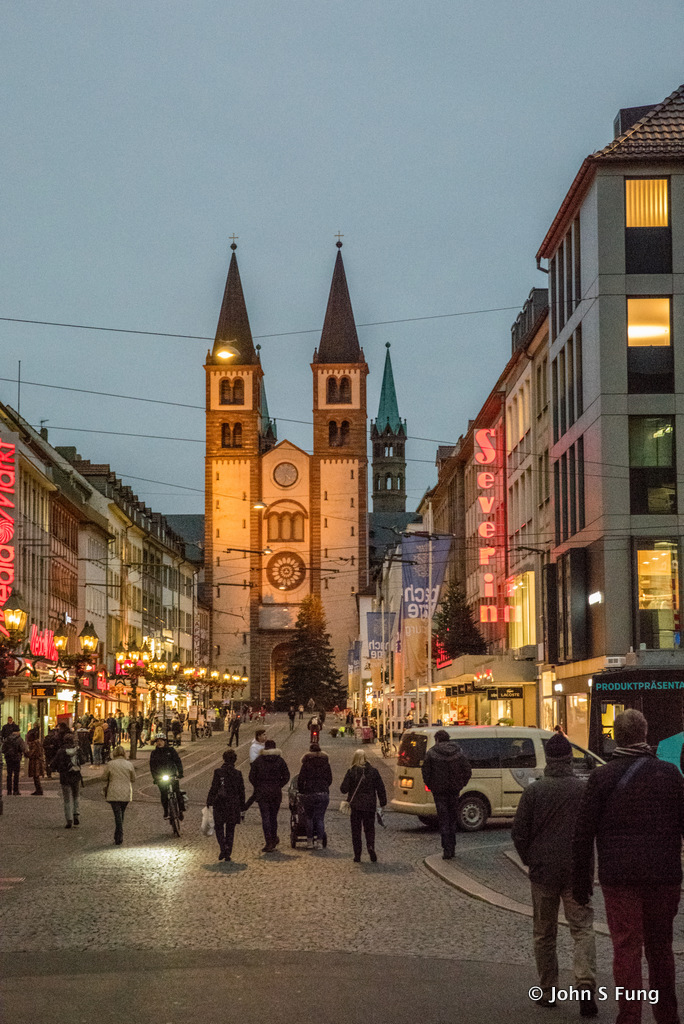
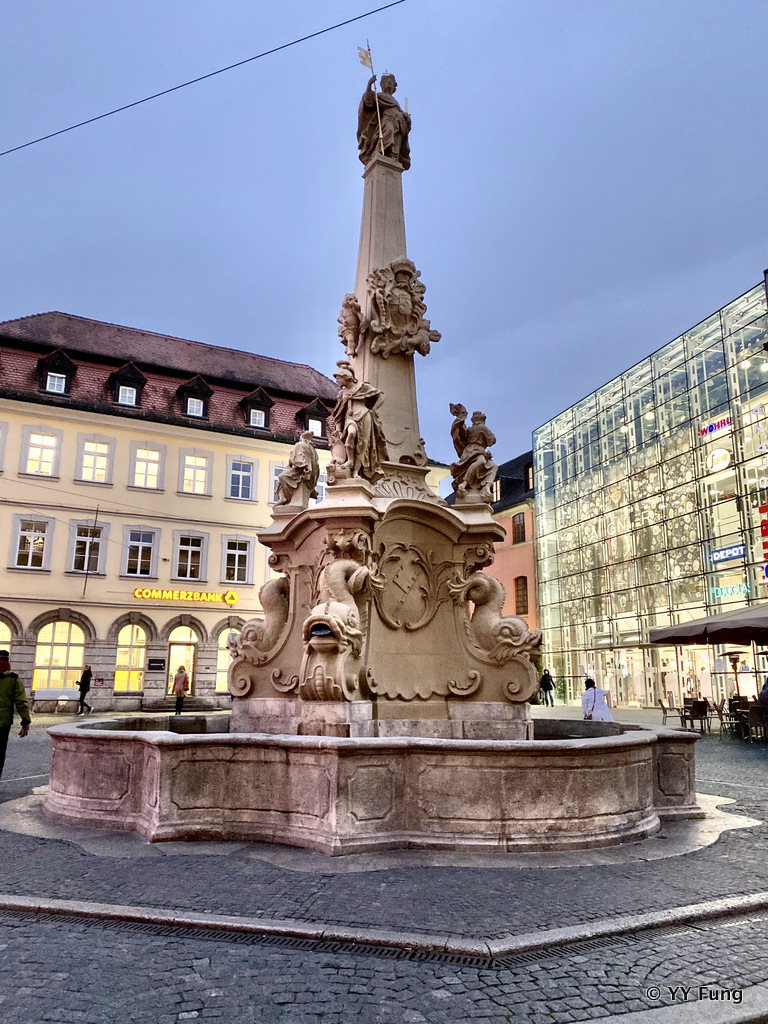
A historic fountain – Four Tubes Fountain, dates back to 1766. On top of the obelisk stands a statue of Franconia, holding the Frankish storm flag (Rennfähnlein)
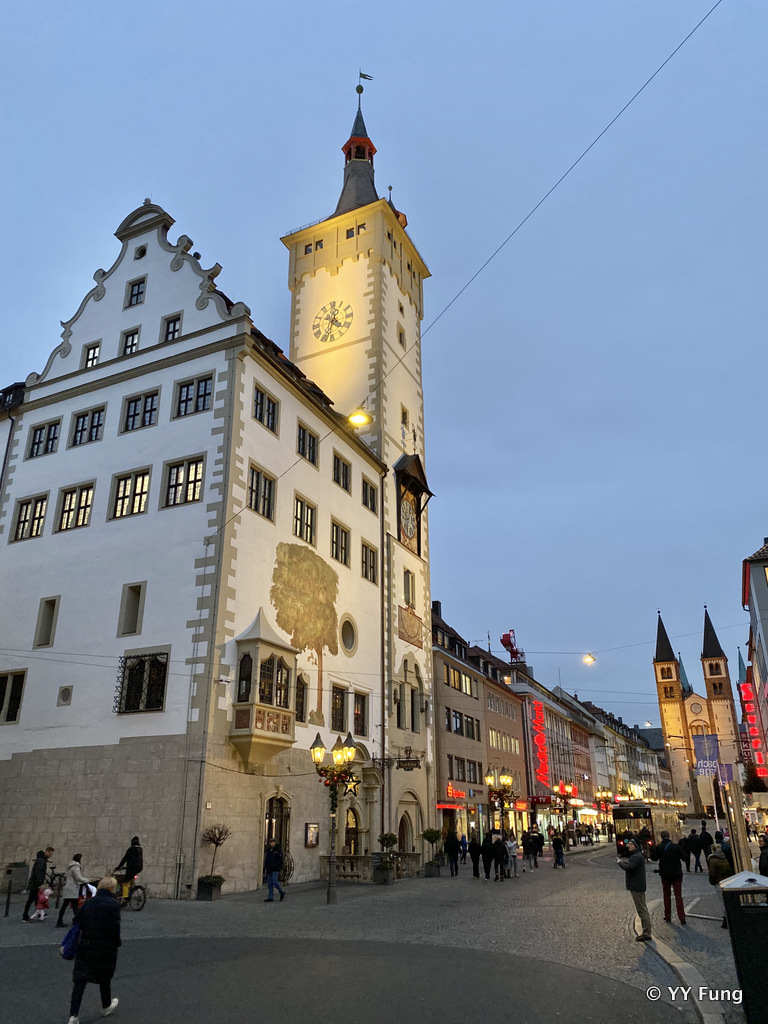
The Old City Hall.
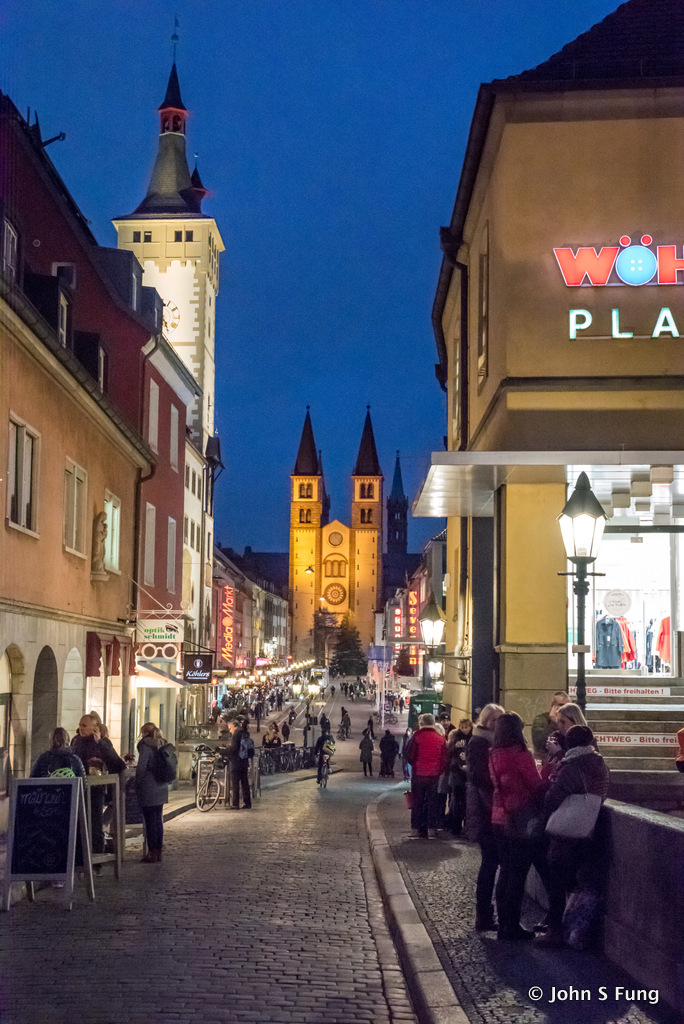
Domstraße (Cathedral street) of the old town, as seen from the Old Bridge. The tower of the Old City Hall is on the left.
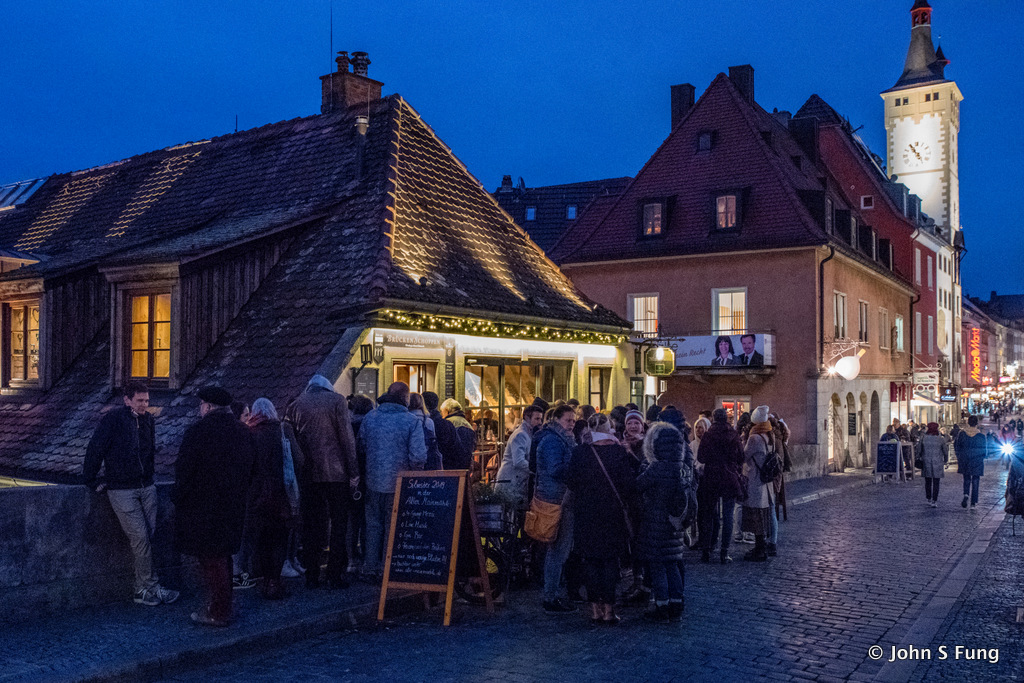
在老橋頭前「老水車餐廳」門前擠滿了顧客,據說常年都是如是。
Alte Mainmuhle, “Old Millwheel” in German, is an old mill-turn-restaurant on the Main. Its access on the bridge was crammed with guests, even in near freezing temperature.
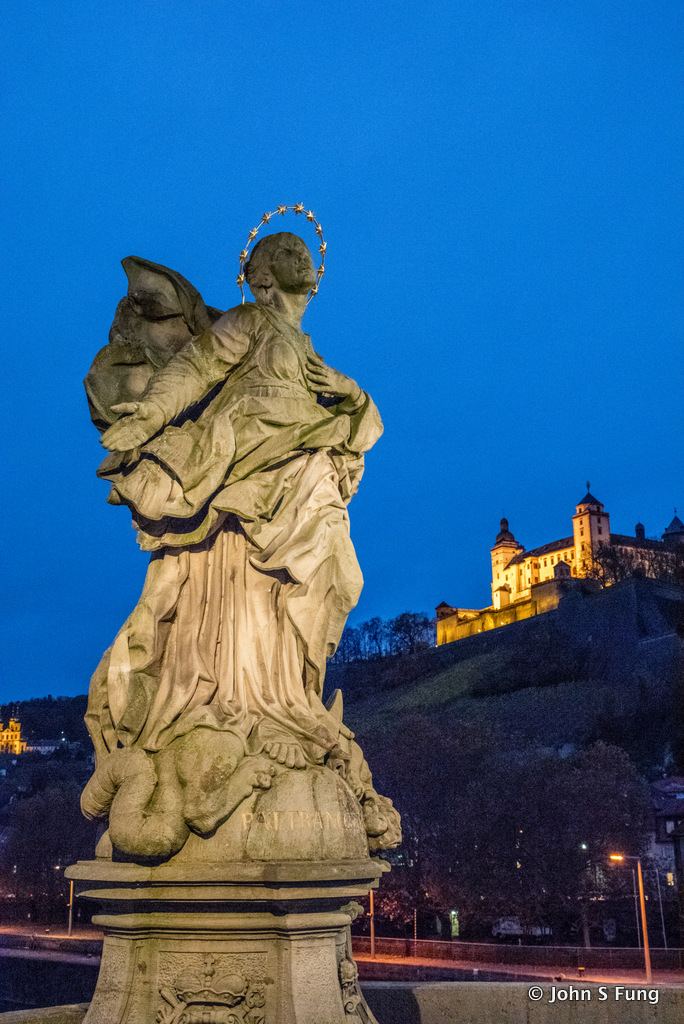
老橋上豎立有十二尊聖人像,這是聖瑪利站在一條龍上。
Twelve barocque statues are placed on the pier caps. This is St. Mary (Patroness of Franconia) and Marienberg Fortress in the backgound.
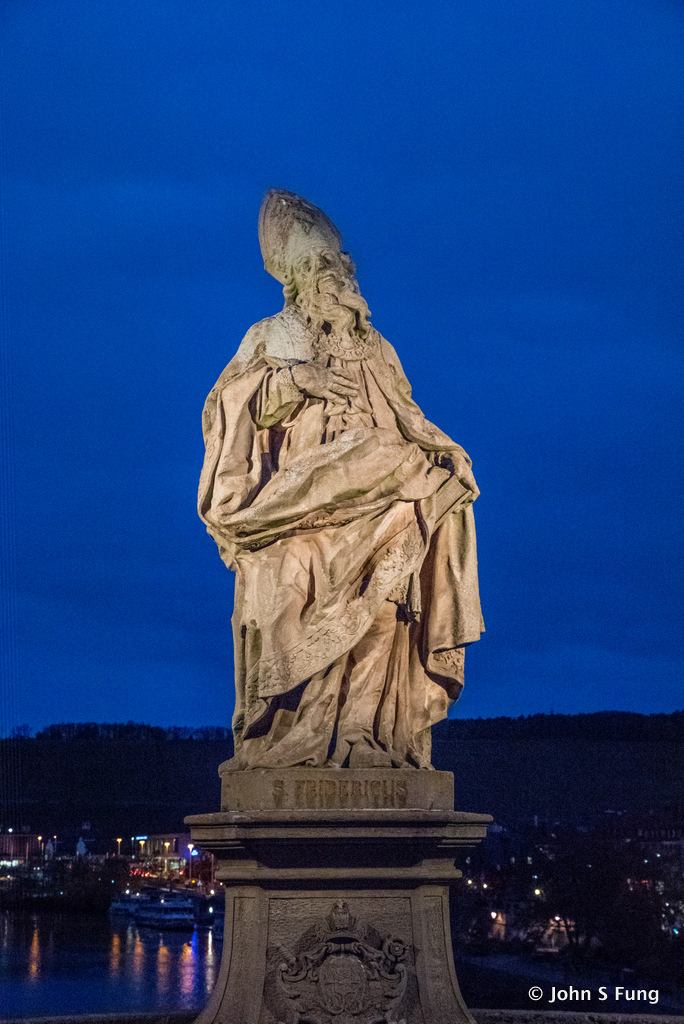
S. Friderigus (St. Friedrich)
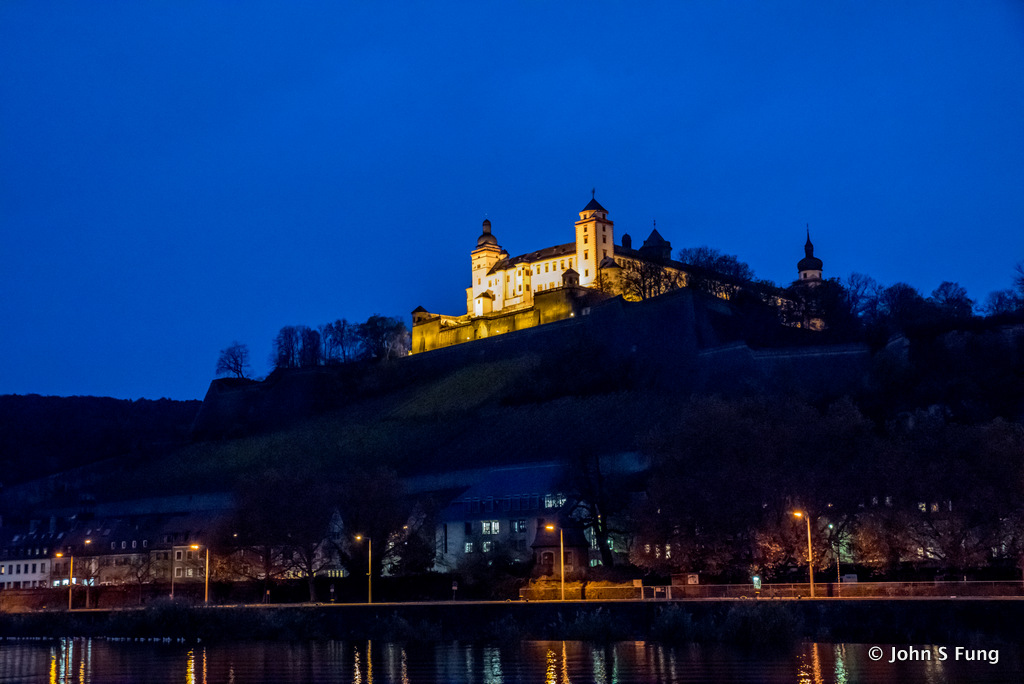
Marienberg Fortress
我們沿著河邊向前行,船就泊在不遠處。妙的是旁邊就有一艘水上中餐館。
 John and YY's photoblog