深秋歐陸上河圖之六:科布倫茨 Viking Grand European Tour – 6: Koblenz, Germany Day 4, Sun, Nov 17, 2019
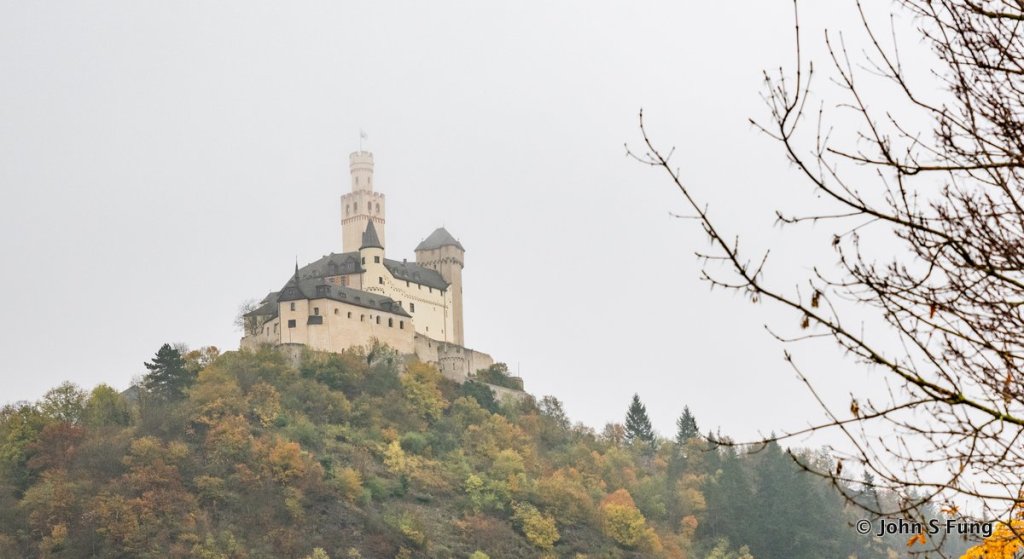
馬士堡 – 據說這是萊恩河谷眾多堡壘中,唯一沒有被攻陷過的城堡。城堡不在科布倫茨市內,而是位於十二公里外 Braubach 附近。
Marksburg Castle – It is said to be the only castle in the Rhine Valley to have never been destroyed by enemies.The castle is located at Braubach which is about 12 km south of Koblenz.
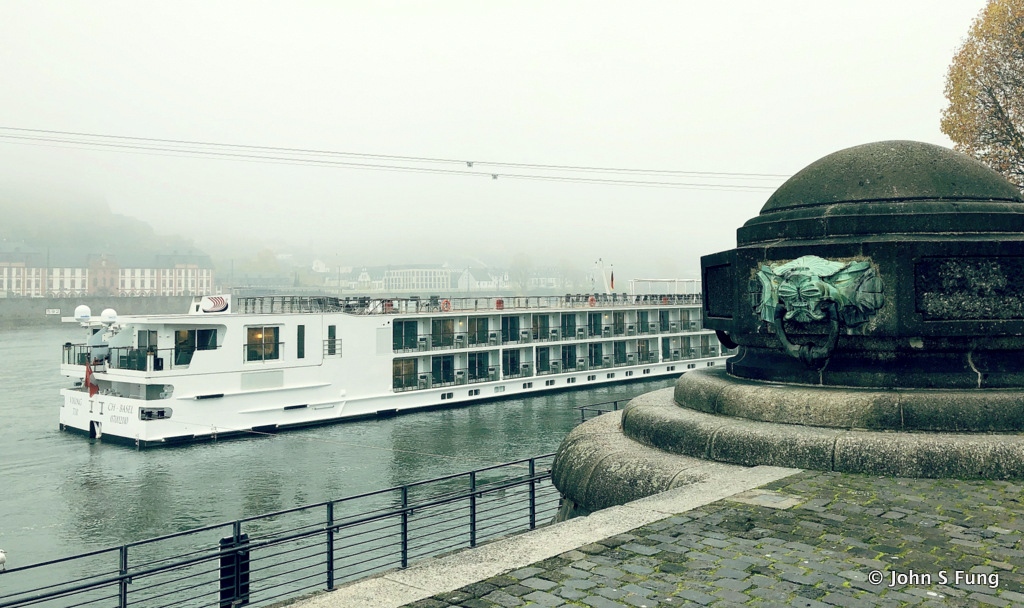
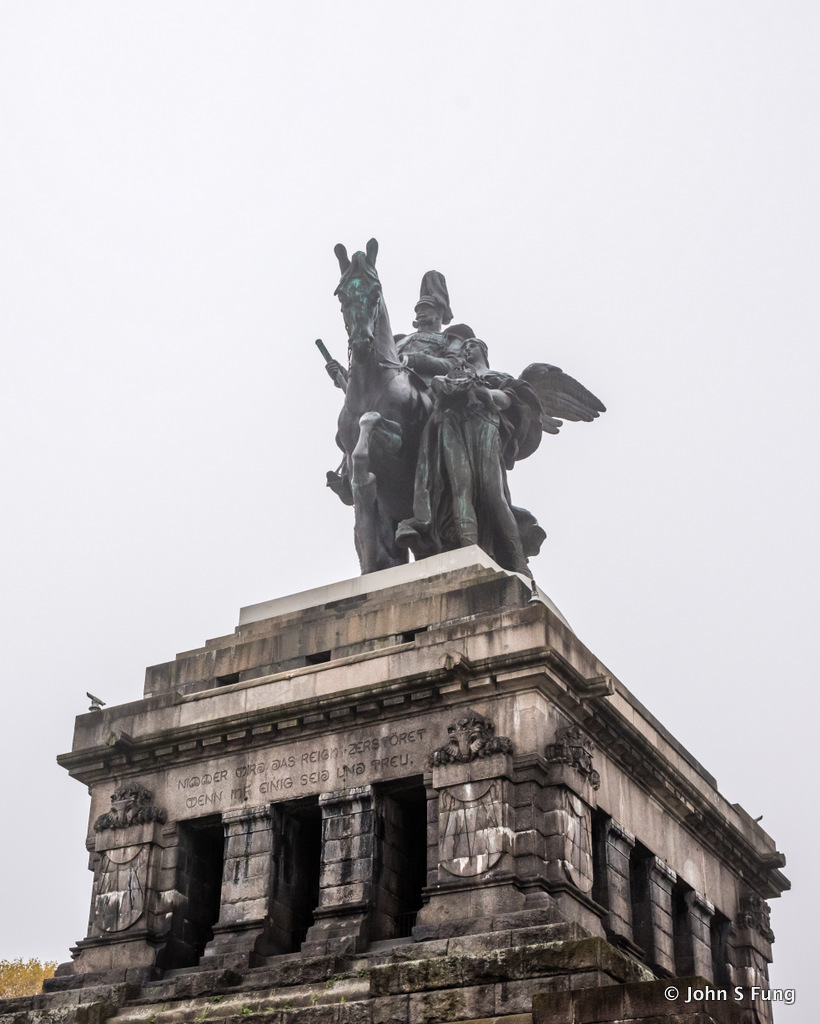
早上霧很大,我們在科布倫茨市萊恩河和莫蘇河合流處的威廉一世纪念像那裡上岸,轉乘巴士往城堡。我們快步來到紀念碑看了一下。科布倫茨很有看頭,可惜未能進城遊覧。
A misty morning, our ship docked at Koblenz at the confluence of the Rhine and Moselle Rivers. Koblenz has a lot to offer, it is a beautiful medieval town with long, rich cultural heritage.
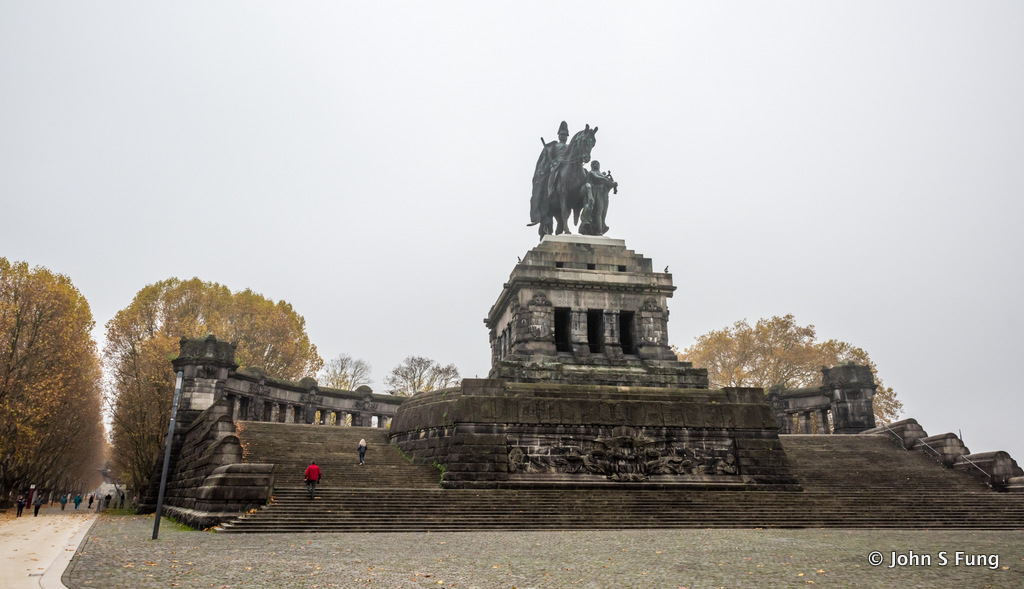
我們2020年會再來,所以這一次就先去參觀馬士堡。今天下午重頭戲是巡航中萊恩河谷,UNESCO世界遺產之一。
We got off the ship at the port next to the “German Corner” where the Rhine and Moselle Rivers converge. There is a Statue of Prince William I.
We joined the majority to tour the Marksburg Castle in the morning. the afternoon was scheduled for the Middle Rhine Scenic Cruising. Upper Middle Rhine valley is an UNESCO World Heritage site.
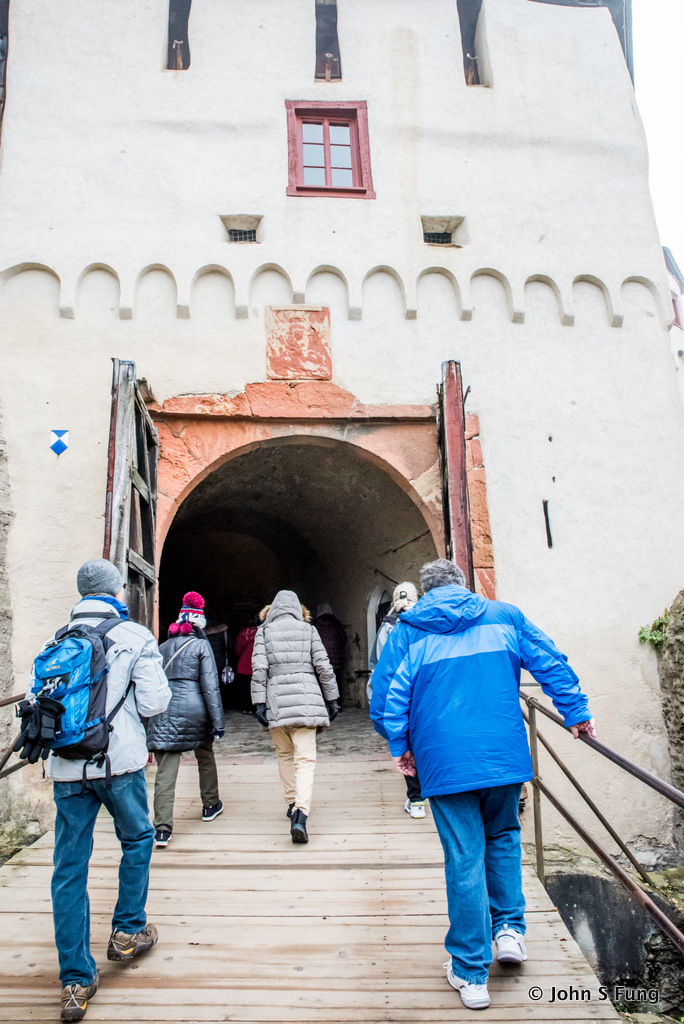
進入古堡的第一道門 – 吊橋門。
Drawbridge Gate – entering the first gate of the castle.
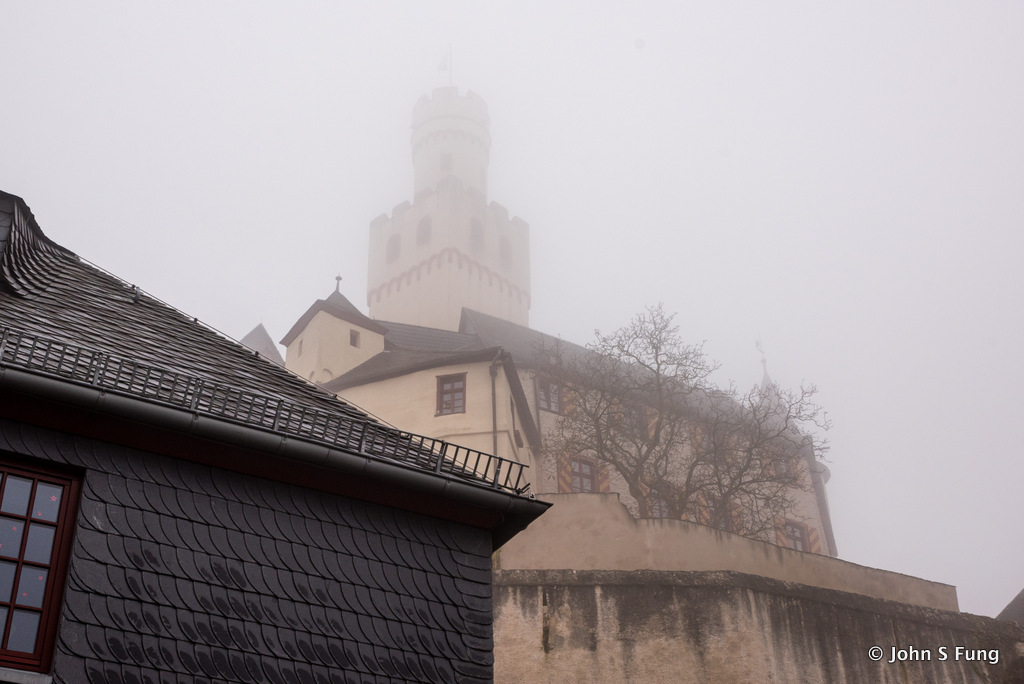
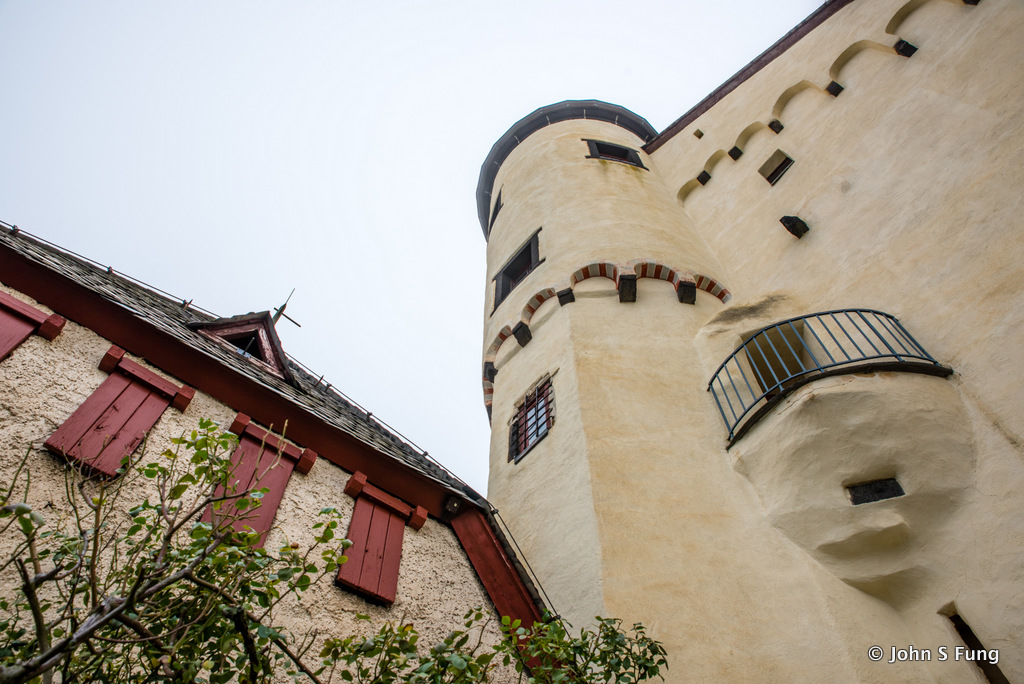
站在禮品部上望向古堡,禮品部和小吃部是原來管事人員的住宿處。
The medieval tower, as seen from the gift shop which was used as servant’s quarters.
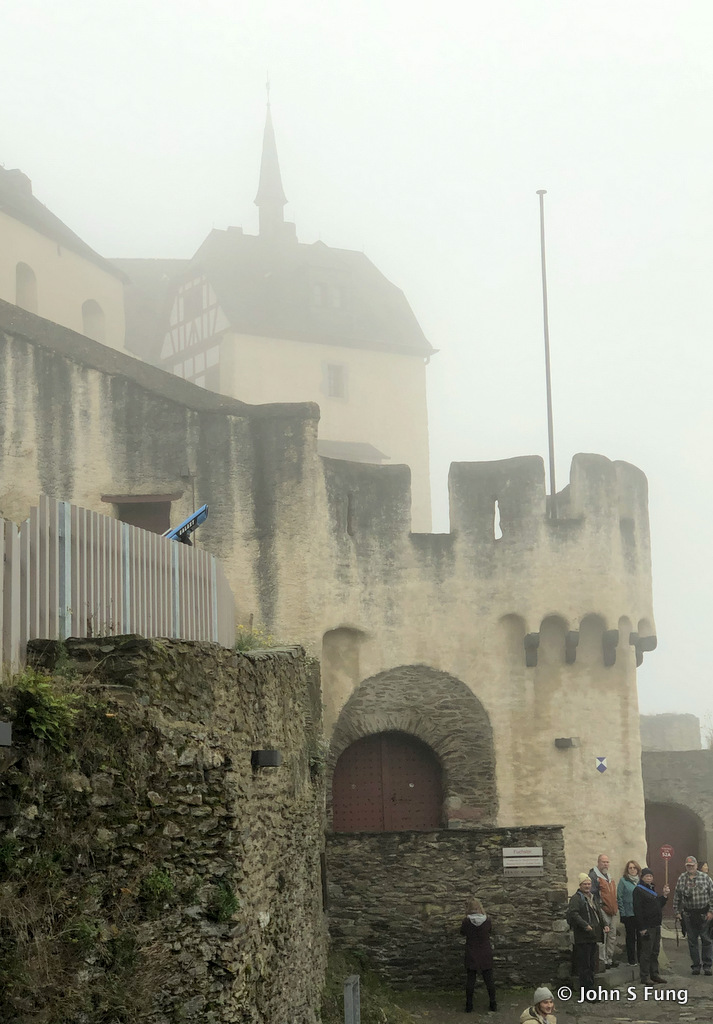
狐狸門 – 這是進入古堡的第二度門 。Fox Gate – The second gate of the castle.
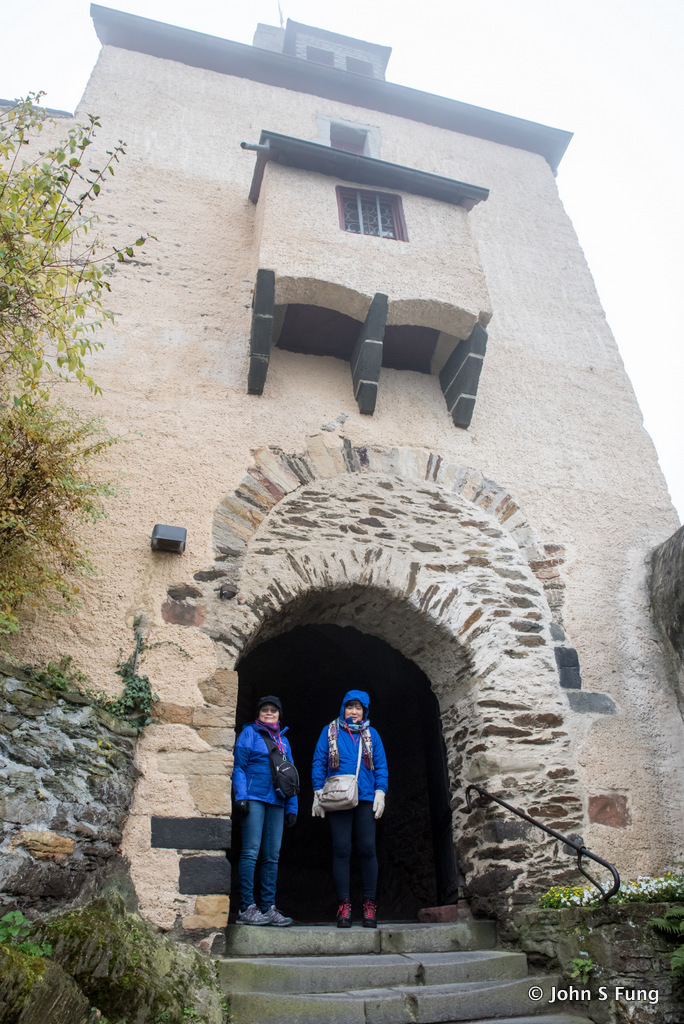
這是進入古堡的第三度門。門上有凸出壁外的窗(machicolation), 底有堞口(oriel), 守軍可由此向敵軍潑熱油、石頭. 借這兩位女仕作比例尺,此門明顯是被改低和窄了,原來較高大的門洞是為騎在馬上的武士進出而設計的。
Arrow Slit Gate – The third gate of the castle. Above the gate there is a machicolation with oriel from which the defenders would use hot oil or stones to attack enemies.
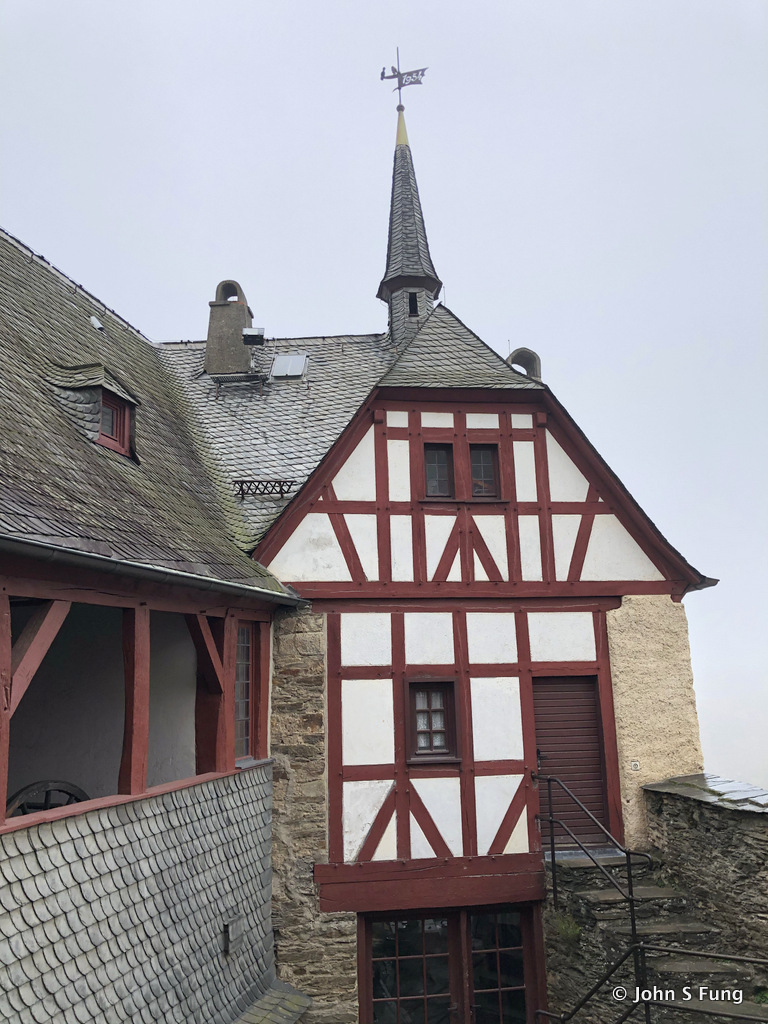
進門騎士騎士通道的上蓋。下圖為通道牆上掛有各時期城主的徽章,
The half-timbered gate building above the third gate. The photo below shows the coats of arms representing the past owners of Marksburg Castle.
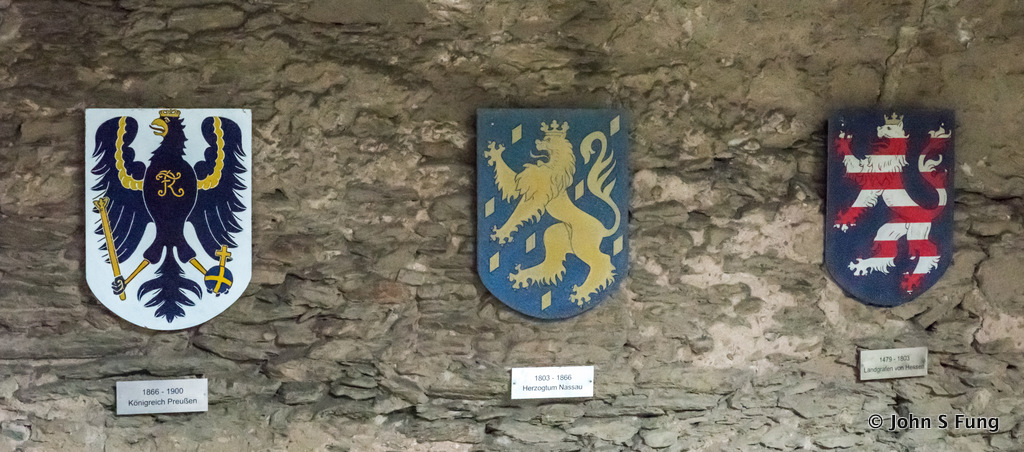
不同時代堡主的徽章. Coats of arms of the past owners.
左 Left: 1866-1900 Konigreich PreuBen (1866年奧普戰爭的結果,Nassau 和馬士堡歸普魯士所有。As a result of the Austro-Prussian War of 1866. Nassau as well as Marksburg Castle was taken over by Prussia.). 中 Middle: 1803-1866 Herzogtum Nassau. 右 Right: 1479-1803 Landgrafen van Hessen.
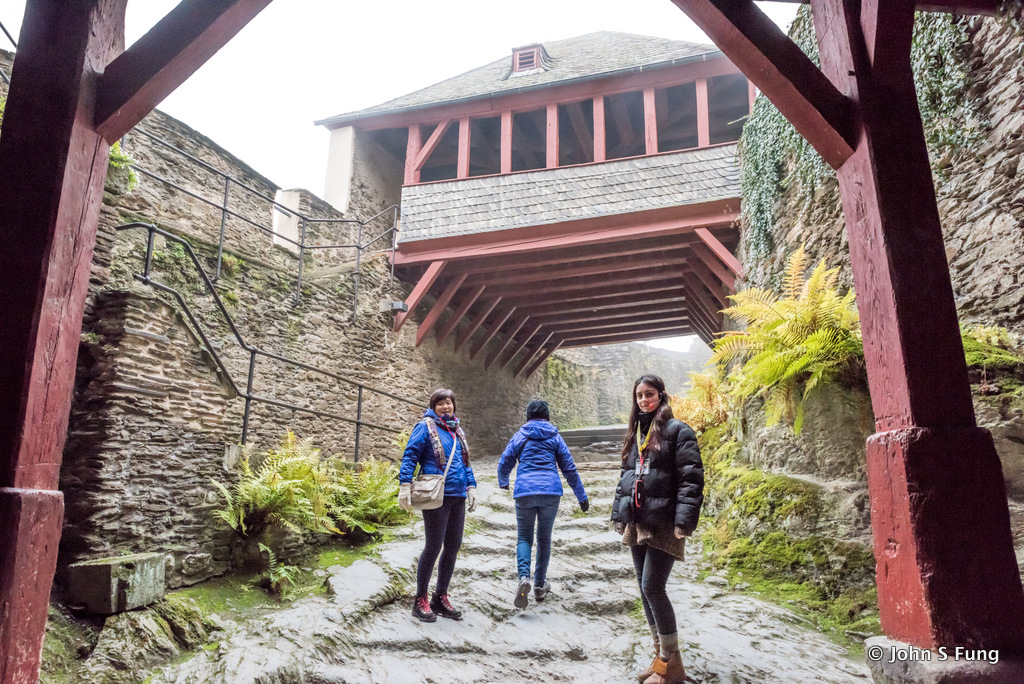
自進門後,拐上一個彎道,樓面高挑,似是為騎士而設的馬道,在大塊山岩上鑿出淺淺的階梯。上圖是後一段。
After entering the arrow slit gate, we climbed a steep stairway, the Riders Stairway or equestrian stairs, carved out of the bedrock centuries ago. This is the upper part of the stairway from the wall with coats of arms.
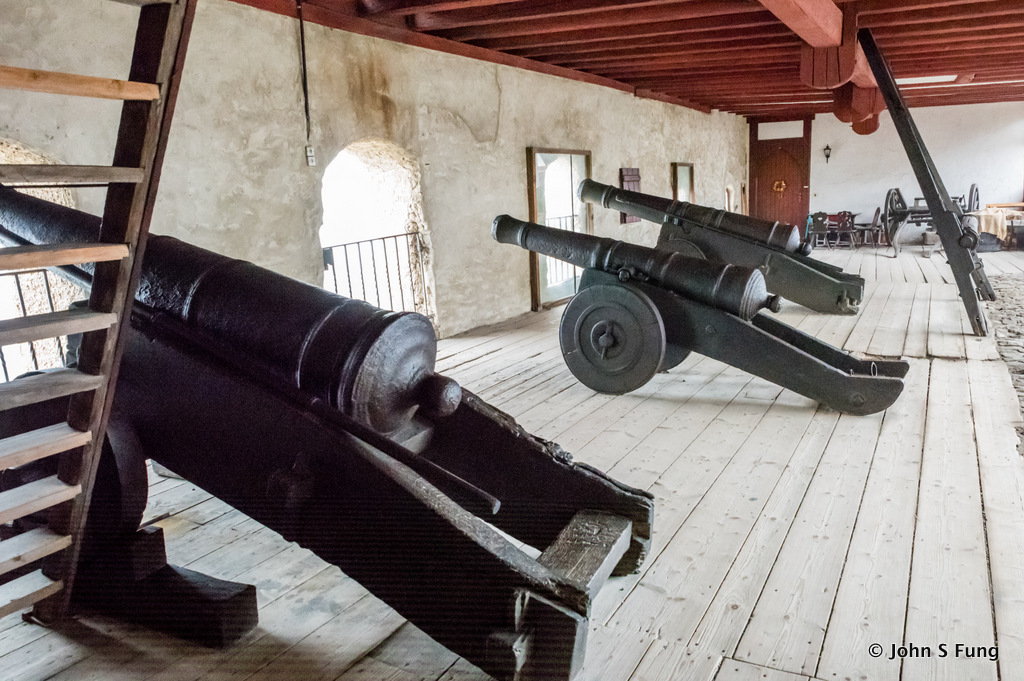
自騎士徑向上走,來到古堡的最下層外圍。這裡有兩炮台,這是大炮台,面向萊恩河。上有四尊大炮,分別用6磅及12磅炮彈,射程可達1000公尺。
The Great Artillery Battery, this battery was first constructed in 1589, the latter half was added in 1711. The coverage of these cannons were about 1000m.
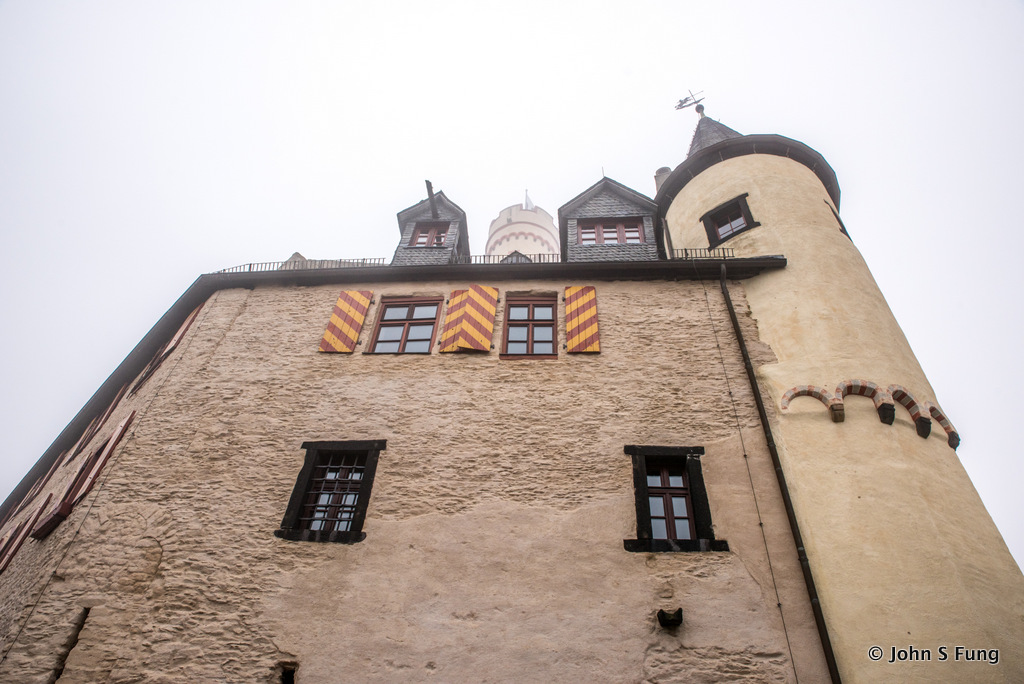
在炮台的左方,有小路環繞城堡下方,拐兩個彎就到城堡的入口
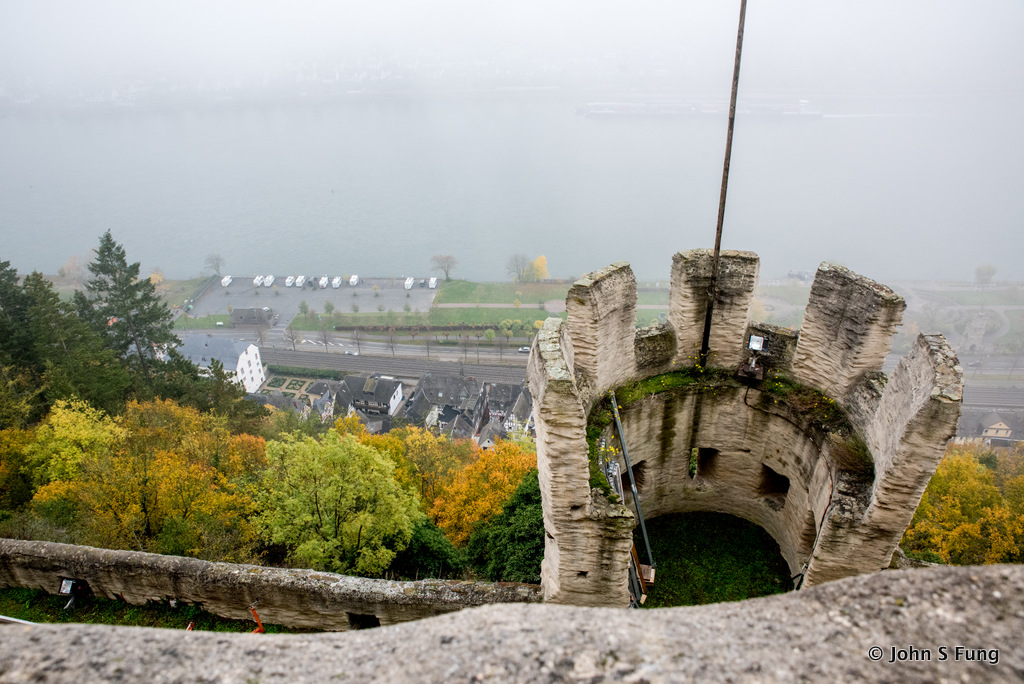
炮台面對河道,導遊説風景極佳,可惜煙雨濛濛,隱約只可見河岸。
It is said that the castle offers a wonderful view of the Rhine, we barely could see the river from the battery level.
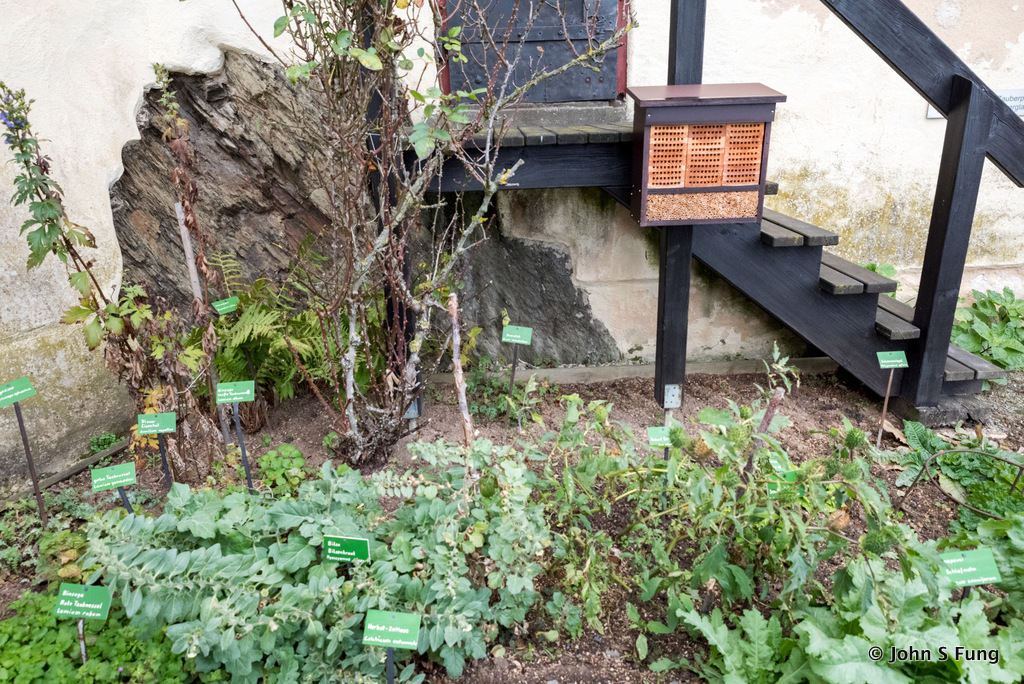
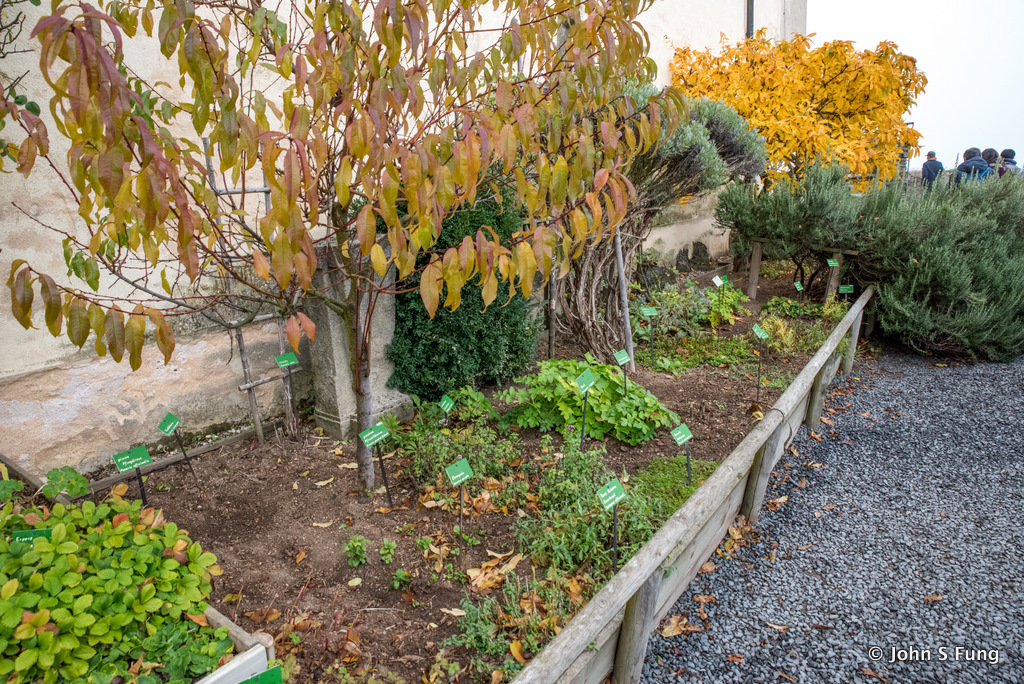
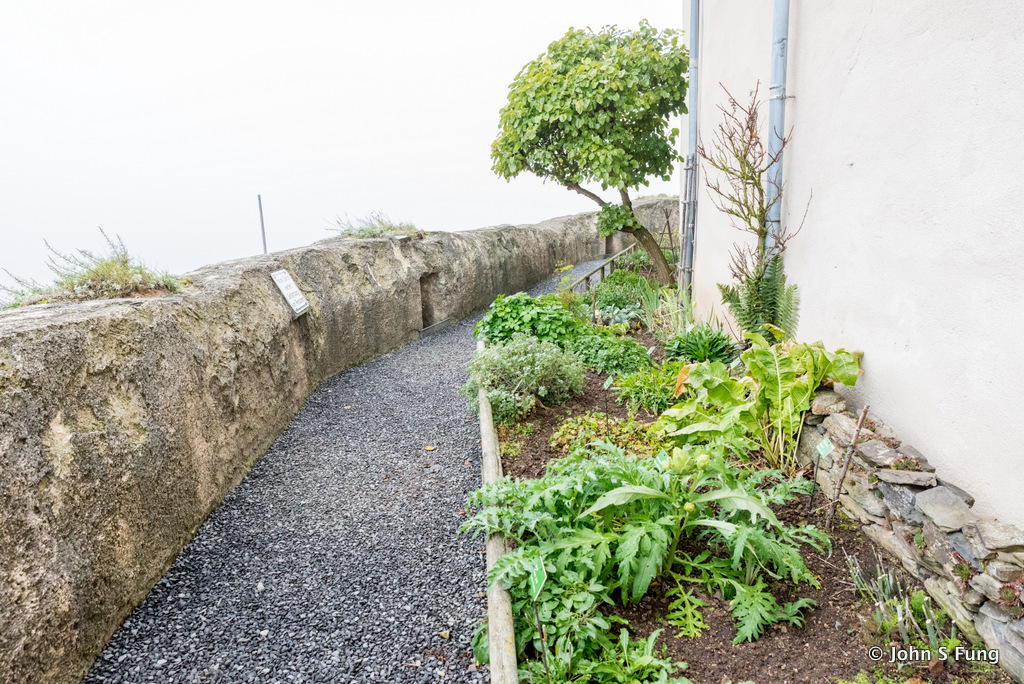
中世紀香料蔬菜園圃。 Medieval herb garden
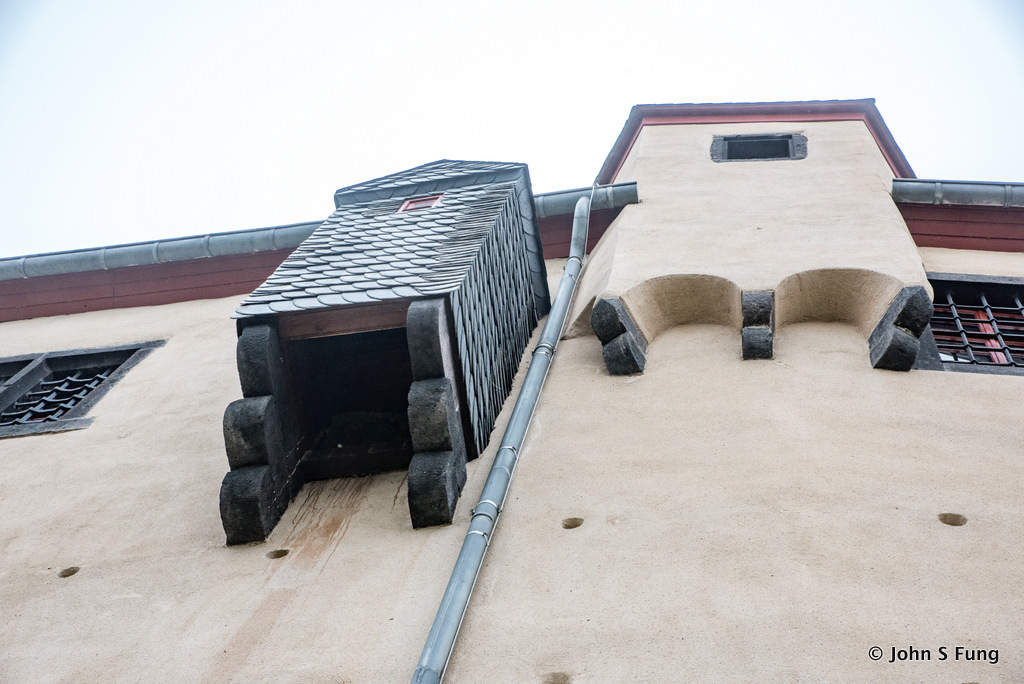
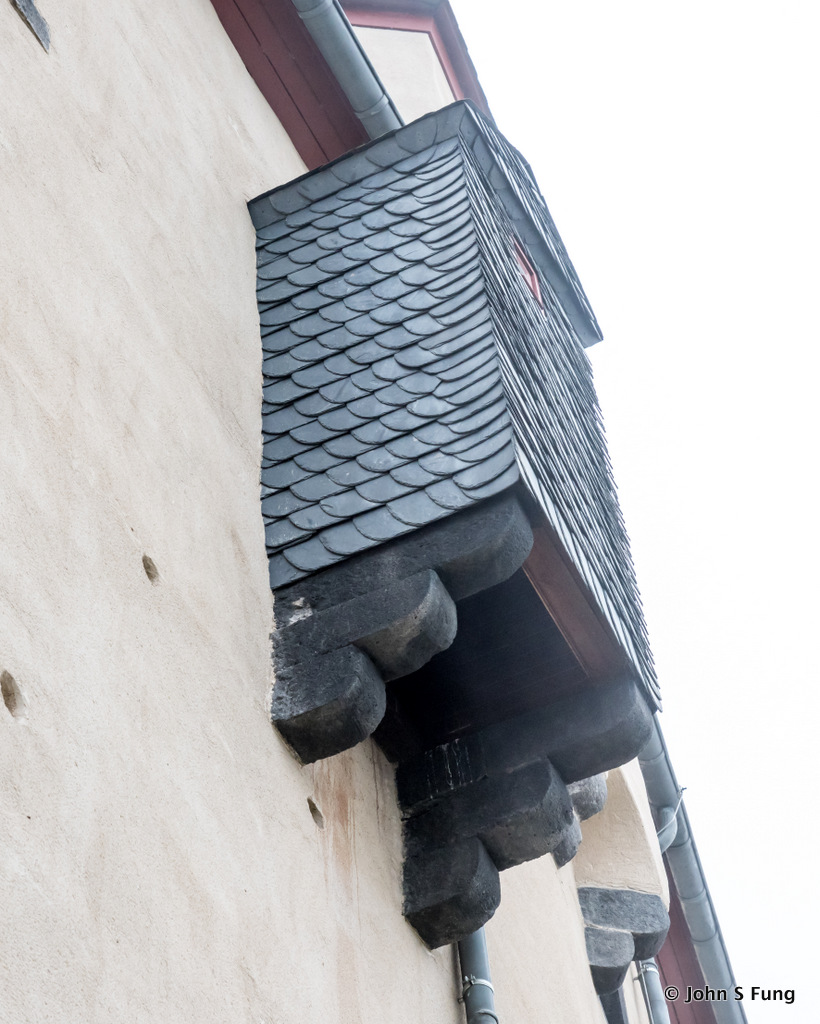
這是城堡二樓的厠所,簡單直接的設計。外牆修有櫃形外掛木構,坐厠實為一空洞,排泄物就飛流直下三千尺…. 讓我想起1980年代沒有現代化的峨嵋山金頂的旅客住宿處、厠所就建在金頂的懸崖上,人就踎在懸空的木板上,洞下面深不見底……
The toilet on the second floor, as seen outside. The design is simple, a wooden box attached to the opening on the wall; under the toilet seat, there is only a hole, no plumbing on the outside.
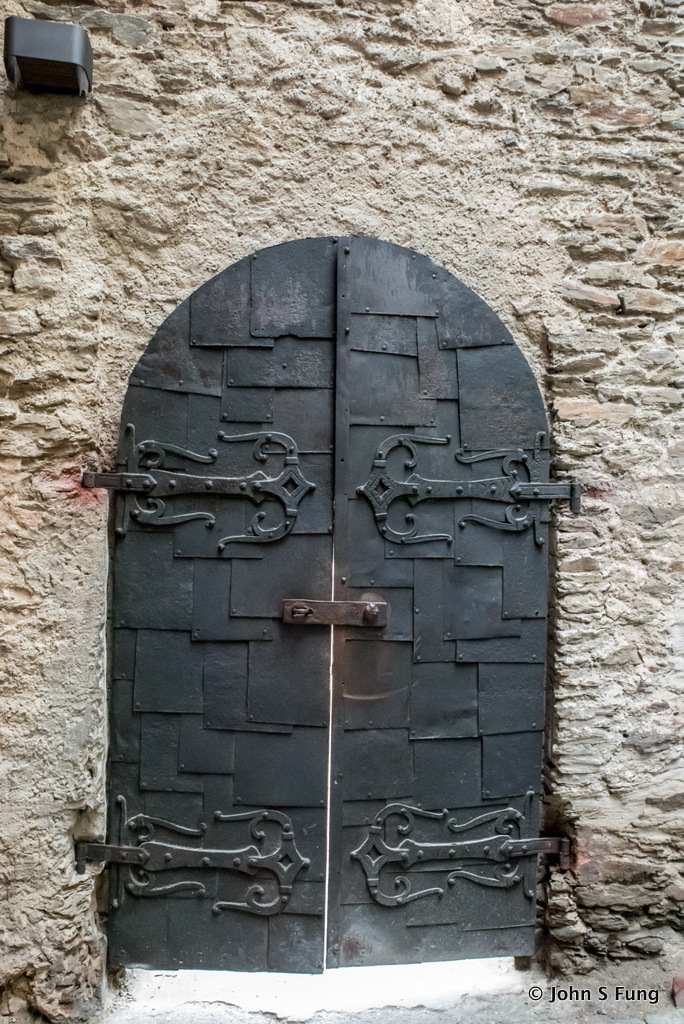
這就是我們進入城堡的大門。The metal-plated door to the inside of the castle.
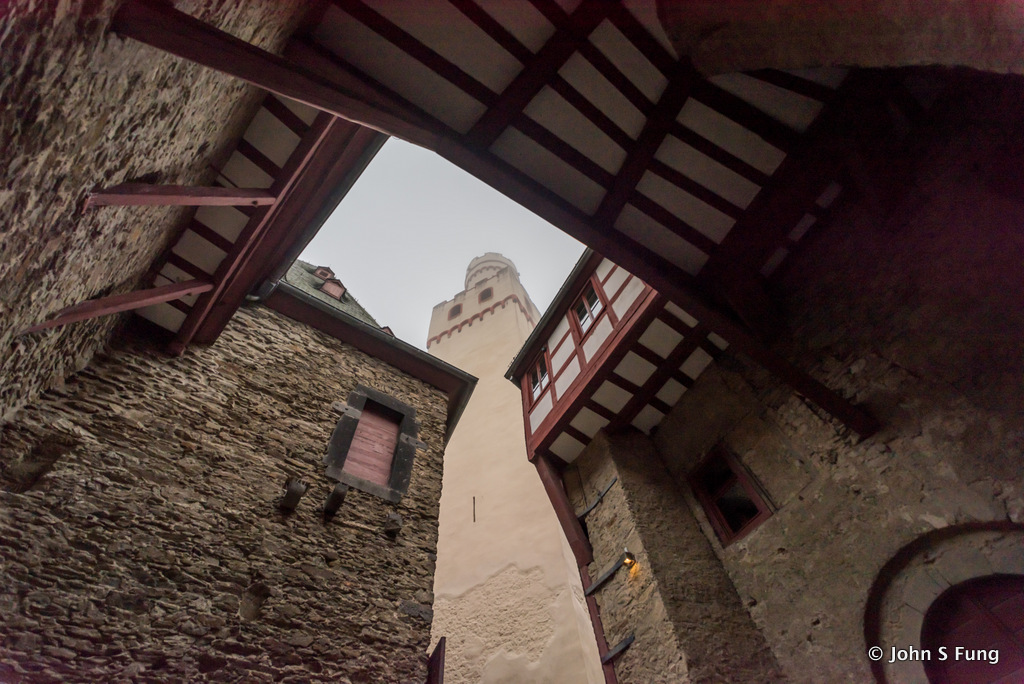
進門後,有一院子,由前方通入,左邊有一大室,是原來的馬厩,現改為烤刑展示室。從院子可見高塔。塔內空間小,只有能容一人的小樓梯,供暸望之用。
After climbing a wooden staircase, we reached the center of the castle: the courtyard with the impressive central tower.
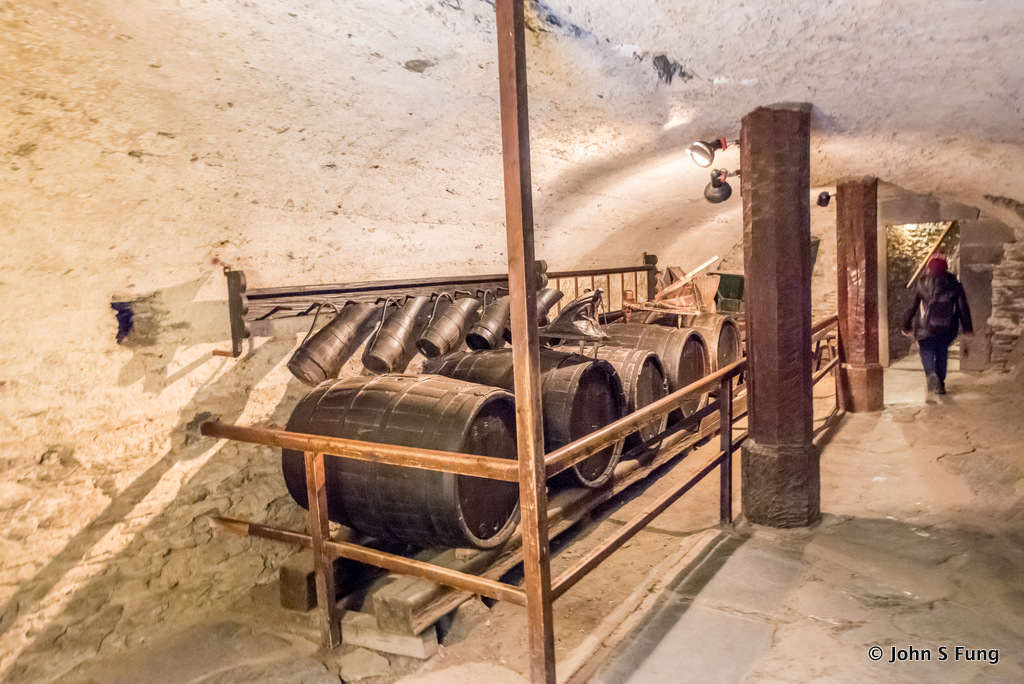
首先經過走廊旁的酒窖。The wine cellar with its 17th century interior.
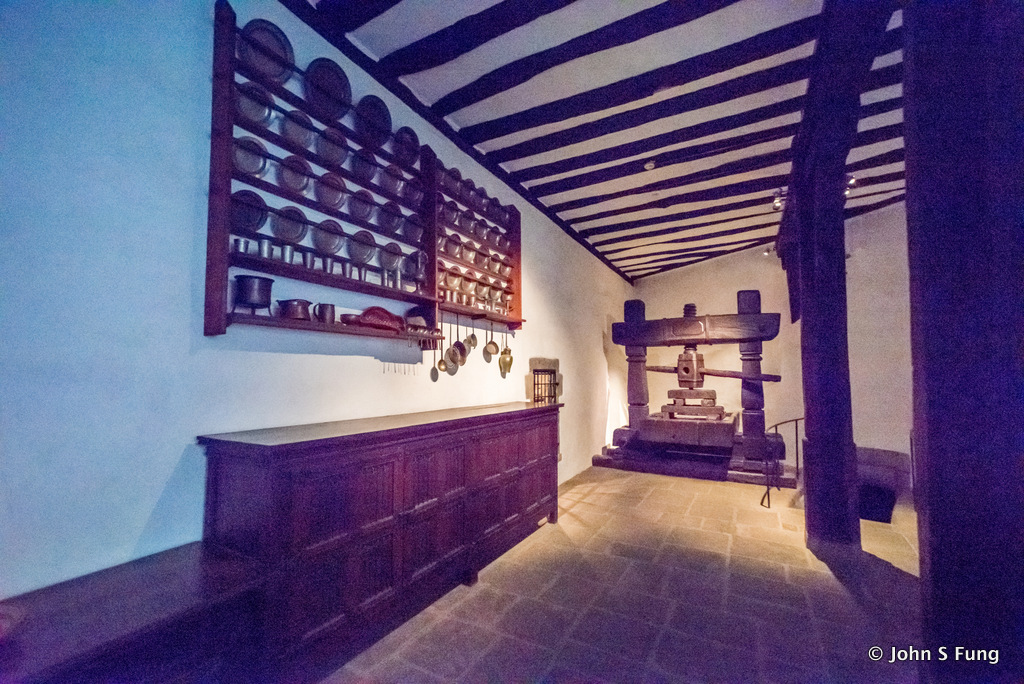
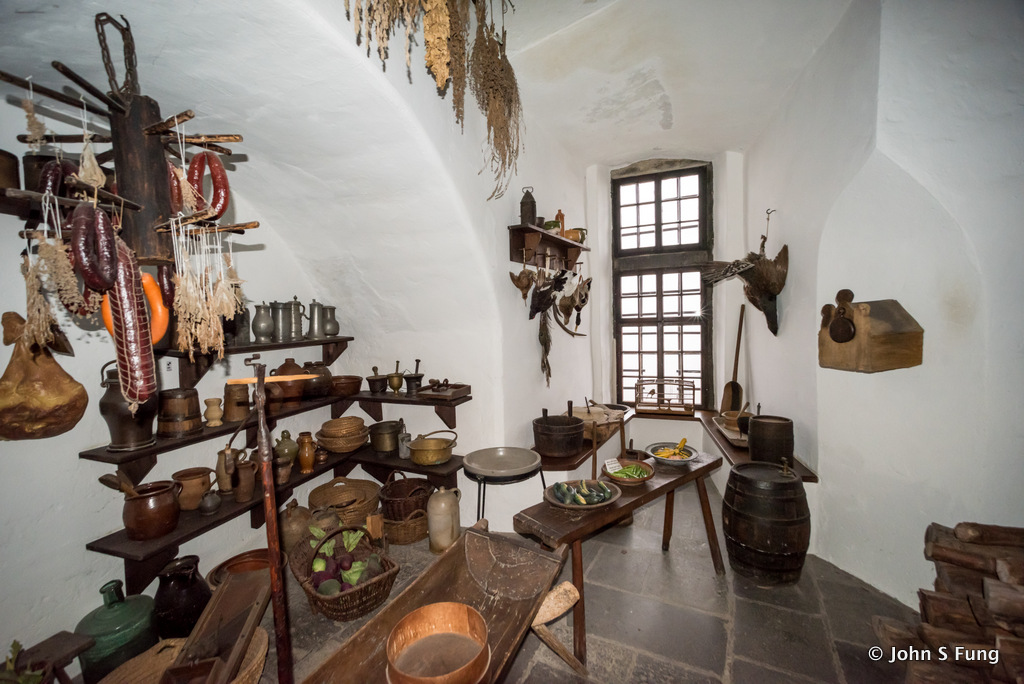
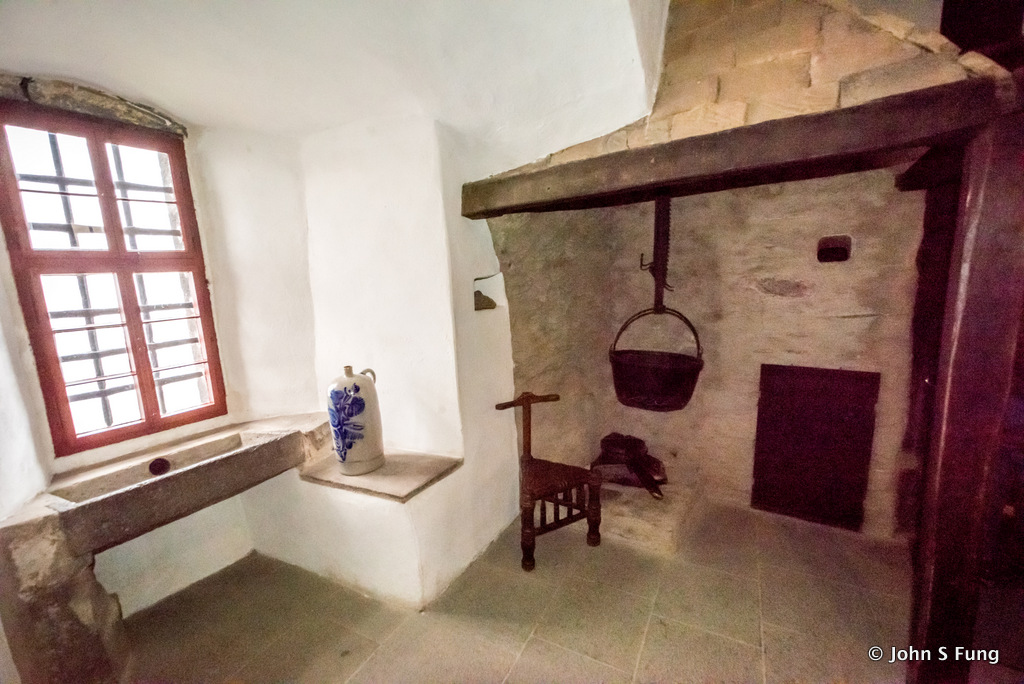
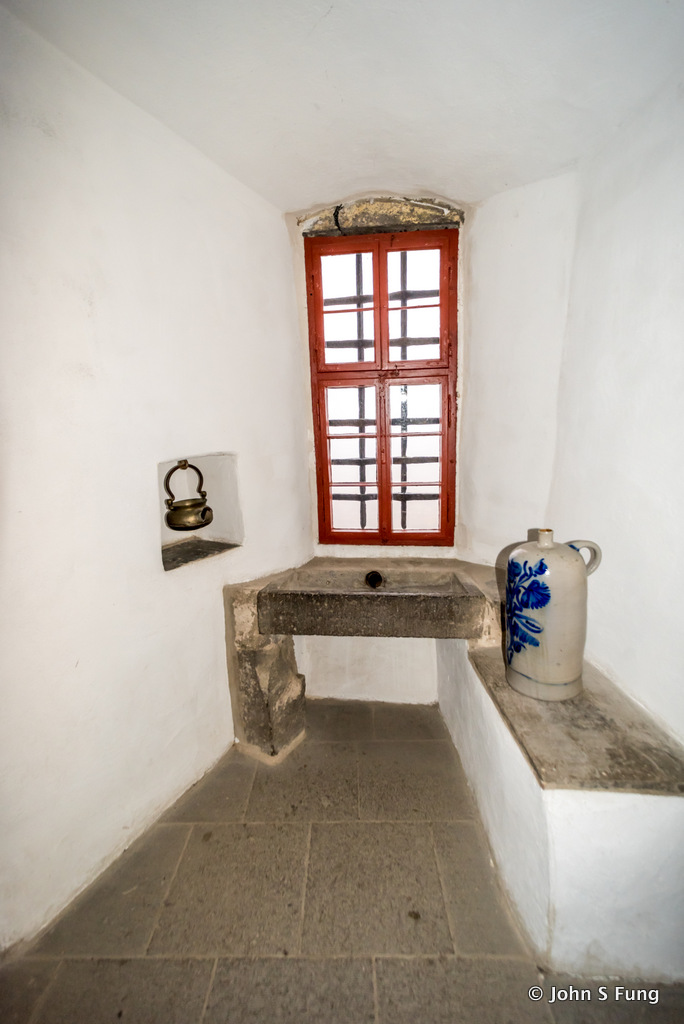
The Kitchen – On the ground floor of the building is the castle kitchen which was built in 1435. This kitchen is big, takes up the whole ground floor, with a huge cooking area and equipped with a chimney. The well preserved old utensils and vessels give an idea to visitors as how food was prepared in medieval time.
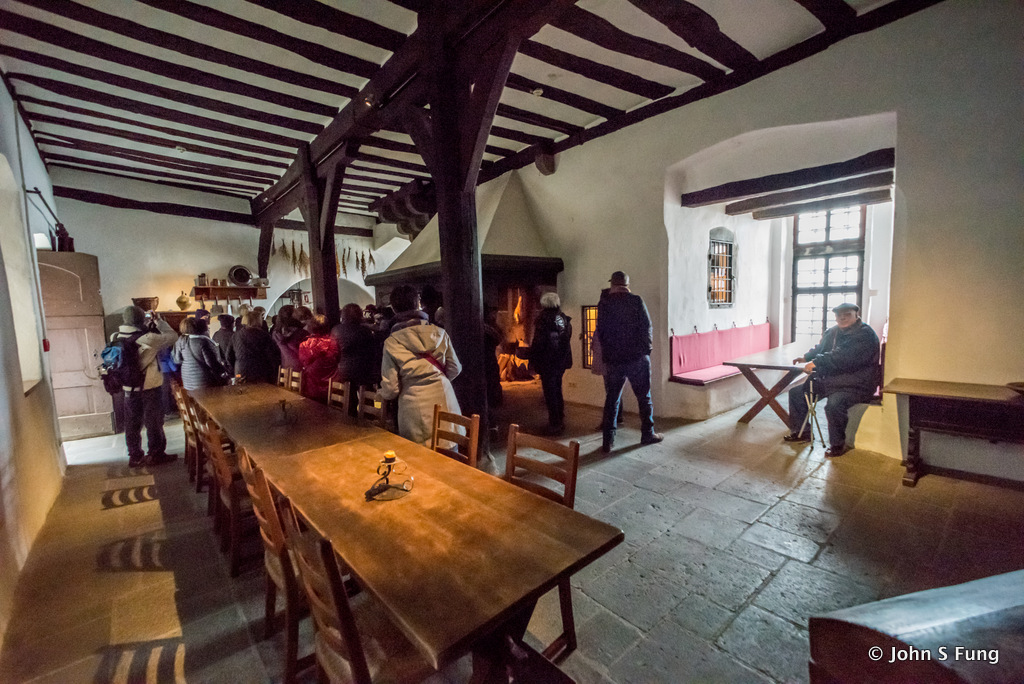
這是廚房,在主建築的一樓。廚房相當大,在窗旁亦建有坐處。眾人圍着的是灶頭(見下圖)。
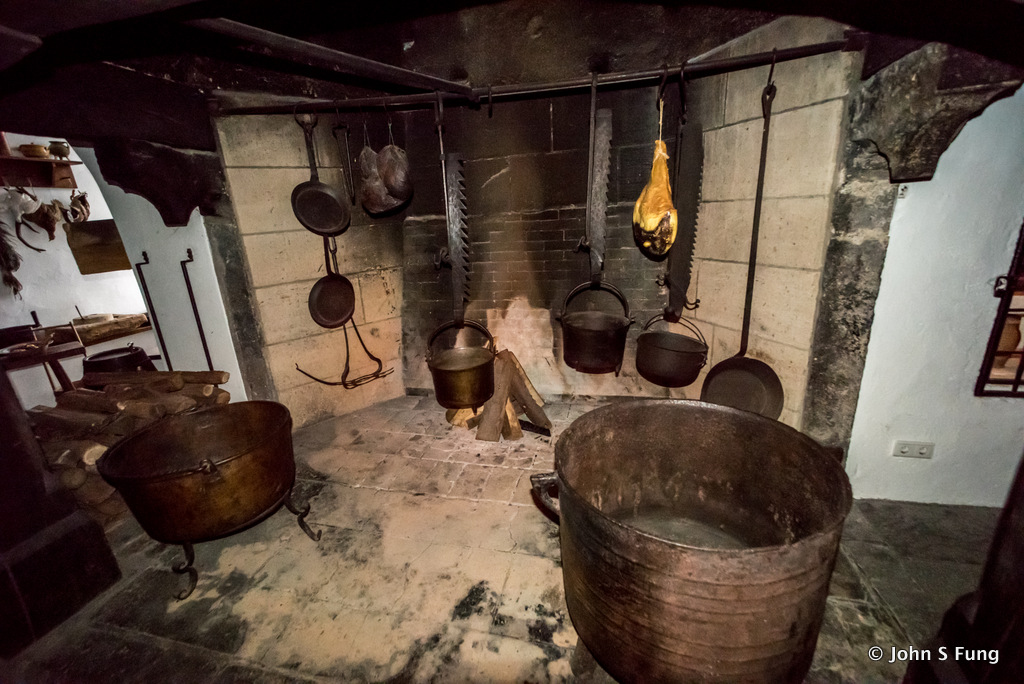
灶頭,上有屋簷型的集煙頂,中通上煙恖排煙。
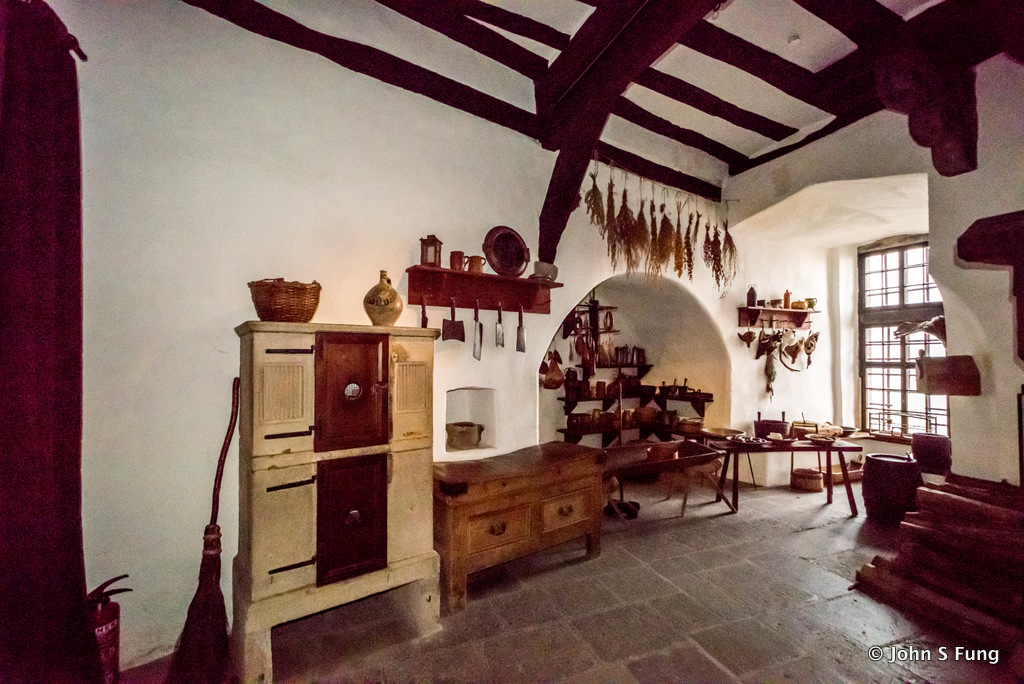
廚房一角。 The kitchen.
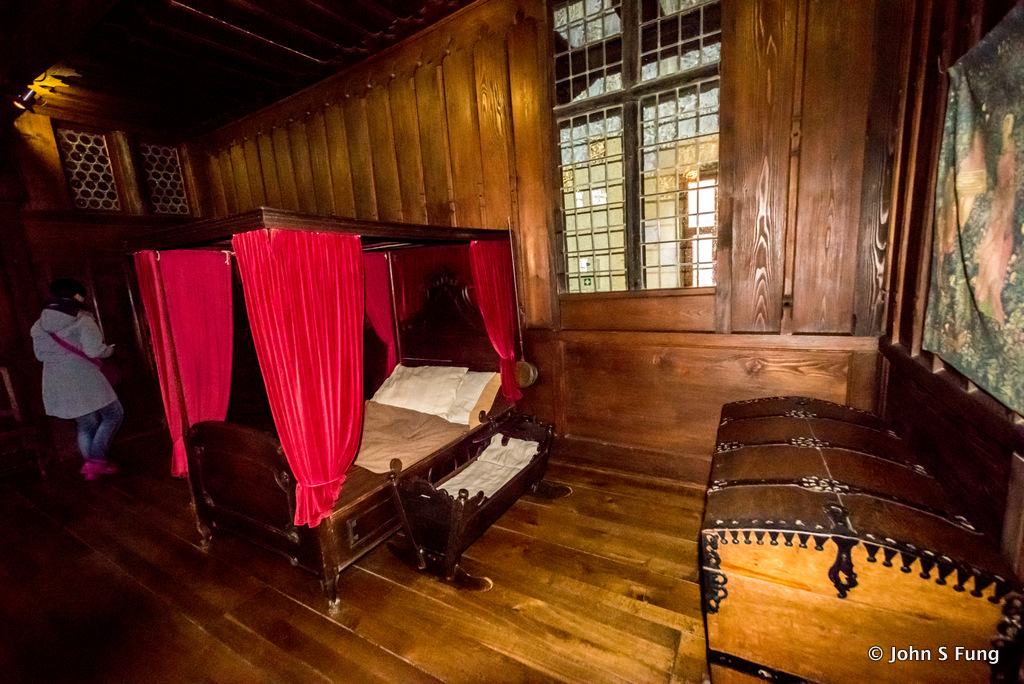
睡房 – 在二樓的第一間房, 內有床、衣箱,窗前有閑坐、閱讀處。導遊説,中古世紀的人不平躺著睡,上半身作一角度的上斜,主要是迷信,怕平躺會一睡不起云云。
Bed Chamber – The first room on the second floor (above the kitchen ) is the noble family’s bedchamber, furnished with wood panelling, a canopied four poster bed, a cradle and a seating and reading area in the window niche.
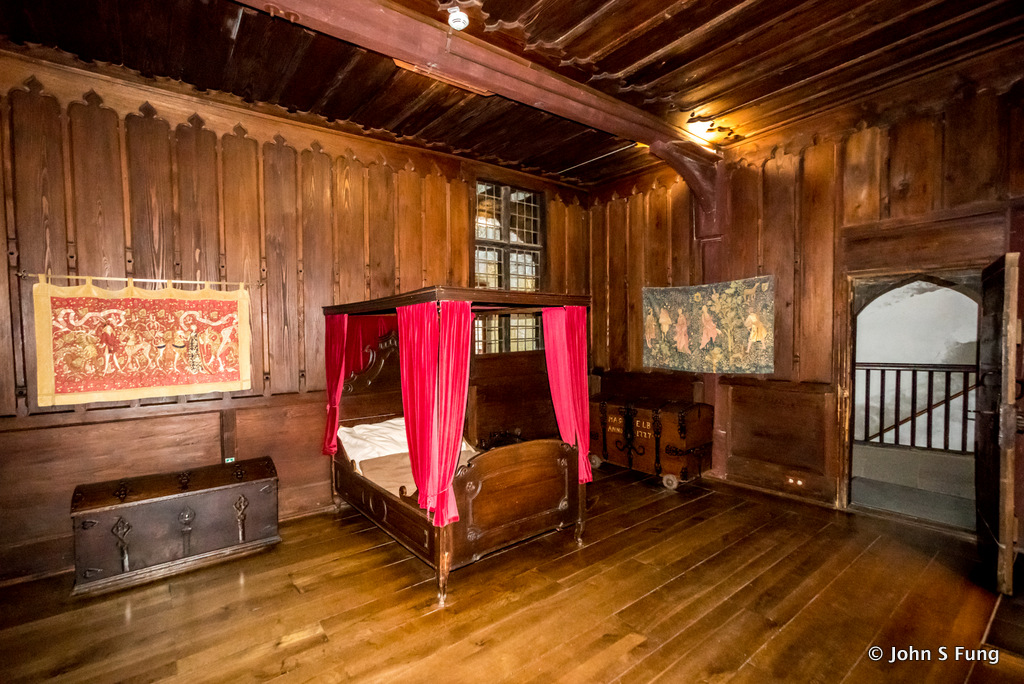
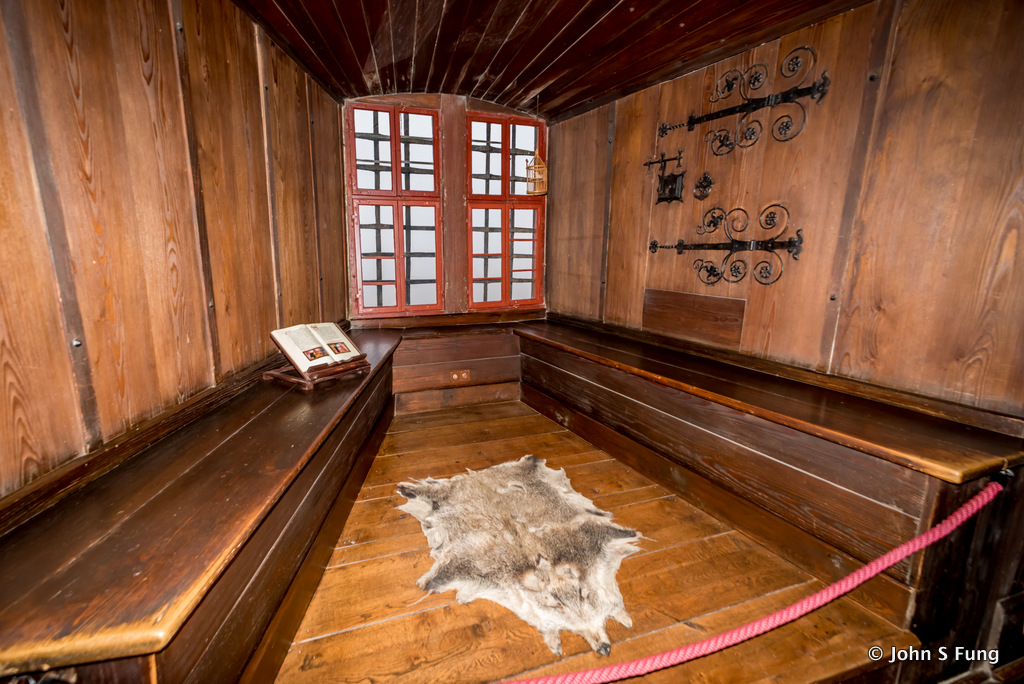
古堡採光不易,所以睡房窗前僻作坐臥處。 The reading/sitting area near the windows.
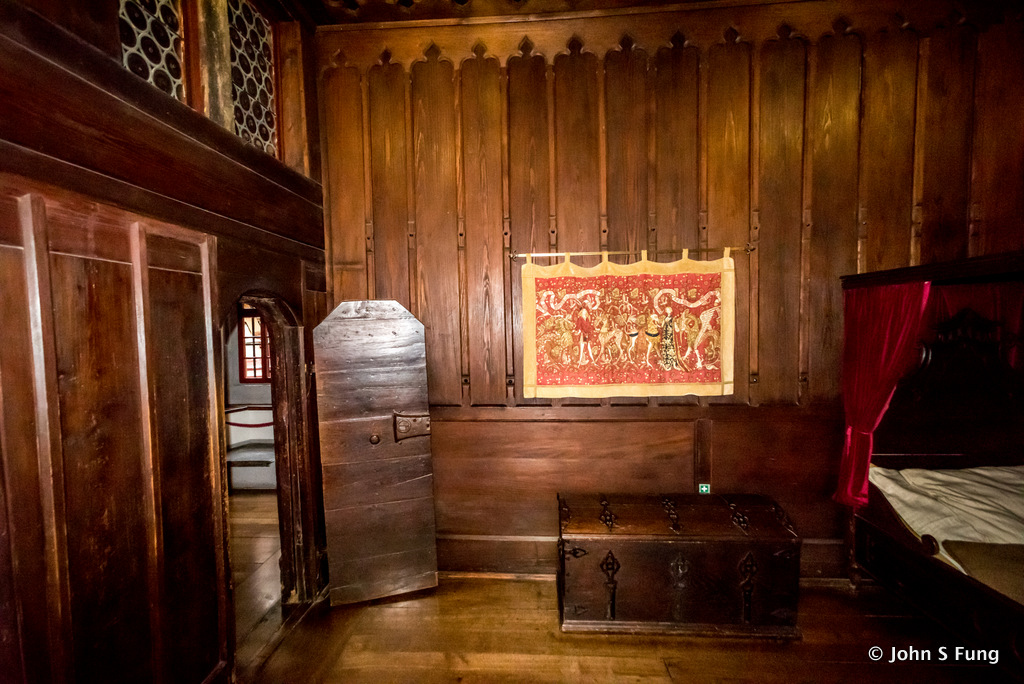
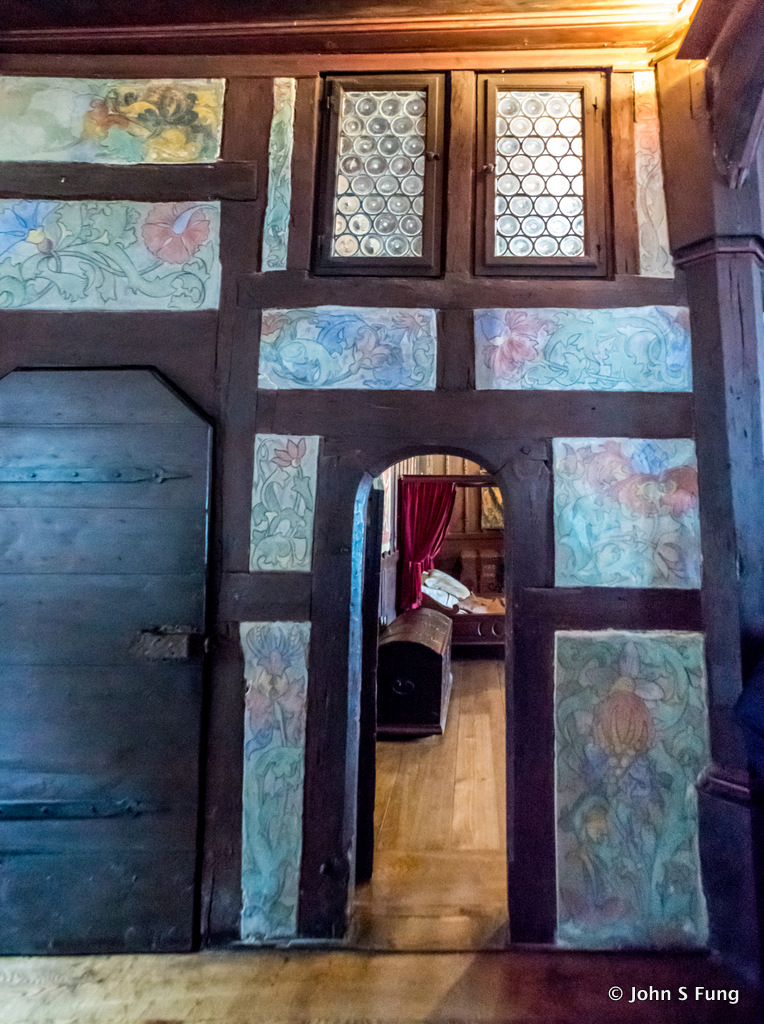
離開臥室所見,外牆有中世紀風的畫飾。外面就是武士室(大廳,吃飯坐臥處)。僕人將煮好的食物送上大廰,當然不會通過臥室,猜想臥宅旁有通道,上圖左面。
Decorative medieval painting on the wall. The door on the left appears to be a passage used by servants to bring cooked food from first floor to the Great Hall (or living/dinning room).
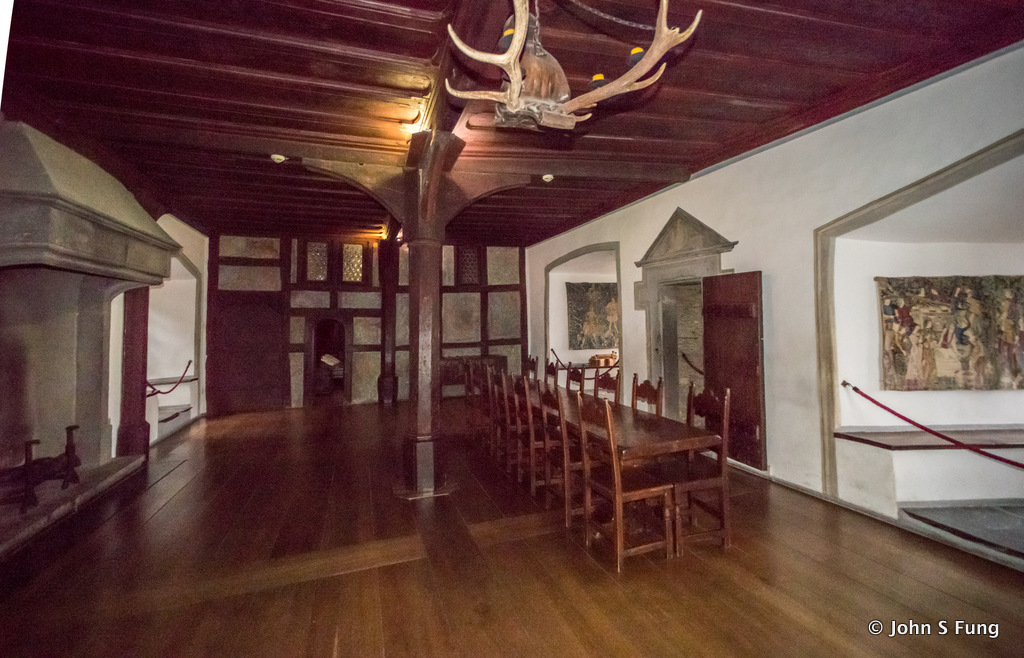
這就是武士廳或大㕔,等同現代人的客廰和飯㕔。大堂中央有長餐桌,右方有窗處,採光較好,僻為坐臥、閲讀處。右方中央有門處就是厠所。
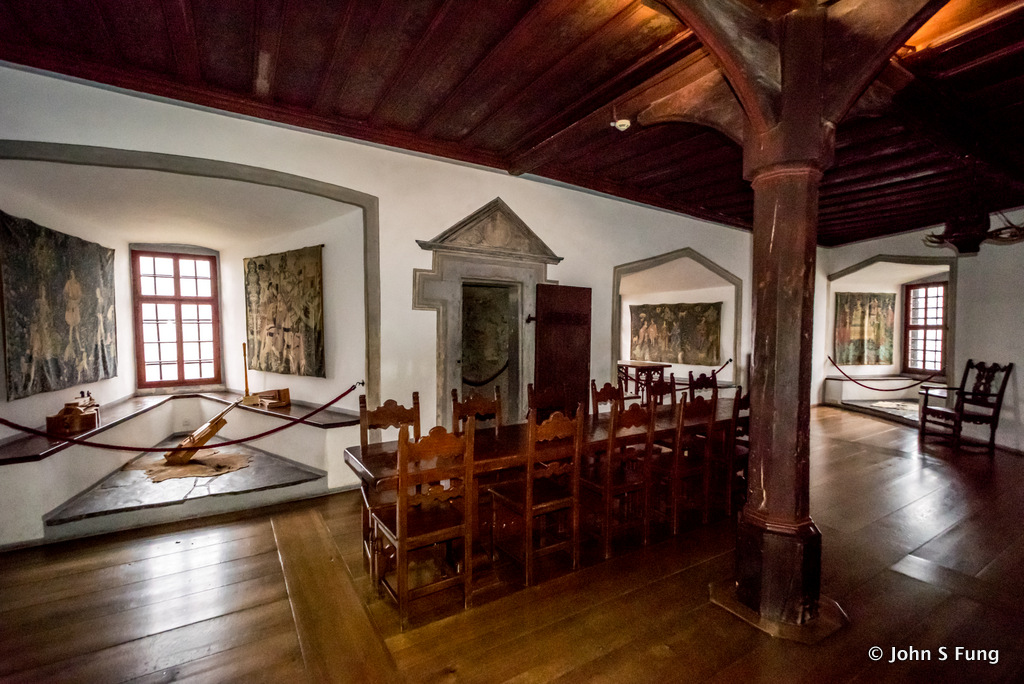
Knight’s hall – The adjoining room to the Bed Chamber is the impressive Great Hall, the center of courtly life in the castle. This is the living room and main dining hall of the castle. This is the place where the master and his family eat, read, play music instrument, entertain guests. As shown in the photo above, the door in the middle leads to a small passage through the outer wall which is a medieval toilet.
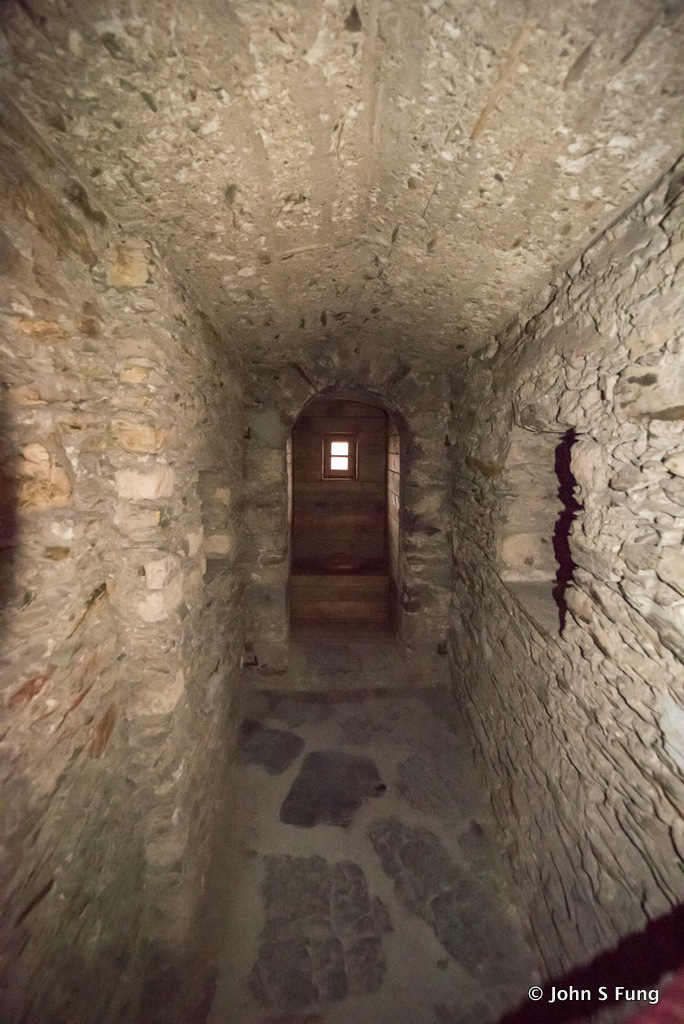
厠所,有點奇怪牆壁如此素淨。 At the end of this small passage, there is a medieval toilet.
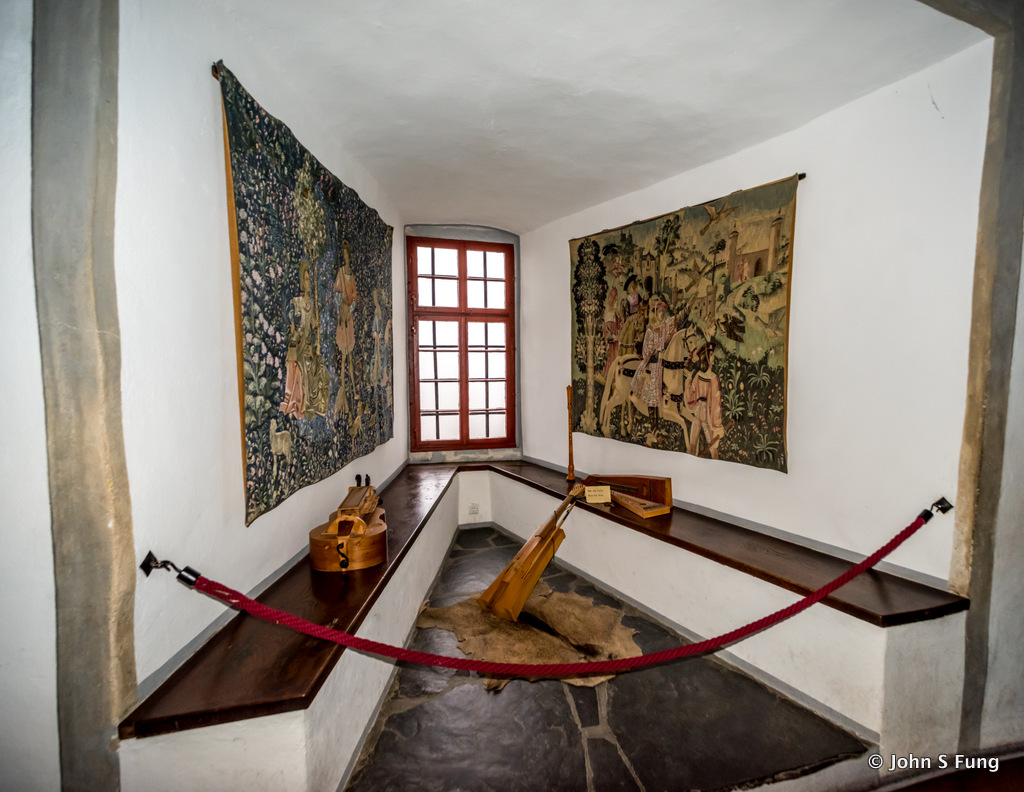
其中一個窗旁坐臥處。這裡也是招呼客人的地方。One of the sitting areas in the Knight’s Hall.
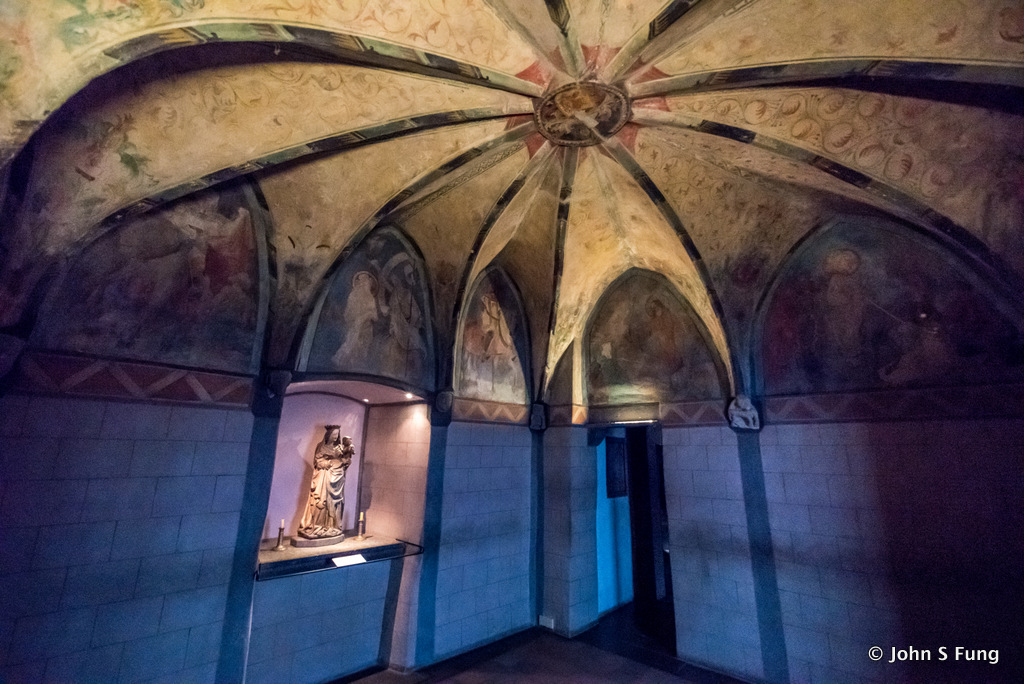
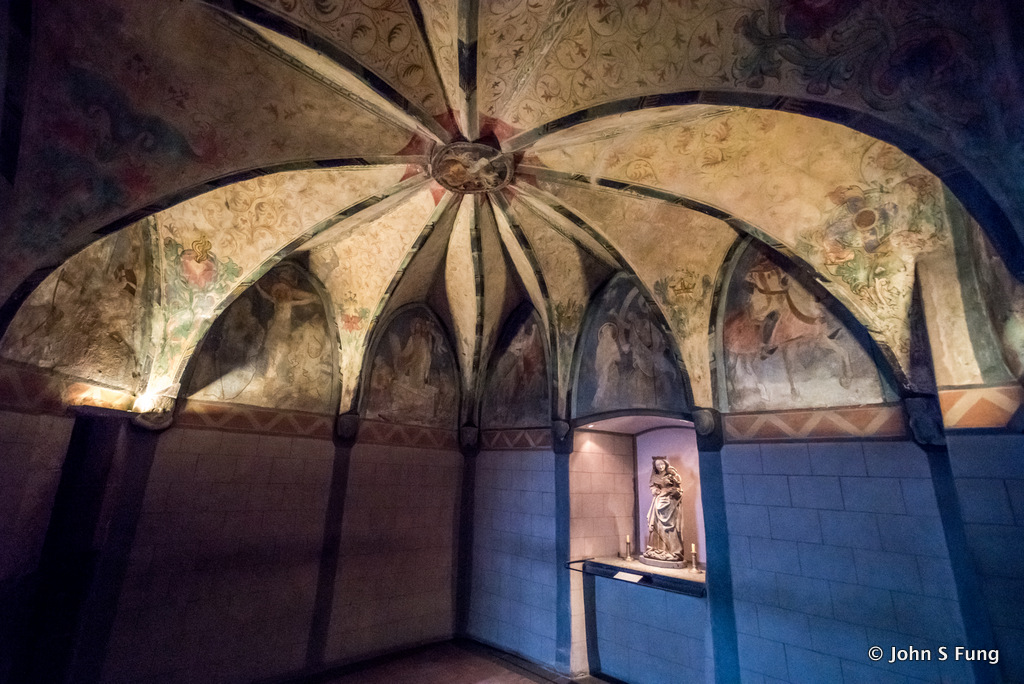
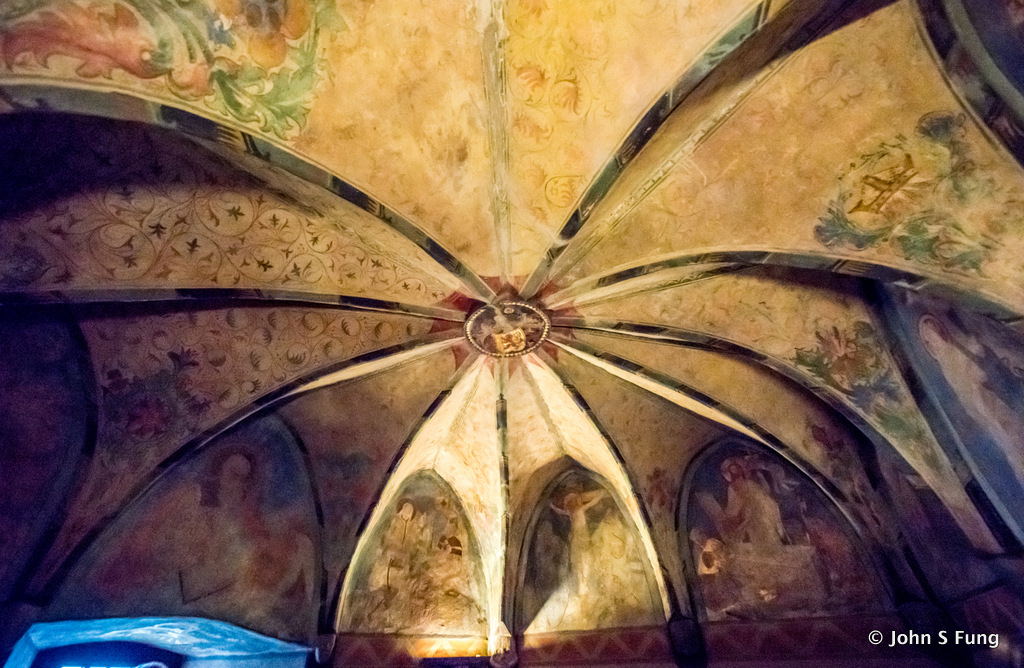
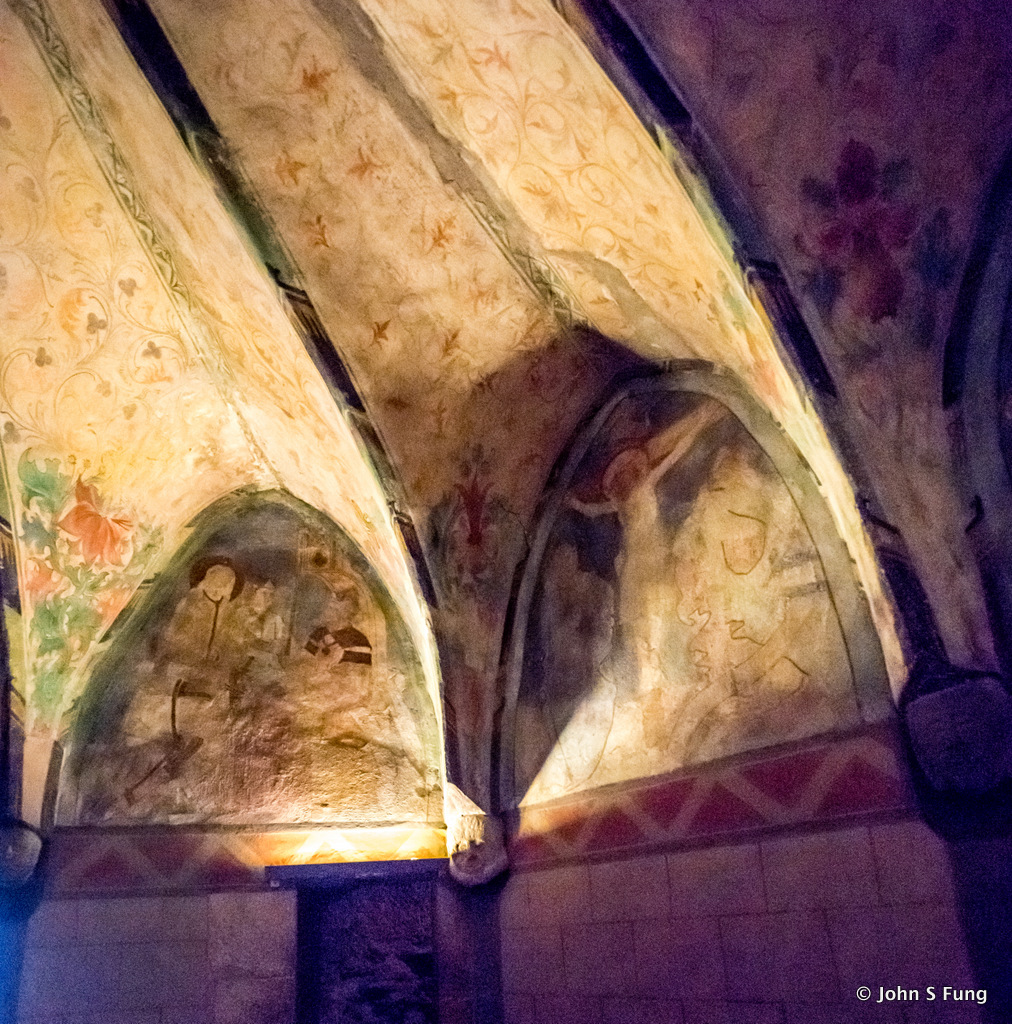
客廳的另一邊,就是堡主的家庭禮拜堂。14世紀的哥德式,肋狀天花分成十瓣,全部有壁畫。牆上神龕供有15世紀的聖母像(椱製品)。
The 14th century chapel is next to Knight’s hall, it is elaborately painted with a ten-part late Gothic rib vault ceiling. A copy of a 15th century Rhenish Virgin Mary statue takes center stage in the niche.
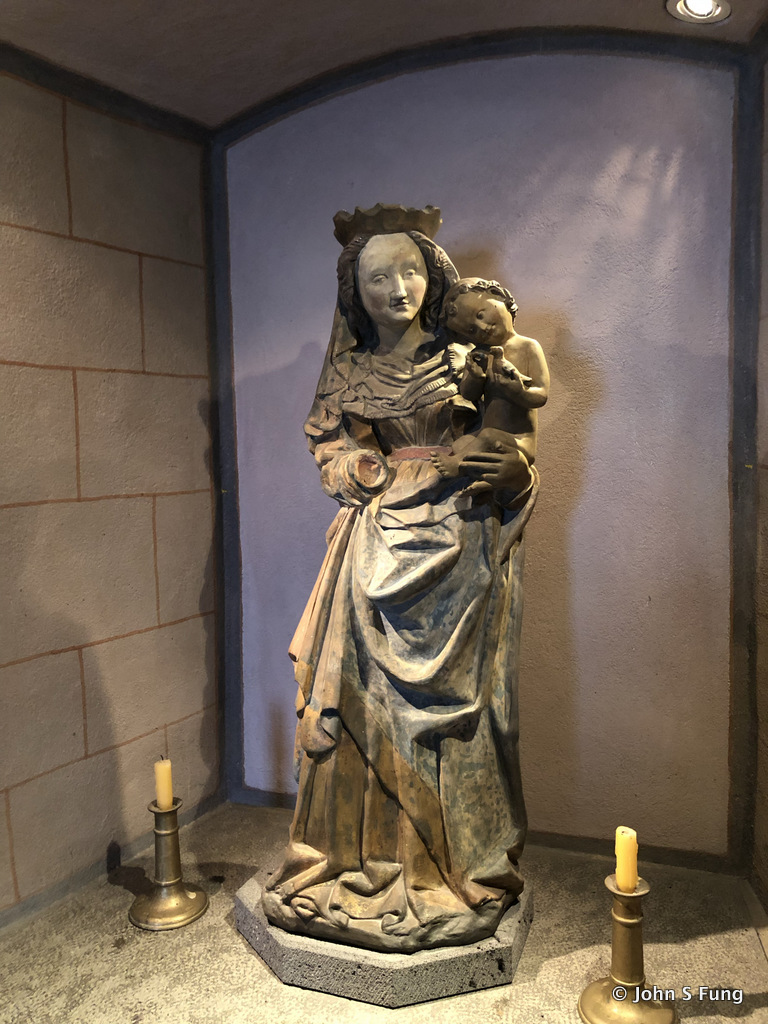
神龕內供有聖母像(15世紀萊恩河風格的複製品)。
A copy of a 15th century Rhenish Virgin Mary
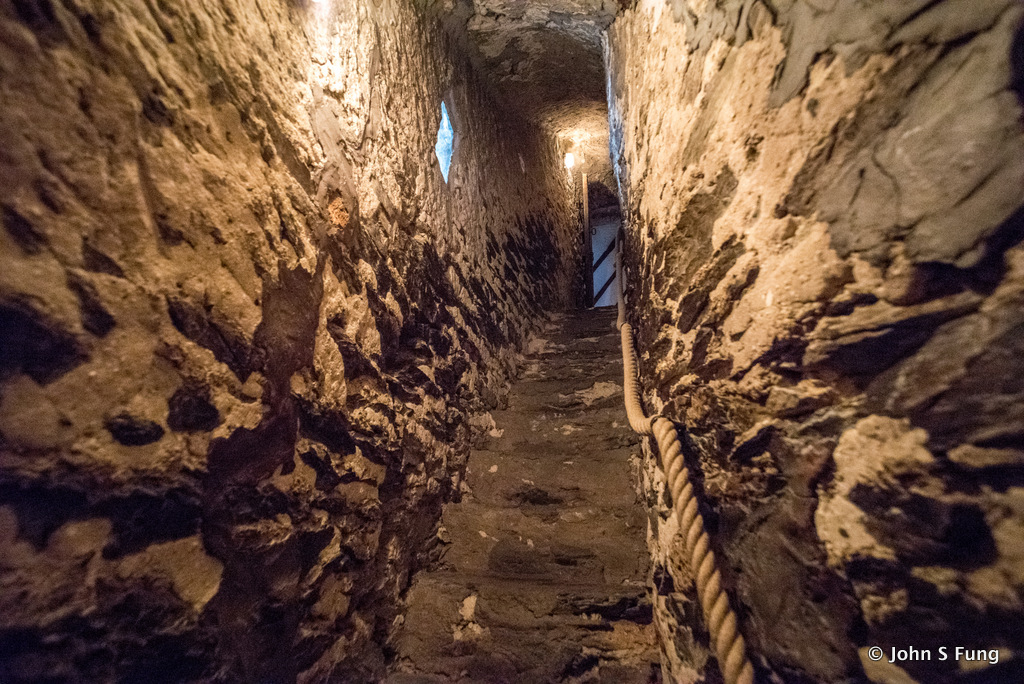
一條在建在牆內的樓梯帶我們離開禮拜堂,經過神父/修士的書房而回到當初進入主棟的位置。
A narrow staircase, built into the wall passing the chaplain’s study, leads to the next floor and reached the entrance where we stepped in the main building.
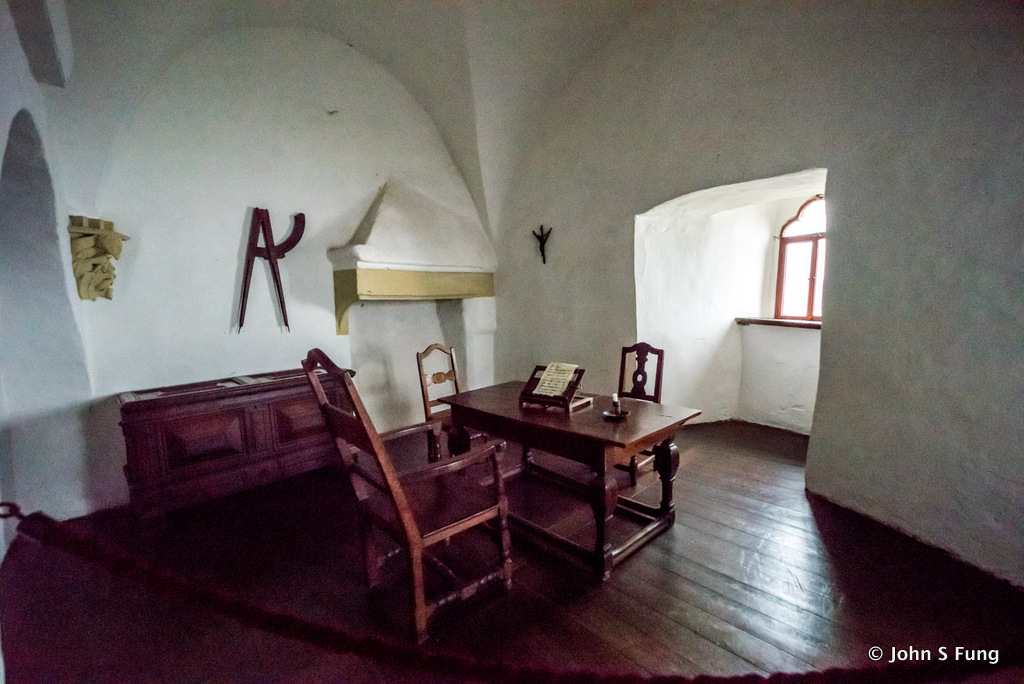
禮拜堂神父/修士的書房。The chaplain’s study (Kaplansstube?).
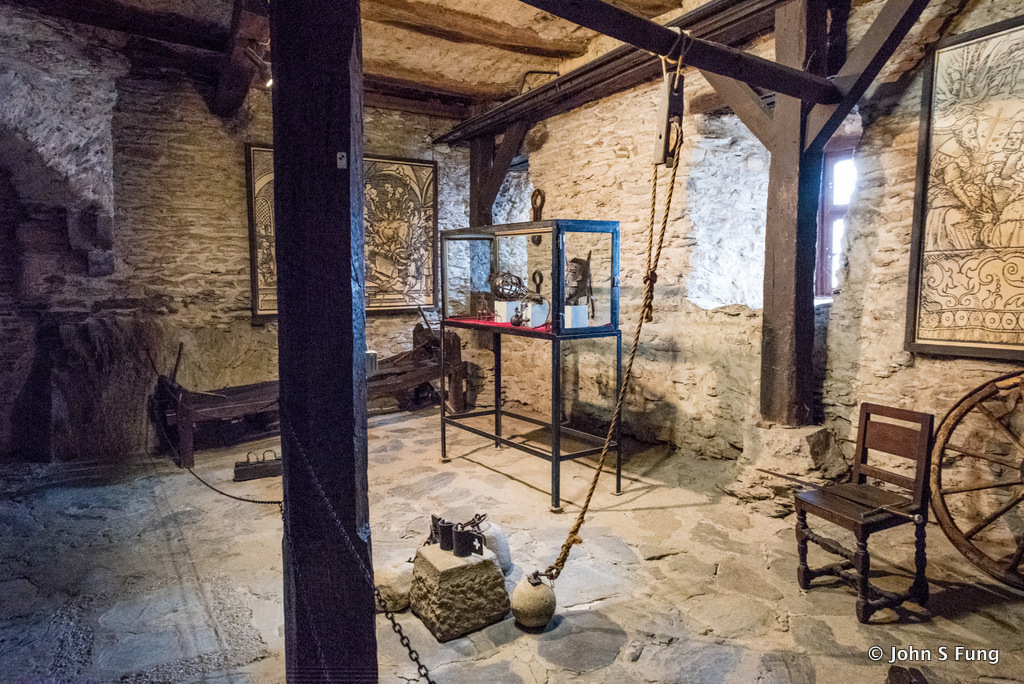
主棟入口處旁,院子那一層,是以前的馬廐,現在改為「烤問」展覽室,展出各種中古時使用之烤問工具。
Former Stables, now used as Torture Exhibition – The oldest part of the castle, the basement of the Romanesque Palas (a palas is prestigious building of a medieval Pfalz or castle that contained the great hall), is now an exhibition hall for torture and punishment in the Medieval age.
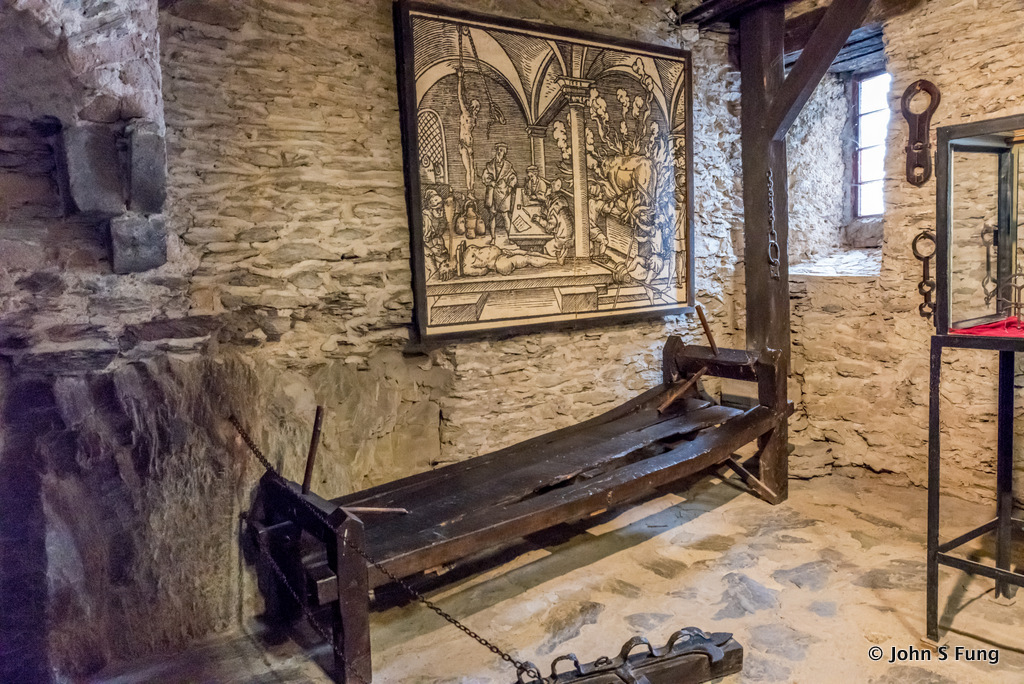
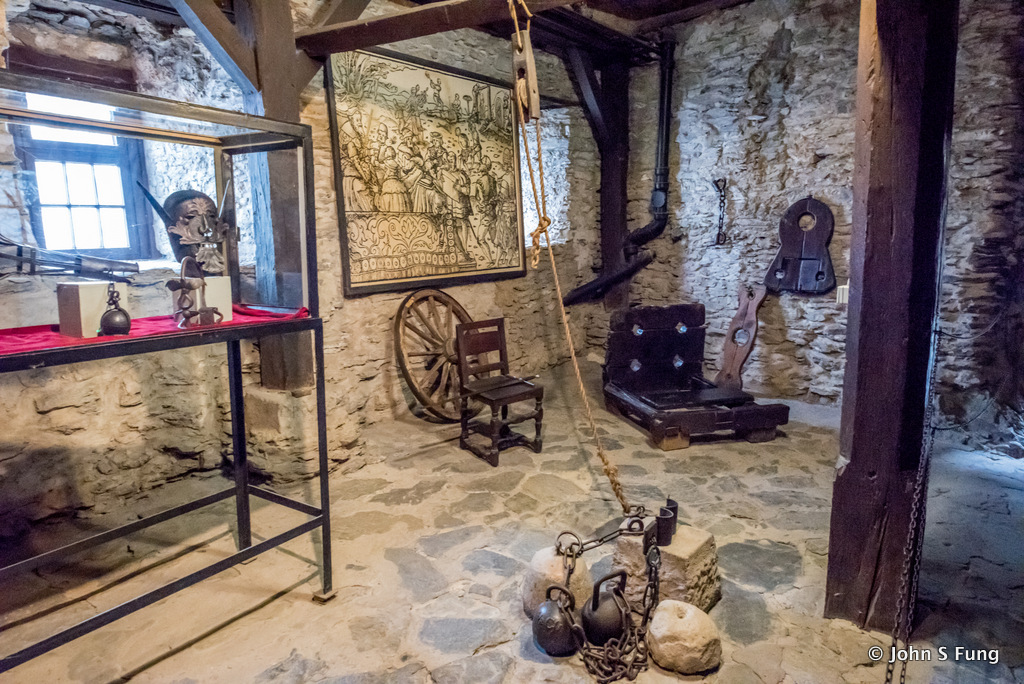
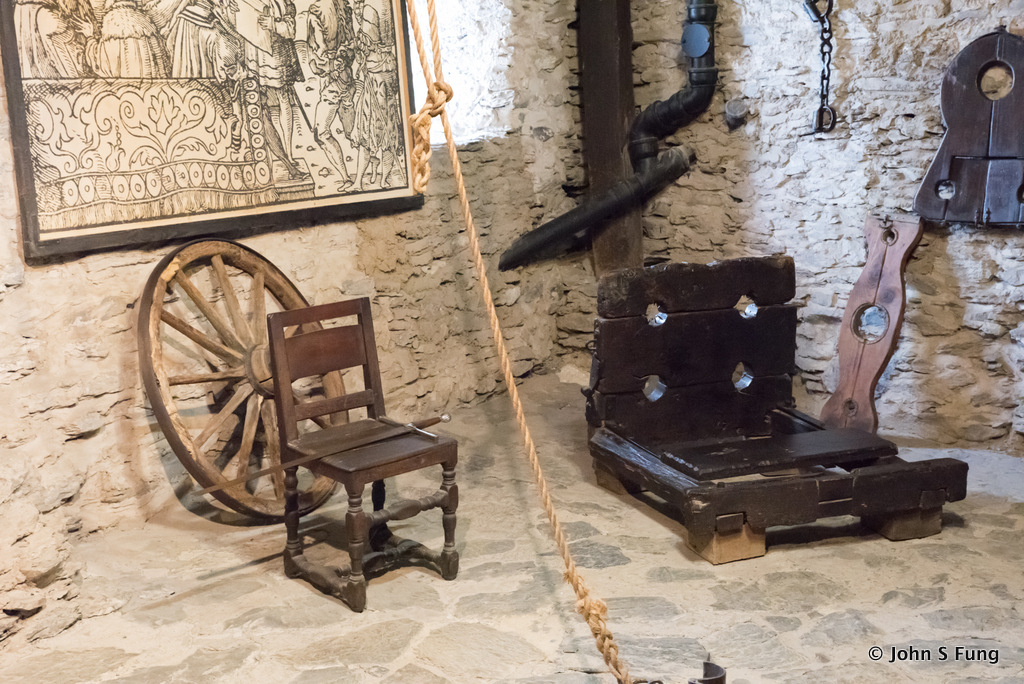
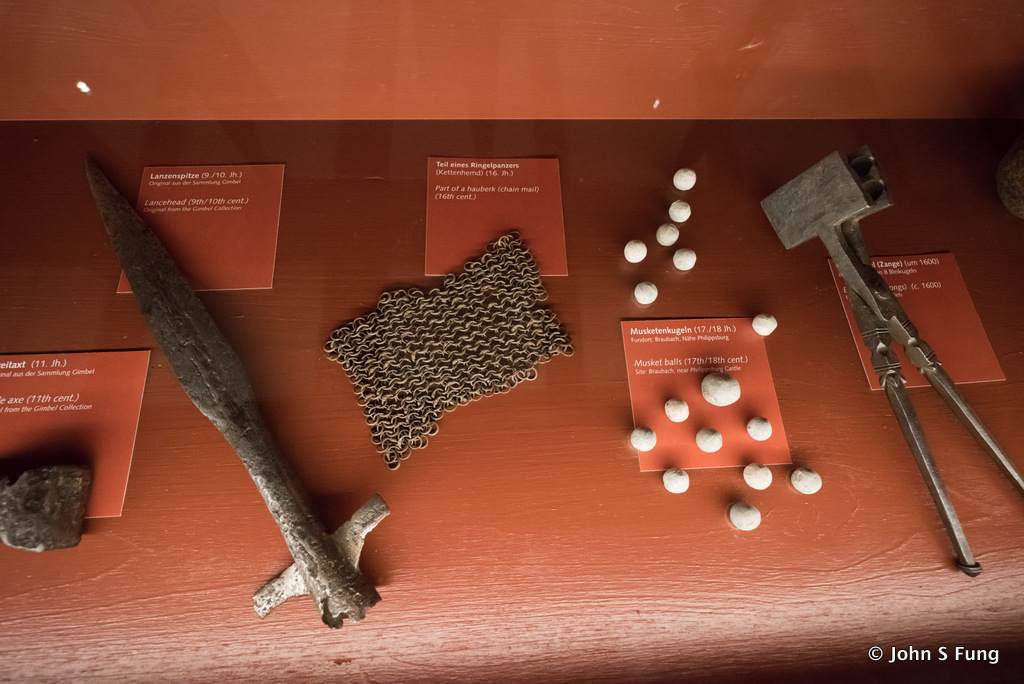
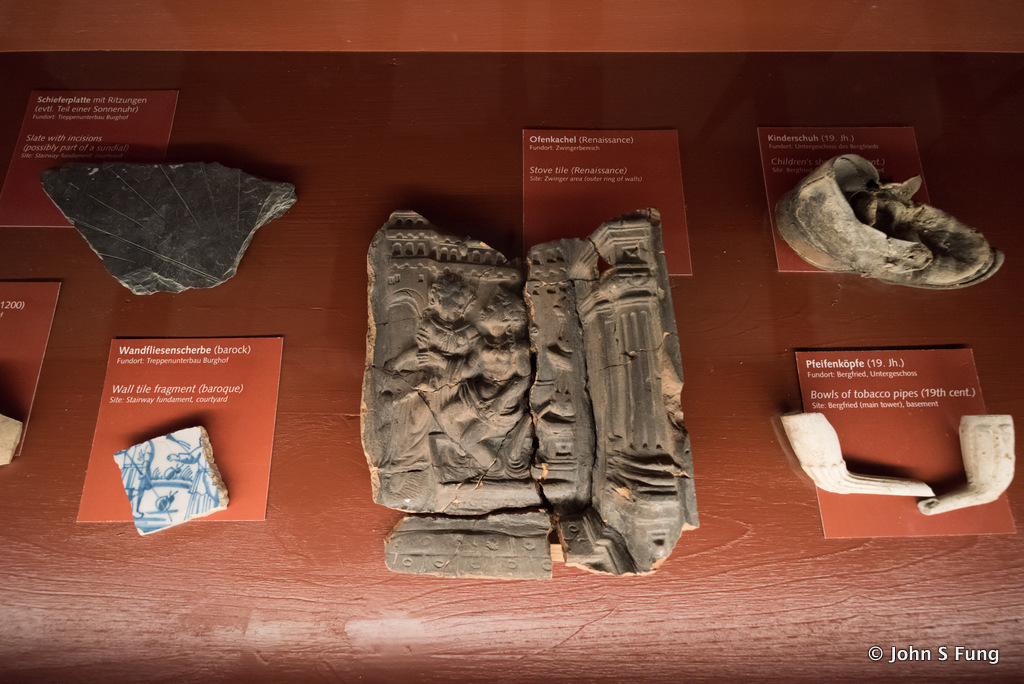
參觀完「烤問室」,我們轉入展覽廳,這裡展出重修古堡時的考古發現。
Recovery from excavation work carried out in and around the castle grounds – coins, glass, arrow heads, dice – are on display in a glass cabinet.
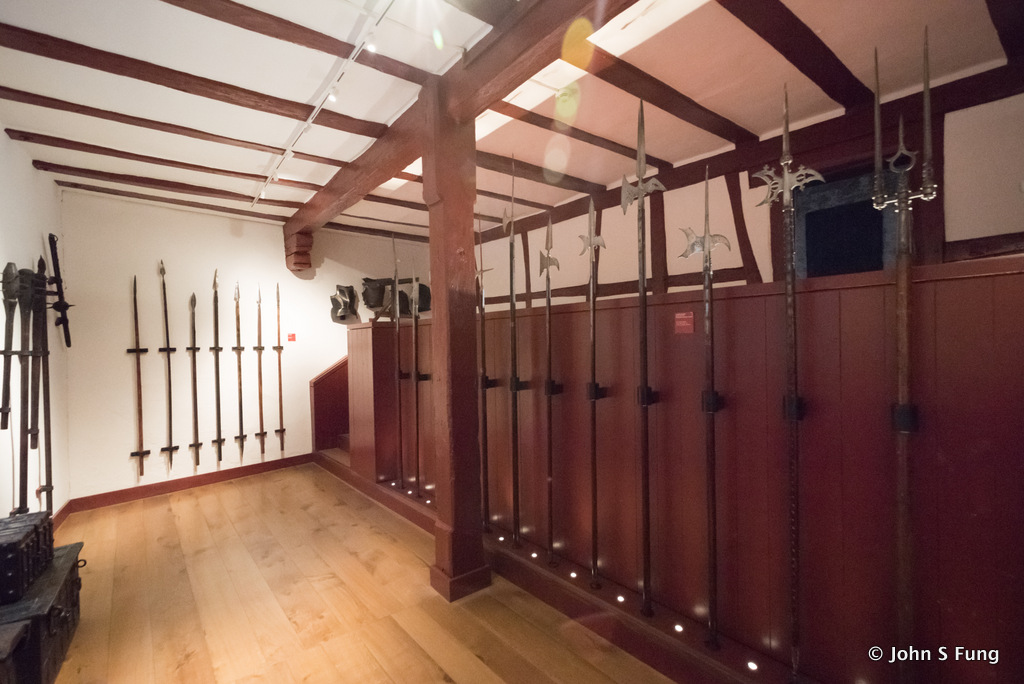
隔壁展廰展出各式武器,以戟為多。
Various pieces of armor and weapons are displayed on the walls.
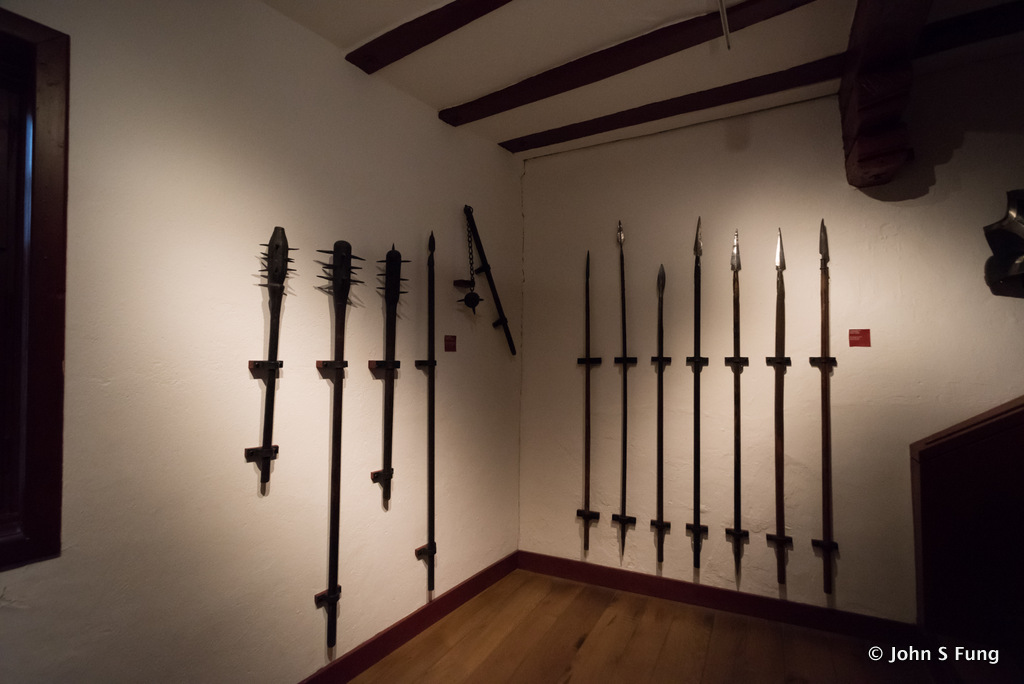
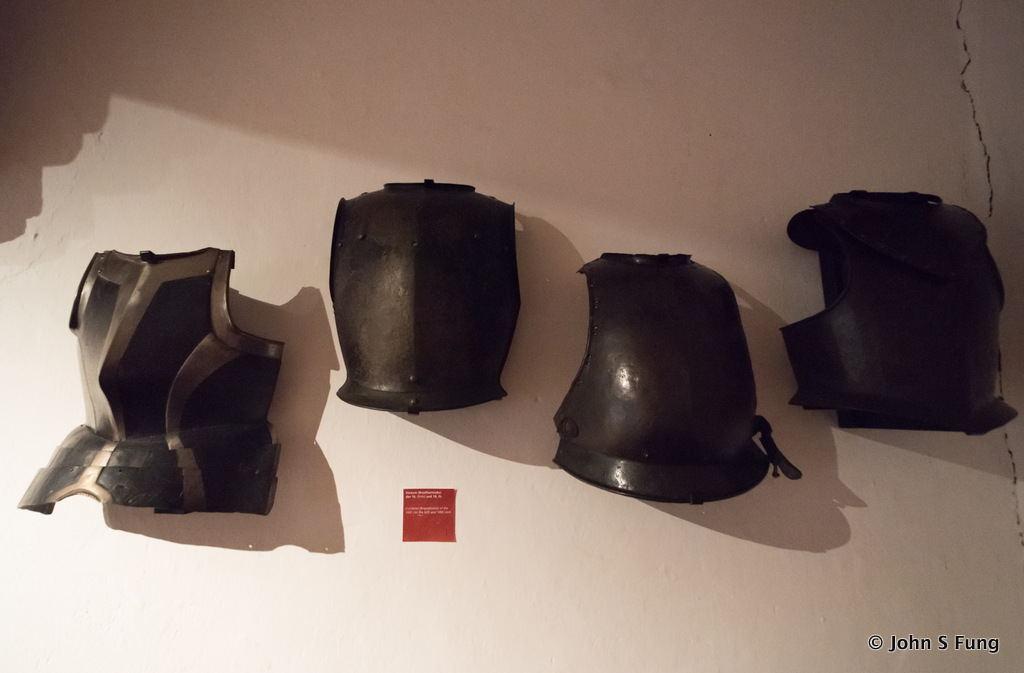
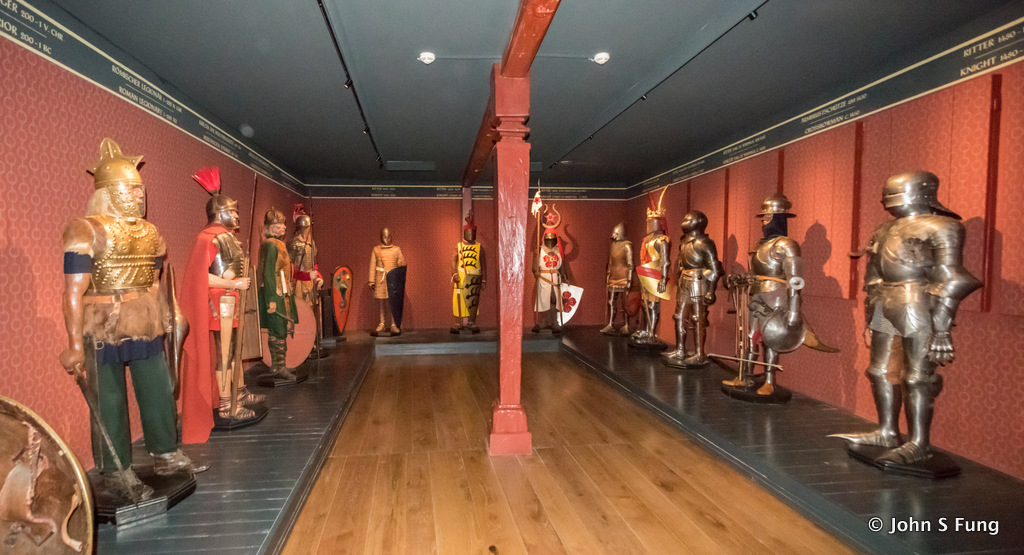
最後一個展㕔,展出十九世紀以來的武士甲胄,包括古物和複製品。
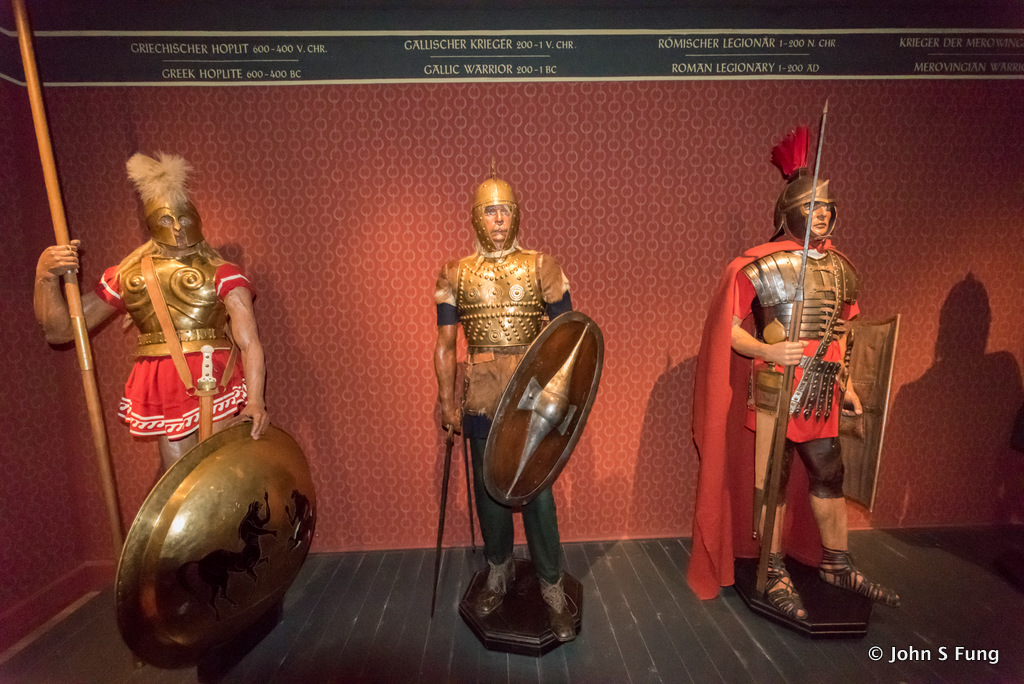
Armory – the “Gimbel Collection”, a display of twelve life-sized figurines from 1880 which demonstrates the changes made to armor and weaponry from ancient to early modern times. The armor on display consists of extremely detailed replicas as well as original pieces.
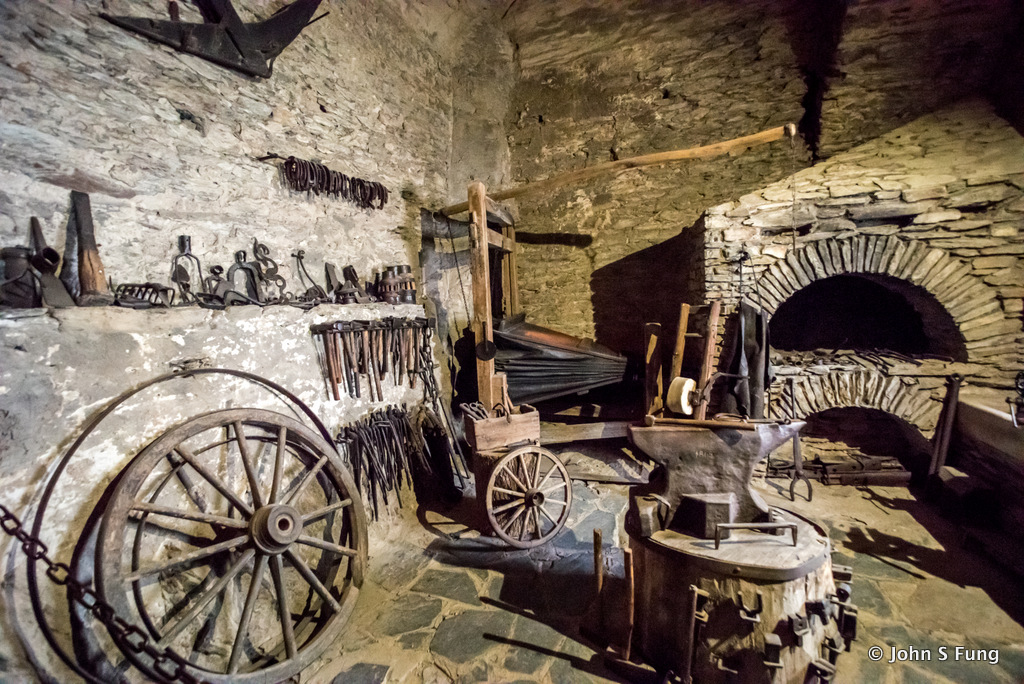
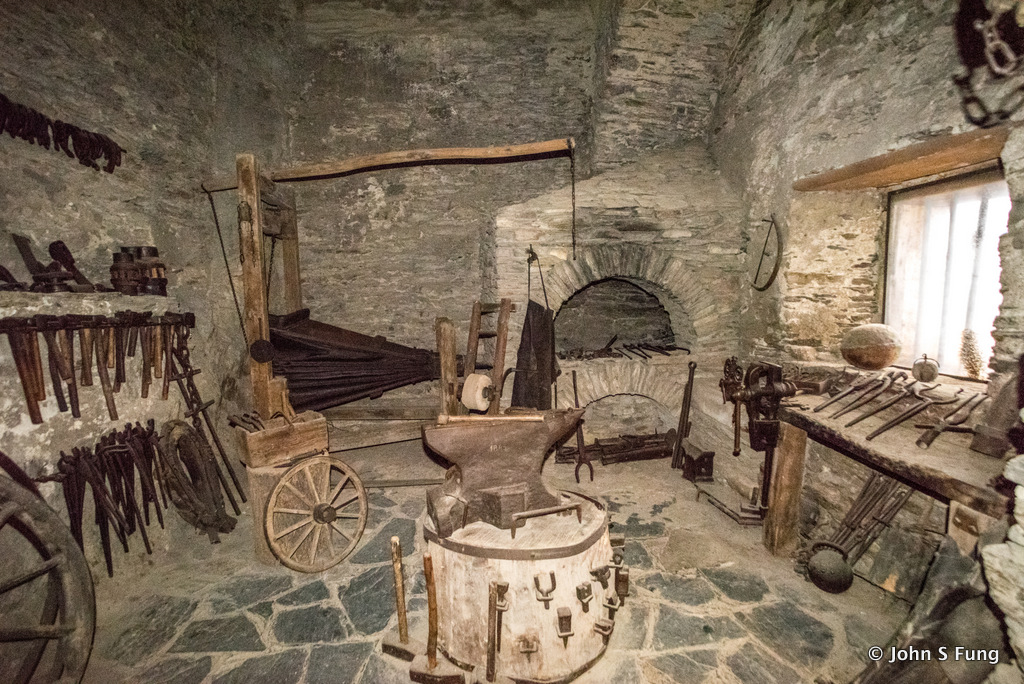
最後一個展室,離開古堡主建築,這個鐵工匠室建在岩石洞中(主要是防火)。 各種器具,應有盡有,打做馬蹄,修整車輪不假外求。
Blacksmith’s workshop – This room built into the rock provides a good impression of what a medieval forge was like.
 John and YY's photoblog